
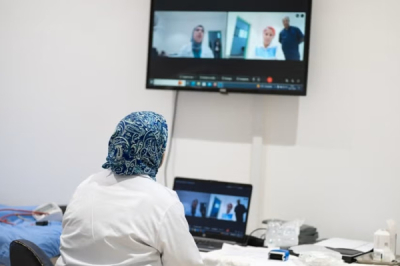
- Huawei, Moroccan authorities, and Dott Medical signed an agreement to deploy telemedicine solutions and upgrade primary healthcare facilities.
- The partnership will combine digital infrastructure, medical equipment, and remote consultation platforms, starting with a pilot phase.
- The initiative supports Morocco’s broader healthcare reform and aims to reduce regional disparities in access to care.
On the sidelines of GITEX Future Health Africa, Morocco’s Ministry of Health and Social Protection signed a memorandum of understanding with Huawei Morocco and Dott Medical on May 4 in Casablanca. The agreement aims to structure the deployment of telemedicine solutions and modernize primary healthcare facilities.
Amine Tehraoui oversaw the signing of the agreement. The initiative aligns with Morocco’s ongoing healthcare reform, which includes the gradual expansion of universal health coverage and efforts to reduce disparities in access to care.
The partnership will develop an integrated solution that combines digital infrastructure, medical equipment, and remote consultation platforms. The stakeholders aim to improve patient care, optimize the use of medical resources, and streamline care pathways, particularly in underserved regions.
Huawei will provide connectivity and digital infrastructure, while Dott Medical will supply specialized medical equipment tailored to healthcare facilities.
At the same time, the partners will ensure compliance with national health data protection requirements, which remain critical to building a sovereign digital health ecosystem.
Before scaling deployment, the partners will launch a pilot project to assess the technical, clinical, and organizational viability of the system. In addition, they will implement training programs to help healthcare professionals adopt and use these tools effectively.
This initiative comes as e-health gains momentum across Africa, where governments are leveraging digital tools to address demographic pressures and infrastructure constraints. In Morocco, authorities are betting on these technologies to improve system efficiency, as the country has about seven doctors per 10,000 inhabitants, a ratio that remains below some emerging market standards.
Beyond healthcare modernization, Morocco aims to capture economic and strategic value from digital health. The country seeks to build a local ecosystem, stimulate innovation, attract investment, and position itself as a regional hub in the sector.
Authorities reaffirmed this ambition during the launch of the first edition of GITEX Future Health Africa Morocco, which brought together public and private stakeholders in Casablanca to advance healthcare system transformation.
This article was initially published in French by Samira Njoya
Adapted in English by Ange J.A de Berry Quenum