
To our readers: this article concludes our series marking the 10th anniversary of the Raif. An analysis of the audit of this investment vehicle.
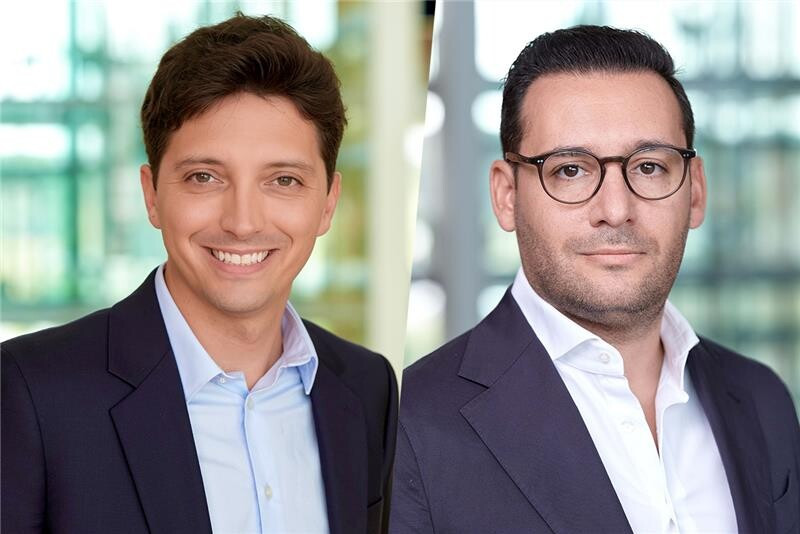
“The product has integrated very well into the Luxembourg toolbox,” says Anthony Bianco, partner in charge of the Internal Audit & Regulatory and Asset Management & Alternatives segments at PwC Luxembourg. “It has become something that has been fully embraced by the market.” Laurent Butticè, audit partner and management company leader at PwC Luxembourg, goes even further: “It has become a standard feature.”
The Reserved Alternative Investment Fund (Raif) is no longer really seen as a novelty in the financial sector. The vehicle, launched in 2016 to accelerate the development of alternative funds whilst maintaining an indirect regulatory framework via authorised management companies, has gradually become part of standard market practice. It is now regarded as an almost standard structuring tool.
Luxembourg has established itself as Europe’s hub for alternative finance
However, according to both experts, the fund’s success cannot be viewed in isolation. Above all, it reflects Luxembourg’s rise to prominence in the world of alternative investments over the past 15 years. “Luxembourg has really developed over the past few years as the European hub for alternative investments,” explains Anthony Bianco. “Unlike Ireland, which has focused more on ETFs and liquid funds, Luxembourg has built up a wealth of expertise in alternative funds.”
Nowadays, new entrants tend to be smaller players who use Luxembourg as a springboard to expand their business.

The European context has played a major role in this development. Following the financial crisis, the AIFM Directive radically restructured the regulatory framework for alternative investment funds in Europe. According to Laurent Butticè, the Grand Duchy very quickly recognised the strategic importance of this regulatory change. “Luxembourg was one of the first countries to implement the directive,” he points out. “The country positioned itself directly in these alternative strategies. This has enabled the development of genuine expertise in these products.”
This early start has gradually attracted major international asset managers to the Grand Duchy. However, according to Anthony Bianco, the types of firms arriving today have changed. “The largest international groups arrived several years ago,” he explains. “Today, the new entrants are mostly smaller players who are using Luxembourg as a springboard to expand their offering.”
Speed of execution remains a key advantage
Raif was specifically designed to respond to this rise in alternative investment strategies. Its operation is based on a relatively simple principle: unlike certain traditional investment vehicles, the fund itself is not directly authorised by the CSSF. Supervision is carried out indirectly through the authorised manager, an AIFM.
This structure enables launch times to be significantly reduced. “What interests market participants is the speed with which they can launch and market an unregulated alternative fund such as the Raif,” explains Laurent Butticè. “This is much simpler because the fund is not directly regulated by the CSSF, but indirectly via its asset manager.”
However, for both experts, this flexibility does not mean a lack of framework or a relaxation of governance. “For a management company, there is ultimately little difference between managing a Raif and a regulated vehicle,” explains Anthony Bianco. “The organisational and regulatory framework is already highly structured in Luxembourg.”
Laurent Butticè also points out that the Luxembourg industry was already well prepared even before the vehicle was launched. “Specialist investment funds and Sicars already existed, with their alternative strategies,” he notes. “Governance, reporting and organisational structures were already in place. It didn’t exactly set the world alight.”
Private equity, property and infrastructure top the list of strategies
In practice, Raif has established itself primarily in three major asset classes: private equity, property and infrastructure, explains Laurent Butticè. “And this can involve either direct investments or funds of funds.”
Private equity now plays a particularly significant role in the development of Luxembourg’s alternative funds. However, Anthony Bianco stresses that this trend should not be interpreted as an imbalance in the market. “Luxembourg is, above all, following trends in the alternative sector,” he explains. “The economic and geopolitical climate, as well as interest rates, inevitably influence which strategies become more popular at certain times.”
The two experts also refuse to reduce the Raif to a specific type of manager or a particular fund size. “You find both very large asset managers and smaller firms,” points out Anthony Bianco. “There isn’t really any particular concentration.”
It is always important to find the best vehicle based on the type of asset and, above all, the type of investor.

The SCSp complements the Luxembourg toolkit
The other major development of the decade has been the boom in SCSp-style structures – Luxembourg limited partnerships – which are particularly popular with Anglo-Saxon investors and asset managers. “It was something that was missing from the Luxembourg toolbox,” explains Anthony Bianco. “Anglo-Saxon asset managers wanted to find the same mechanisms, the same terminology and the same structures that they had historically used.”
According to Laurent Butticè, this development has been particularly dramatic. “The SCSp has undergone significant changes in recent years,” he explains.
Once again, the two men reject any simplistic dichotomy between SCSp and Raif. “No one product is better than another,” insists Laurent Butticè. “You always have to find the best vehicle depending on the type of asset and, above all, the type of investor.” Taxation, structuring, the nature of the investors, operational constraints or investment strategies can quickly alter the trade-offs between different vehicles.
An industry ready to embrace the next developments
The two experts also highlight the role played by the Luxembourg regulator in the rise of alternative strategies. “The CSSF has developed a real understanding of complex strategies,” says Laurent Butticè. “This also facilitates the development of these products and investment strategies.”
This maturity also explains why recent changes to European regulations are viewed with relatively little concern in the Grand Duchy. “For Luxembourg, AIFMD II is more of an evolution than a revolution,” says Anthony Bianco. “There will be some adjustments, but the Luxembourg market was already well prepared.”
Ten years after its launch, Raif appears to have firmly established itself within Luxembourg’s alternative investment fund landscape. And for Laurent Butticè, the fund clearly has further growth ahead of it. “Raif still has many good years ahead of it,” he concludes.
To our readers: this article concludes our series marking the 10th anniversary of the Reserved Alternative Investment Fund. It features insights from Alfi, Jacques Elvinger, Arendt, Carne Group and PwC.