

As growth in the mergers and acquisitions (M&A) market slowed, domestic institutional-only private equity funds (PEFs) reduced control-oriented investments last year while sharply increasing non-control investments such as corporate loans and mezzanine financing.
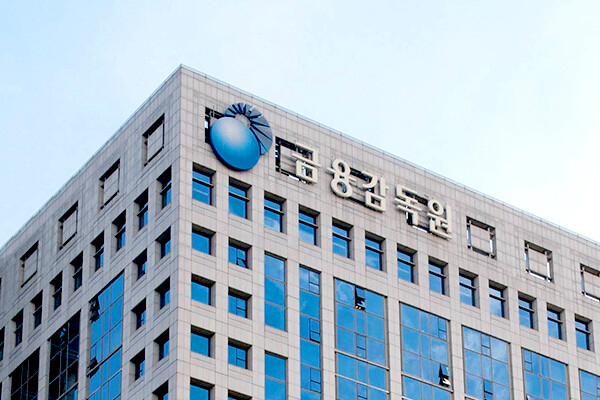
According to the “2025 Institutional PEF Operations Status” released by the Financial Supervisory Service (FSS) Thursday, PEF investment execution last year totaled 28.1 trillion won, up about 12 percent, or 3 trillion won, from 25.1 trillion won a year earlier.
A closer look at the investment data shows the increase in PEF investment execution was driven by a sharp rise in investments by non-control PEFs. Total investment reached 4.4 trillion won, up 340 percent from the previous year. The number of funds executing investments also rose 246.2 percent to 90.
Corporate loans (1.4 trillion won) and mezzanine financing (1.2 trillion won) accounted for more than half of non-control PEF investments. Real estate and infrastructure (600 billion won) investments and minority stake acquisitions (500 billion won) followed. Analysts said demand grew more for medium-risk, medium-return asset investments through loan or mezzanine structures than for traditional equity investments.
By contrast, control-oriented PEFs executed a total of 23.7 trillion won in investments across 343 domestic and overseas companies, reducing their investment scale by 1.7 percent from 24.1 trillion won a year earlier. Dry powder (uncommitted capital) also reached a record high, underscoring PEFs’ cautious investment stance. As of the end of last year, dry powder stood at 43.2 trillion won, up 19.7 percent from the previous year and 15.2 percent higher than the prior peak of 37.5 trillion won in 2023.
Among general partners (GPs) operating PEFs, polarization between large and small-to-medium GPs continued. The share of large GPs, with committed capital of 1 trillion won or more, relative to total committed capital stood at 68.7 percent at the end of last year, up 2.5 percentage points from 66.2 percent a year earlier. The shares of mid-sized GPs (committed capital of 100 billion won or more but less than 1 trillion won) and small GPs (committed capital under 100 billion won) fell 2.2 percentage points and 0.3 percentage points, respectively.
“Market competition is expected to gradually intensify amid a preference for large GPs and an increase in new GP entries,” an FSS official said. “We plan to provide guidance so that sound investment practices take root by ensuring that, during the growth of the PEF market, not only the industry’s inherent role but also its social responsibility are fully considered.”
