
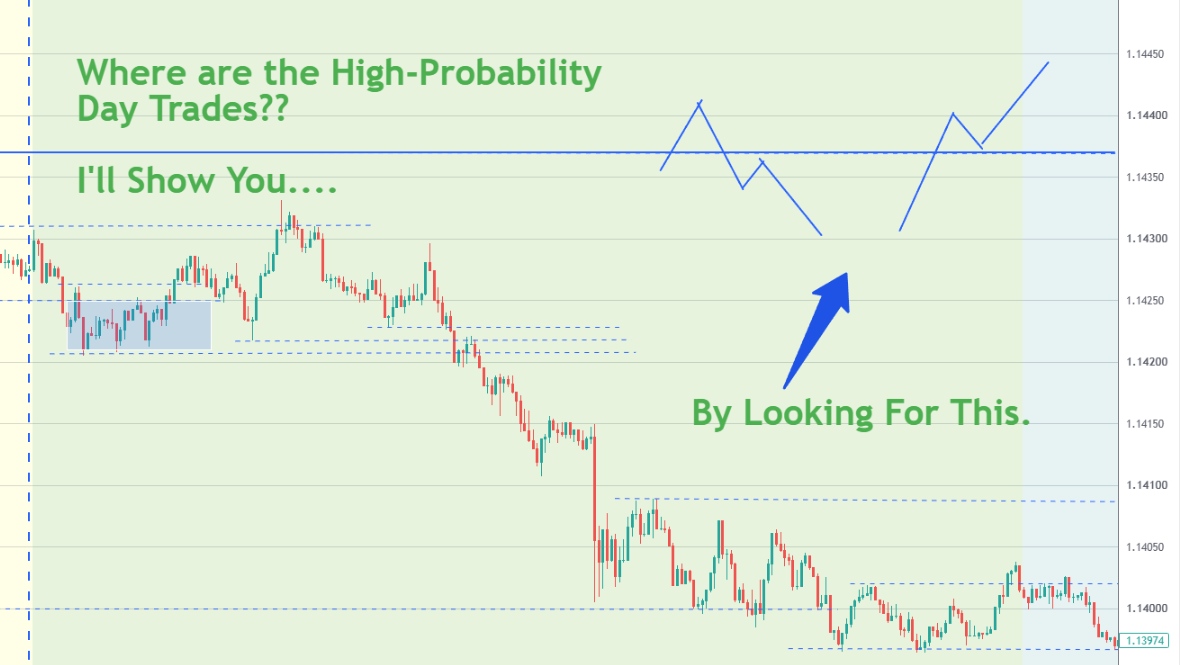
A key level is any price area where price reversed aggressively from, or an area or level that price has been respecting (bouncing off). These levels act like inflection points. We can’t know whether price will break beyond or get rejected, but we do get to see how it reacts at that level, which provides the insight. Because at an inflection point we get to see which side, the buyers or sellers, is proven right (the confirmation), then we can ride a long for a bit.
Waiting for confirmation is important. Rather than jumping in the moment price pokes through a level, wait to see how the pullback behaves. After a breakout or failed breakout of a level, the next pullback—how it acts in relation to the level—reveals far more about true directional intent than the initial breakout or failed breakout itself. This is the essence of confirmation: letting the market show its hand before committing capital.
In the video below, based on concepts in my EURUSD Day Trading Course, I walk through several high‑probability day trades that emerge from this approach on July 13, 2026. These setups aren’t about predicting the future (all we can do is make decisions based on the data in front of us, which could change at any time); they’re about making edge-based trading decisions when price forms certain patterns around key levels.
Many traders struggle with the fear of missing out. They see a move start, worry it will run without them, and jump in. This habit leads to low win rates, poor entries, and terrible risk/reward ratios. Sure, you may catch more moves, but you also catch more trades that whipsaw you, chop you up, and don’t go anywhere. You crush your win rate, your confidence, and chances of success.
Trading around key levels requires patience, and yes, it means you will miss some moves. But the trades you do take tend to be higher‑probability because they are built on the order flow created when it becomes evident who is right and who is wrong. You’re entering when the market has already shown which way it is likely to move based on traders who are now trapped or are being proven right, and the “room to move” provides a reasonable reward relative to the risk.

This approach also reinforces a critical truth: trading is a game of probabilities. There are no guaranteed setups, no perfect patterns, no magic indicators. What we have are tendencies—behaviors that repeat often enough to provide an edge when combined with discipline and risk management. Trading around key levels and waiting for confirmation doesn’t eliminate losses, but it does seem to push the probabilities more in our favor.
Ultimately, the goal is not to catch every move. The goal is to catch the right moves—those with structure, clarity, and sufficient potential to justify the risk. When traders embrace this mindset, their charts become less chaotic, their decisions more deliberate, and their results far more consistent.
For further reading, see the Range and Range Breakouts sections in Key Concepts for Price Action Trading.
Cory Mitchell, CMT
Disclaimer: Nothing in this article is personal investment advice, or advice to buy or sell anything. Trading is risky and can result in substantial losses, even more than deposited if using leverage. Affiliate links are used on the site: If you purchase a product via one of these links, this site may be compensated at no cost to you. Thank you for supporting the site in this way. Past results/performance aren’t always indicative of future results/performance.