
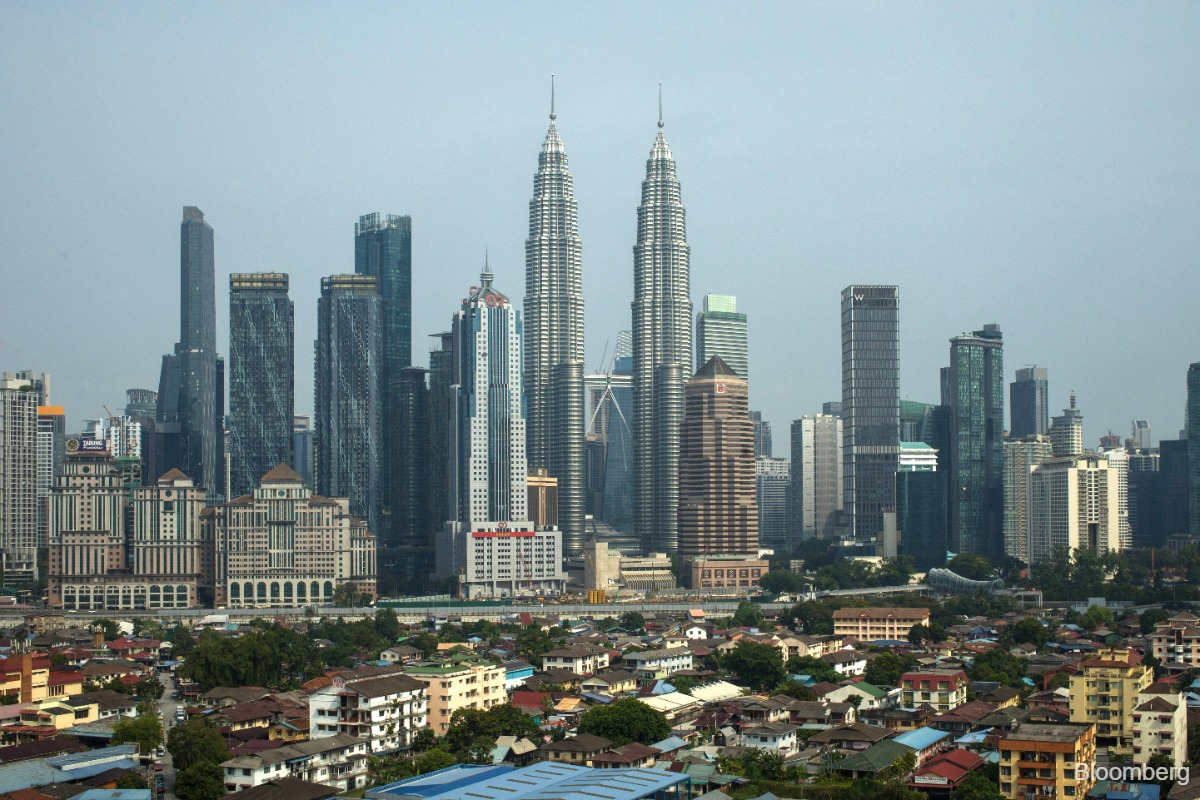
MALAYSIA is often described as having one economy. In reality, it operates through three. Recognising this distinction helps explain why encouraging economic data and public sentiment increasingly appear to move in different directions. Each economy answers a different question, and confusing them risks producing misguided policies, unrealistic expectations and an increasingly disconnected public debate.
The first is the Statistical Economy, where success is measured through GDP (gross domestic product) growth, exports, investment inflows and industrial production. It is the economy governments monitor and international institutions compare. The second is the Market Economy, where investors allocate capital according to future expectations rather than current performance. Here, confidence is shaped less by today’s growth than by tomorrow’s competitiveness, institutional credibility and strategic capability. The third is the Household Economy, where prosperity is experienced in everyday life. Families judge economic progress not by quarterly statistics, but by whether incomes keep pace with living costs, housing remains affordable, and future opportunities continue to improve.
These three economies coexist, yet they do not always move together. That divergence explains why an economy may appear healthy on paper while many citizens remain unconvinced that prosperity has improved. The issue is not that one perspective is right and another is wrong; each measures a different dimension of national progress.
This is why GDP, despite remaining indispensable, cannot by itself define prosperity. It measures how much an economy produces, but not how prosperity is distributed, experienced or perceived. Much of today’s economic debate stems from expecting GDP to answer questions it was never designed to answer. When governments announce stronger growth, they are describing the Statistical Economy. When investors increase capital allocation, they are responding to the Market Economy. When households worry about affordability despite encouraging national figures, they are speaking from the Household Economy.
The distinction has become more important because the global economy itself has changed. In previous decades, countries competed primarily through production capacity, manufacturing expansion and export growth. Today, however, capital increasingly rewards strategic capability. Investment flows towards economies with stronger institutions, technological depth, policy consistency, reliable infrastructure and the resilience to compete under long-term uncertainty.
Artificial intelligence, semiconductor ecosystems, advanced energy systems, cybersecurity and digital payment networks may appear to belong to different industries, yet they share a common purpose: each strengthens a country’s long-term capability. Increasingly, financial markets reward not simply what an economy produces today, but what it is capable of becoming tomorrow.
For Malaysia, this represents an important strategic transition. The country’s openness to trade, diversified manufacturing base and regional connectivity remain valuable strengths. The next stage of development, however, will depend less on expanding economic activity than on strengthening the capabilities that transform growth into sustainable national prosperity.
The central challenge, therefore, is not whether GDP should matter less. It is whether economic growth is successfully converted into broad-based prosperity. This is where the Prosperity Conversion Chain offers a more useful perspective.
Economic development does not end when investment arrives. Investment must strengthen productive capability. Capability should generate higher productivity, which supports rising real incomes and, ultimately, stronger household confidence. Only when this chain functions effectively does economic growth become genuine prosperity. When any link weakens, economies may continue expanding while public confidence steadily declines.
This perspective shifts attention from the quantity of growth to the quality of its transmission. The more important question is no longer how fast an economy grows, but how effectively that growth improves people’s lives. It also explains why countries reporting similar GDP growth often experience very different levels of public confidence and investor interest.
The same principle applies internationally. Nations are no longer competing primarily on labour costs or manufacturing scale. They are increasingly competing on institutional quality, technological capability, energy resilience, digital infrastructure, talent development and policy consistency. These are no longer simply governance objectives; they have become strategic economic assets that determine where long-term capital is willing to invest.
In this sense, the global economy is gradually moving from a Growth Economy towards a Capability Economy. Growth remains essential, but capability increasingly determines whether growth can be sustained, upgraded and translated into lasting prosperity. Markets are rewarding not only output, but future capacity.
For Malaysia, this should not be interpreted as a rejection of GDP. On the contrary, GDP remains one of the most important indicators of national performance because no country can improve living standards without expanding its economy. Yet GDP should be understood as the starting point of the conversation rather than its conclusion.
The larger strategic objective is to ensure that the Statistical Economy, the Market Economy and the Household Economy reinforce one another rather than drift further apart. When national statistics improve while household confidence weakens, policymakers see only part of the picture. Conversely, when businesses continue investing, governments maintain credible long-term policies and households experience rising purchasing power, prosperity becomes more than a favourable economic cycle. It becomes a durable national advantage.
Ultimately, successful economies are not defined solely by the size of their GDP, nor by stock-market performance or investment inflows. They are defined by their ability to align three different realities into one coherent national direction. GDP measures production. Prosperity measures confidence. The countries that lead in the decades ahead will not necessarily be those that grow the fastest, but those most capable of transforming capability into confidence, confidence into resilience, and resilience into shared national prosperity.
Sim Chiun Wee is chief strategic adviser (Greater China, HK, Macao) of the Strategic Pan Indo-Pacific Affairs (SPIPA) consultancy, based in Kuala Lumpur.