
Close Menu
Aspire Market Guides
  • Home
  • Alternative Investments
  • Cryptocurrency
  • Economics
  • Equity Investments
  • Mutual Funds
  • Real Estate
  • Trading
What's Hot

ITR filing: How Bitcoin, NFTs, airdrops, gifted crypto, and overseas wallets are taxed in India and how to report them

July 21, 2026

Capitalist vs. Socialist Economies: Key Differences Explained

July 21, 2026

SBI FM lists with ambition to be a market leader in mutual fund industry

July 21, 2026
Facebook X (Twitter) Instagram
Trending:
  • ITR filing: How Bitcoin, NFTs, airdrops, gifted crypto, and overseas wallets are taxed in India and how to report them
  • Capitalist vs. Socialist Economies: Key Differences Explained
  • SBI FM lists with ambition to be a market leader in mutual fund industry
  • ICON Real Estate Advisors Arranges $4.1 Million Sale of Bayonne Apartment Building
  • Uphold Launches Single Step Crypto-to-Equities Trading for 4,000+ U.S. Stocks and ETFs
  • Top 10 NFT Performers by Weekly Sales Volume: Courtyard Outshines
  • Govt rejects concern that weak rupee reflects weak economy, says macroeconomic fundamentals strong
  • The State Duma has allowed Russians to invest in cryptocurrency but has banned its use as
  • What Is Capitalism? History, Pros & Cons, vs. Socialism
  • Real estate deals nearly triple to $2.3 billion in Q2 as PE investments, M&A gather pace: Grant Thornton Bharat
Tuesday, July 21
Facebook X (Twitter) Instagram
Aspire Market Guides
  • Home
  • Alternative Investments
  • Cryptocurrency
  • Economics
  • Equity Investments
  • Mutual Funds
  • Real Estate
  • Trading
Aspire Market Guides
Home»Economics»The Economy Of Pakistan
Economics

The Economy Of Pakistan

By CharlotteJuly 21, 20263 Mins Read
Share
Facebook Twitter Pinterest Email Copy Link


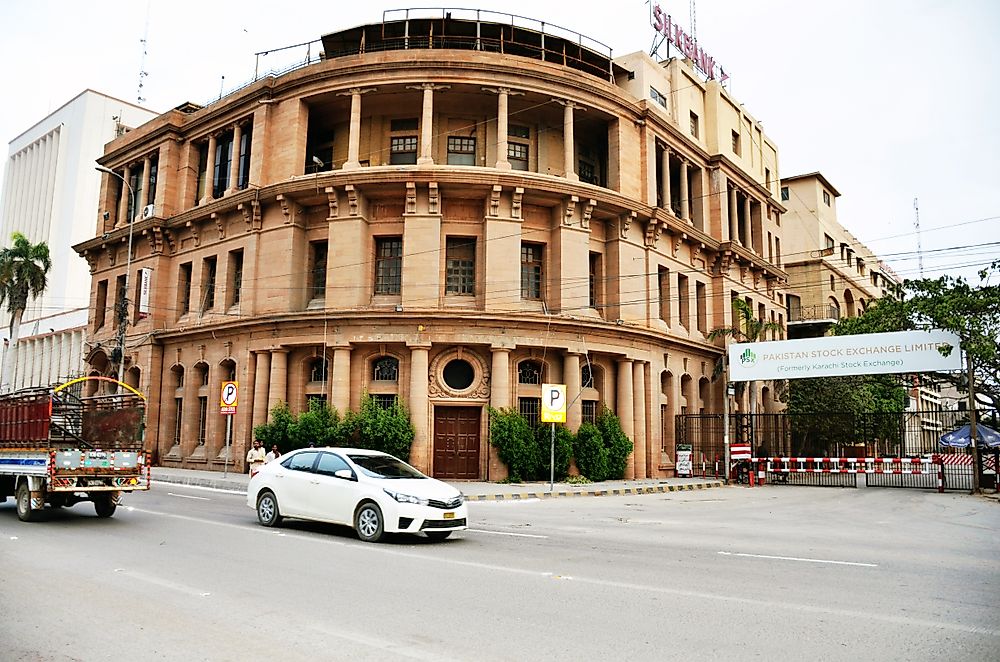
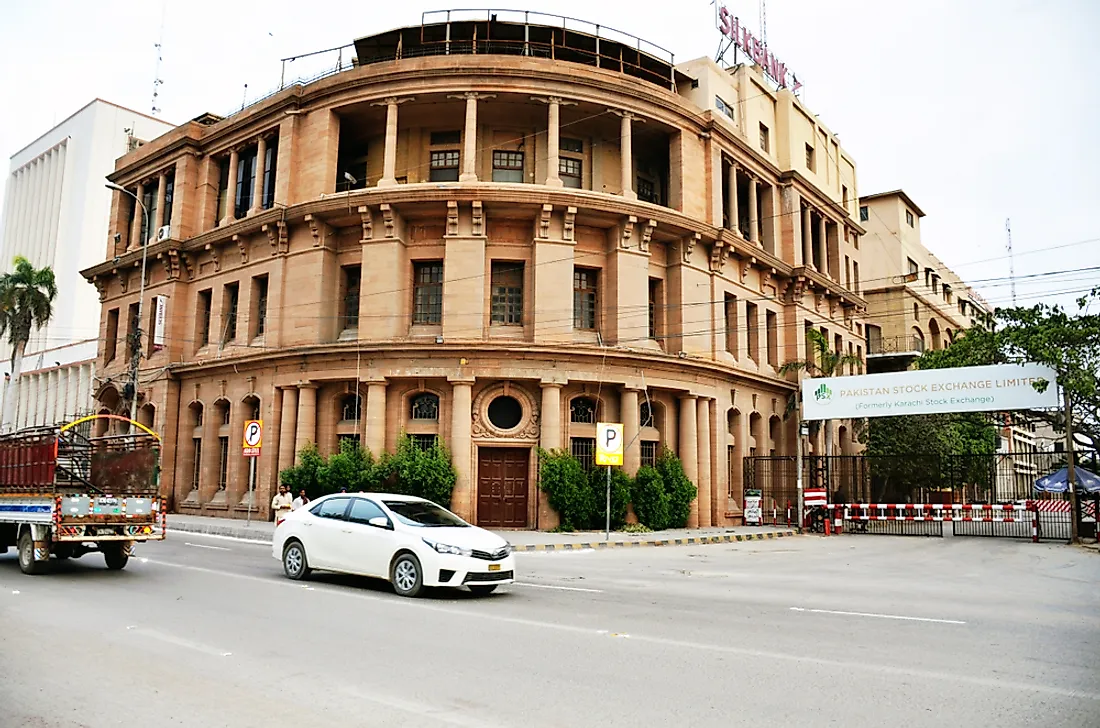
A street in Karachi, the financial capital of Pakistan. Editorial credit: APICE CREATIVE / Shutterstock.com.

A street in Karachi, the financial capital of Pakistan. Editorial credit: APICE CREATIVE / Shutterstock.com.

Pakistan has a mixed economy with privately-owned and state-owned businesses regulated by government policy. It is a developing economy and considered one of the “Next Eleven”, a list of countries with the potential of becoming the biggest economies in the world. Currently, the economy of Pakistan is the 43rd largest in the world.

In 2015, its nominal gross domestic product (GDP) was $271 billion GDP per capita was $1,429. This does not, however, take into account the informal economy which makes up approximately 36% of all economic activity. This country has a workforce of 57.6 million and an unemployment rate of 6.5%. Of these employed individuals, 43% work in agriculture. This is followed by manufacturing (13.3%), retail and wholesale (9.2%), and transport and communication (7.3%).

Leading Industries Of Pakistan

The leading industry of Pakistan is the services sector, which contributes 54.9% of the GDP. Agriculture, although employing 43% of the workforce, makes up only 25.1% of the GDP. The leading industry products include: textiles, food processing, pharmaceuticals, construction materials, automobiles, and clothing.

Top Export Goods And Export Partners Of Pakistan

In 2014, Pakistan exported $28.3 billion worth of goods, making it the 67th largest export economy in the world. Its principal exports include: house linens ($3.23 billion), rice ($2.24 billion), non-retail cotton yarn ($2.04 billion), non-knit men’s suits ($1.32 billion), and heavy woven cotton ($1.08 billion). A large percentage of its exports go to the following countries: the US ($3.57 billion), China ($2.77 billion), Afghanistan ($2.2 billion), Germany ($1.7 billion), and the UK ($1.69 billion).

Top Import Goods And Import Partners Of Pakistan

The 2014 imports to Pakistan totaled $47.4 billion, giving this country a negative trade balance of $19.1 billion. A negative trade balance means that the country imported more than it exported. Its major imports include: refined petroleum ($8.19 billion), crude petroleum ($5.19 billion), palm oil ($1.88 billion), scrap iron ($891 million), and coal briquettes ($678 million). A large portion of its imports come from the following countries: China ($9.9 billion), the United Arab Emirates ($6.6 billion), Saudi Arabia ($4.08 billion), Kuwait ($2.82 billion), and India ($2.16 billion).

Challenges Faced By The Economy Of Pakistan

Economic growth in Pakistan has been hindered by years of war and political conflict, a rapidly increasing population, and low levels of direct foreign investment. Additionally, 21% of the population live below the poverty line. Pakistan’s negative trade balance has been increasing the country’s deficit and decreasing its reserves. Every year, the negative trade balance grows as imports exceed exports. Part of the reason for the reliance on imports is that the country’s underdeveloped infrastructure and industry do not allow for growth. Many of the industries here have been state-owned for a number of years, resulting in inefficiency and reduced profits.

Future Economic Plans

Despite these challenges, the economy of Pakistan has accomplished 4.71% growth in GDP, which is expected to increase to 5.4% by 2018. In order to combat slow economic growth, the government has been working to privatize a large number of industries. This move is expected to reduce the budget deficit and attract foreign investment. Both of these are necessary for improved infrastructure and industry, which are critical to economic growth. The International Monetary Fund (IMF) has removed the country from an “in crisis” status and its debt outlook has been labeled stable.

Amber Pariona July 30 2019 in Economics
  1. Home
  2. Economics
  3. The Economy Of Pakistan


Source link

Related Posts

Economics

Capitalist vs. Socialist Economies: Key Differences Explained

July 21, 2026
Economics

Govt rejects concern that weak rupee reflects weak economy, says macroeconomic fundamentals strong

July 21, 2026
Economics

What Is Capitalism? History, Pros & Cons, vs. Socialism

July 21, 2026
Economics

Nell-Breuning and ownership as a right for all – ucanews.com

July 21, 2026
Economics

JPMorgan Chase CEO Jamie Dimon says markets underestimate risks

July 21, 2026
Economics

New Forest District Council backs new five-year economic development strategy

July 21, 2026
Add A Comment
Leave A Reply Cancel Reply

Editors Picks

ITR filing: How Bitcoin, NFTs, airdrops, gifted crypto, and overseas wallets are taxed in India and how to report them

July 21, 2026

Capitalist vs. Socialist Economies: Key Differences Explained

July 21, 2026

SBI FM lists with ambition to be a market leader in mutual fund industry

July 21, 2026

ICON Real Estate Advisors Arranges $4.1 Million Sale of Bayonne Apartment Building

July 21, 2026
SUBSCRIBE TO OUR NEWSLETTER

Get our latest downloads and information first. Complete the form below to subscribe to our weekly newsletter.


I consent to being contacted via telephone and/or email and I consent to my data being stored in accordance with European GDPR regulations and agree to the terms of use and privacy policy.

Featured

ZAURIX Opens London Office to Expand Trading Infrastructure for Algorithmic Traders

June 12, 2026

The Hidden Infrastructure Challenge Behind Renewable Energy Growth

June 12, 2026

The microeconomic mirage: Deconstructing the paper triumphs of the Tinubu administration

July 5, 2026
Monthly Featured

13 equity mutual funds deliver over 22% CAGR on lumpsum investments in 5 years. Do you own any? – The Economic Times

April 25, 2026

Aftermath Silver reports high-grade assays from Berenguela Phase 3 drilling in Peru

June 25, 2026

RBI highlights mixed economic trends in India as West Asia crisis impacts demand, supply

April 24, 2026
Latest Posts

ITR filing: How Bitcoin, NFTs, airdrops, gifted crypto, and overseas wallets are taxed in India and how to report them

July 21, 2026

Capitalist vs. Socialist Economies: Key Differences Explained

July 21, 2026

SBI FM lists with ambition to be a market leader in mutual fund industry

July 21, 2026
SUBSCRIBE TO OUR NEWSLETTER

Get our latest downloads and information first. Complete the form below to subscribe to our weekly newsletter.


I consent to being contacted via telephone and/or email and I consent to my data being stored in accordance with European GDPR regulations and agree to the terms of use and privacy policy.

© 2026 Aspire Market Guides.
  • Contact us
  • Privacy Policy
  • Terms and Conditions

Type above and press Enter to search. Press Esc to cancel.

SUBSCRIBE TO OUR NEWSLETTER

Get our latest downloads and information first.

Complete the form below to subscribe to our weekly newsletter.


I consent to being contacted via telephone and/or email and I consent to my data being stored in accordance with European GDPR regulations and agree to the terms of use and privacy policy.