
Close Menu
Aspire Market Guides
  • Home
  • Alternative Investments
  • Cryptocurrency
  • Economics
  • Equity Investments
  • Mutual Funds
  • Real Estate
  • Trading
What's Hot

iShares Overseas Government Bond Index: August 2026 fund update

August 13, 2026

GSR Shifts Portfolio Toward Solana, Trims Bitcoin and Ethereum Weights

August 13, 2026

Where should a 70 year old invest the savings from supperannuation fund via SWP for best monthly returns? Vineet Nanda of SIFT capital recommends some mutual funds for the same. Sonal Bhutra #RetirementPlanning #SWP #MutualFunds #RetirementInc – LinkedIn

August 13, 2026
Facebook X (Twitter) Instagram
Trending:
  • iShares Overseas Government Bond Index: August 2026 fund update
  • GSR Shifts Portfolio Toward Solana, Trims Bitcoin and Ethereum Weights
  • Where should a 70 year old invest the savings from supperannuation fund via SWP for best monthly returns? Vineet Nanda of SIFT capital recommends some mutual funds for the same. Sonal Bhutra #RetirementPlanning #SWP #MutualFunds #RetirementInc – LinkedIn
  • News flash: We live in a mixed economy | Froma Harrop – The Bristol Herald Courier
  • KuCoin Pay Partners with RaveDAO to Expand $RAVE Token Utility
  • S.Korea’s commercial property deals fall in Q2 despite broader recovery in Asia Pacific
  • [Video] Zhu Rongji: The iron-fisted premier who reshaped China’s economy
  • Ethereum Genesis Whales Wake After 11 Years as Millions in ETH Start Moving
  • Ether's recent crash below $2,000 leaves $686 million gaping hole in trading firm's book – coindesk.com
  • Individual investors park 79% of mutual fund assets in equities; HNIs diversify while retail investors go all in equities
Thursday, August 13
Facebook X (Twitter) Instagram
Aspire Market Guides
  • Home
  • Alternative Investments
  • Cryptocurrency
  • Economics
  • Equity Investments
  • Mutual Funds
  • Real Estate
  • Trading
Aspire Market Guides
Home»Economics»[Video] Zhu Rongji: The iron-fisted premier who reshaped China’s economy
Economics

[Video] Zhu Rongji: The iron-fisted premier who reshaped China’s economy

By CharlotteAugust 13, 20266 Mins Read
Share
Facebook Twitter Pinterest Email Copy Link


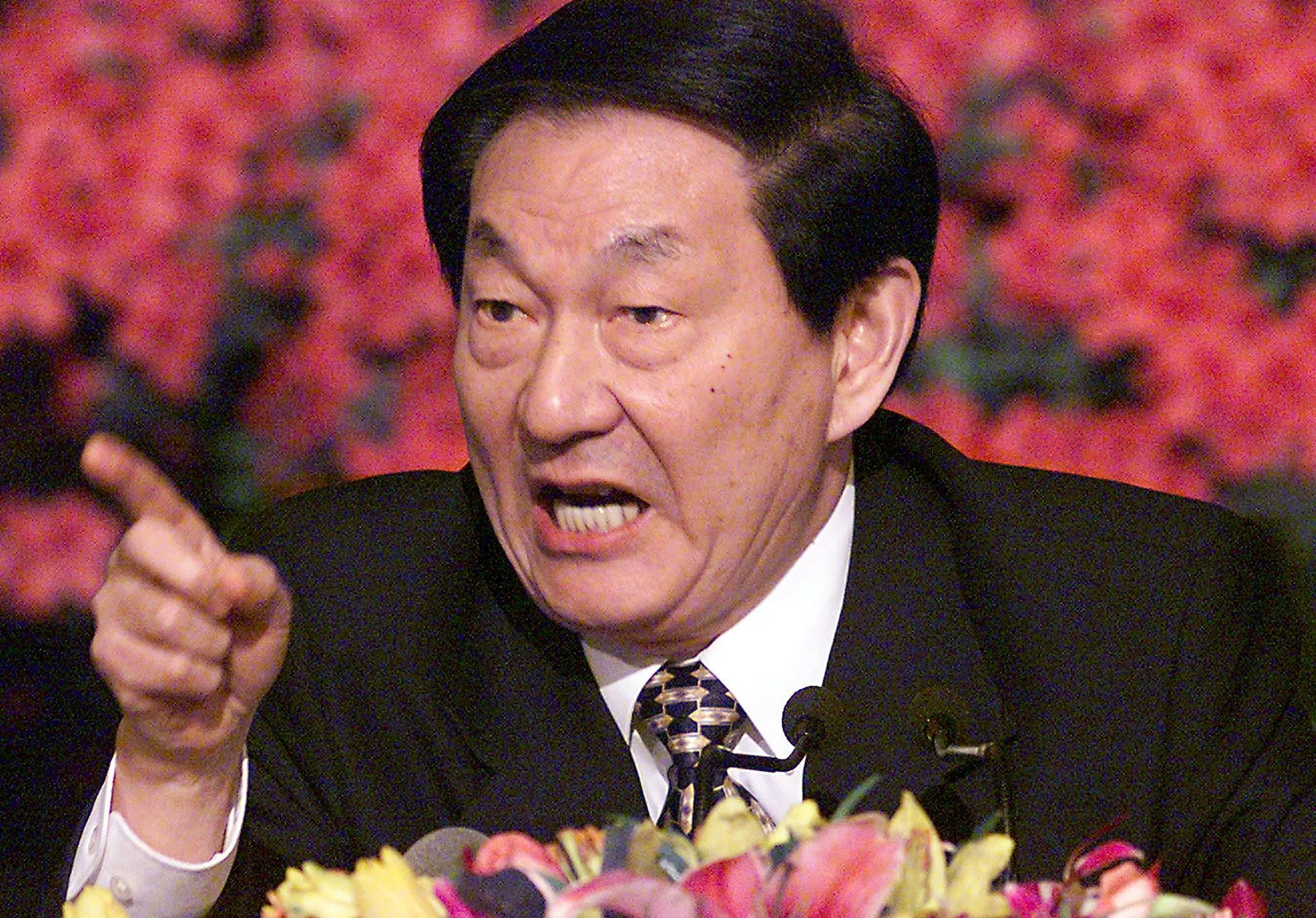
Chinese Premier Zhu Rongji responds to a journalist's question during a press conference after the closing session of the National People's Congress, on 15 March 2000, in Beijing.
Chinese Premier Zhu Rongji responds to a journalist’s question during a press conference after the closing session of the National People’s Congress, on 15 March 2000, in Beijing. (Stephen Shaver/AFP)

(Edited and refined by Grace Chong, with the assistance of AI translation.)

Former Chinese Premier Zhu Rongji died from illness in Beijing on 12 August. As the principal architect of China’s transition from a planned economy to a socialist market economy in the 1990s, Zhu was known for his forceful style, outspokenness and ability to get things done. Economic reform became the defining political legacy of his tenure.

China set the goal of establishing a socialist market economy in the early 1990s. In 1991, Zhu moved from his post as Shanghai party secretary to become a vice-premier of the State Council. The following year, he joined the Politburo Standing Committee of the Chinese Communist Party (CCP). In 1993, he also became governor of the People’s Bank of China, and in 1998 he was appointed premier of the State Council.

Faced with an overheating economy and high inflation, Zhu pushed for macroeconomic controls and a clean-up of the financial system, helping China achieve a “soft landing”. The 1994 tax-sharing reform reallocated revenue between the central and local governments and established separate tax authorities for the two levels of government. This significantly strengthened the central government’s fiscal position and its capacity for macroeconomic control. To win support from local governments, Zhu travelled to 17 provinces, autonomous regions, municipalities and cities with independent planning status in just 74 days, coordinating the reform proposals one by one.

In the financial sector, he strengthened the central bank’s macroeconomic management system, separated policy-oriented finance from commercial finance, and pushed specialised banks to become commercial banks. During the Asian financial crisis in 1997, China maintained a stable renminbi exchange rate.

After becoming premier, Zhu pushed ahead with state-owned enterprise (SOE) reforms through measures including mergers, bankruptcies, worker lay-offs and redeployment, workforce reductions and efficiency improvements, and debt-to-equity swaps. At the end of 2000, the Chinese government announced that the three-year goal of reforming large and medium-sized SOEs and helping them overcome their difficulties had been largely achieved. The following year, China joined the World Trade Organization, further integrating its economy into global markets.

Professor Kou Chien-wen, a distinguished professor in the Department of Political Science and the Graduate Institute of East Asian Studies at National Chengchi University in Taiwan, told Lianhe Zaobao that to understand Zhu’s historical role, it is necessary to start with the political backdrop to the “Huangfu Ping” (皇甫平) articles in 1991 and Deng Xiaoping’s Southern Tour in 1992.

A man uses his smartphone next to a giant screen on a shopping mall broadcasting a portrait of former Chinese Premier Zhu Rongji who passed away on 12 August, in Beijing, China, on 12 August 2026.
A man uses his smartphone next to a giant screen on a shopping mall broadcasting a portrait of former Chinese Premier Zhu Rongji who passed away on 12 August, in Beijing, China, on 12 August 2026. (Maxim Shemetov/Reuters)

Following the 1989 political turmoil, there was intense debate within the CCP over reformist and conservative approaches. In spring 1991, the Liberation Daily, the official newspaper of the Shanghai Municipal Committee, published four commentaries under the pen name “Huangfu Ping”, calling for the resumption of reform and opening up.

Zhou Ruijin, then party secretary of the Liberation Daily, later disclosed that the articles were published under Zhu’s leadership and with his support. Phrases such as “1991 is the year of reform” and “The only way to resolve our worries is through reform” came from remarks Zhu made at meetings with Shanghai cadres. Zhou was the planner and principal writer of the “Huangfu Ping” series.

After Deng’s Southern Tour, the market-oriented direction gained the upper hand within the CCP, Kou said. The work of turning the shift from a planned economy to a market economy into concrete institutional reforms, he said, “was in fact all carried out under Zhu Rongji”. His role was irreplaceable.

The reforms, however, came with enormous social costs. In 2001, reflecting on the impact of the Asian financial crisis, Zhu said that about ten million SOE workers had been laid off at the time. His 2003 government work report showed that since 1998, more than 27 million SOE workers had been laid off, of whom more than 18 million had found new jobs.

The large-scale layoffs broke the “iron rice bowl” enjoyed by a generation of workers, becoming an unavoidable part of any assessment of Zhu’s reforms. His determination to push through sweeping reforms despite the pressure also shaped his distinctive public image.

He became known as an “iron-fisted premier” (铁腕总理) and an “iron-blooded chancellor” (铁血宰相), while Western media at times dubbed him the “economic tsar”.

China's former Premier Zhu Rongji (right), sitting next to his successor Wen Jiabao, acknowledges delegates' applause as he arrives at a session of the National People's Congress, in Beijing, on 16 March 2003.
China’s former Premier Zhu Rongji (right), sitting next to his successor Wen Jiabao, acknowledges delegates’ applause as he arrives at a session of the National People’s Congress, in Beijing, on 16 March 2003. (Andrew Wong/Reuters)

Kou said the label “economic tsar” should not be taken to mean that Zhu could make decisions independently of the CCP’s top leadership. He still needed the support of Jiang Zemin, then general secretary of the CCP. Nevertheless, compared with today, premiers during the Jiang-Zhu period and later the Hu Jintao-Wen Jiabao period had considerably more room to make decisions on economic and social policy.

But as China underwent a market-oriented transformation and rapid economic growth, issues including income inequality, social security and wealth distribution gradually emerged during Hu Jintao’s tenure.

Over the past decade or more, Beijing has sought to address the “after-effects of unbalanced development”, Kou said, placing greater emphasis on equality and narrowing the wealth gap while imposing tighter constraints on private capital. The international environment has also changed. With developments such as growing China-US competition, economic policy must now take greater account of national security and the broader international landscape.

Beyond economic reform, Zhu’s hardline statements on Taiwan were among the most widely remembered moments of his political career.

On 15 March 2000, three days before Taiwan’s presidential election, Zhu responded to a question from a Lianhe Zaobao reporter at a press conference for the National People’s Congress. He directly addressed Taiwan’s voters, warning, “Anyone who seeks Taiwan independence will not come to a good end”, and reiterated that Beijing would never promise to renounce the use of force. His remarks drew considerable attention both in China and abroad.

Kou said the remarks reflected the anxiety and warning within the CCP’s top leadership at the time, as Taiwan faced the possibility of its first change of ruling party and the Democratic Progressive Party potentially coming to power.

But that did not mean Zhu himself had set Beijing’s policy towards Taiwan, Kou said. “On cross-strait issues, he was an executor. He was implementing decisions made by the central leadership.”

This article was first published in Lianhe Zaobao as “铁腕推动中国经济向市场化转型 朱镕基留下鲜明政治遗产”.

Related: Zhu Rongji: A legacy of transforming China’s economy and forging relations with ASEAN | Jiang Zemin who deepened China’s reform and opening up dies at age 96


Source link

Related Posts

Economics

News flash: We live in a mixed economy | Froma Harrop – The Bristol Herald Courier

August 13, 2026
Economics

Will the housing market crash in 2026? Here’s what we know

August 13, 2026
Economics

Tunisia in macroeconomic improvement amid social crisis | APAnews

August 13, 2026
Economics

News flash: We live in a mixed economy | Froma Harrop – ravallirepublic.com

August 13, 2026
Economics

FROMA HARROP: News flash: We live in a mixed economy | Opinion

August 13, 2026
Economics

The economics of winning elections

August 13, 2026
Add A Comment
Leave A Reply Cancel Reply

Editors Picks

iShares Overseas Government Bond Index: August 2026 fund update

August 13, 2026

GSR Shifts Portfolio Toward Solana, Trims Bitcoin and Ethereum Weights

August 13, 2026

Where should a 70 year old invest the savings from supperannuation fund via SWP for best monthly returns? Vineet Nanda of SIFT capital recommends some mutual funds for the same. Sonal Bhutra #RetirementPlanning #SWP #MutualFunds #RetirementInc – LinkedIn

August 13, 2026

News flash: We live in a mixed economy | Froma Harrop – The Bristol Herald Courier

August 13, 2026
SUBSCRIBE TO OUR NEWSLETTER

Get our latest downloads and information first. Complete the form below to subscribe to our weekly newsletter.


I consent to being contacted via telephone and/or email and I consent to my data being stored in accordance with European GDPR regulations and agree to the terms of use and privacy policy.

Featured

BC.GAME Updates $BC White Paper, Revealing New Details on Token Utility and Burn Mechanism – PA Media

May 31, 2026

Global funds attract investors amid AI turbulence – AMWatch

July 30, 2026

TPG (TPG) Slid Due to the Market’s Overreaction – Insider Monkey

April 23, 2026
Monthly Featured

Nine homes near Waltham refused on the grounds of being in the open countryside

April 8, 2026

Froma Harrop: News flash: We live in a mixed economy

August 11, 2026

Meliuz SA (BSP:CASH3) (Q2 2026) Earnings Call Highlights: Record EBITDA and Strategic Bitcoin …

August 8, 2026
Latest Posts

iShares Overseas Government Bond Index: August 2026 fund update

August 13, 2026

GSR Shifts Portfolio Toward Solana, Trims Bitcoin and Ethereum Weights

August 13, 2026

Where should a 70 year old invest the savings from supperannuation fund via SWP for best monthly returns? Vineet Nanda of SIFT capital recommends some mutual funds for the same. Sonal Bhutra #RetirementPlanning #SWP #MutualFunds #RetirementInc – LinkedIn

August 13, 2026
SUBSCRIBE TO OUR NEWSLETTER

Get our latest downloads and information first. Complete the form below to subscribe to our weekly newsletter.


I consent to being contacted via telephone and/or email and I consent to my data being stored in accordance with European GDPR regulations and agree to the terms of use and privacy policy.

© 2026 Aspire Market Guides.
  • Contact us
  • Privacy Policy
  • Terms and Conditions

Type above and press Enter to search. Press Esc to cancel.

SUBSCRIBE TO OUR NEWSLETTER

Get our latest downloads and information first.

Complete the form below to subscribe to our weekly newsletter.


I consent to being contacted via telephone and/or email and I consent to my data being stored in accordance with European GDPR regulations and agree to the terms of use and privacy policy.