
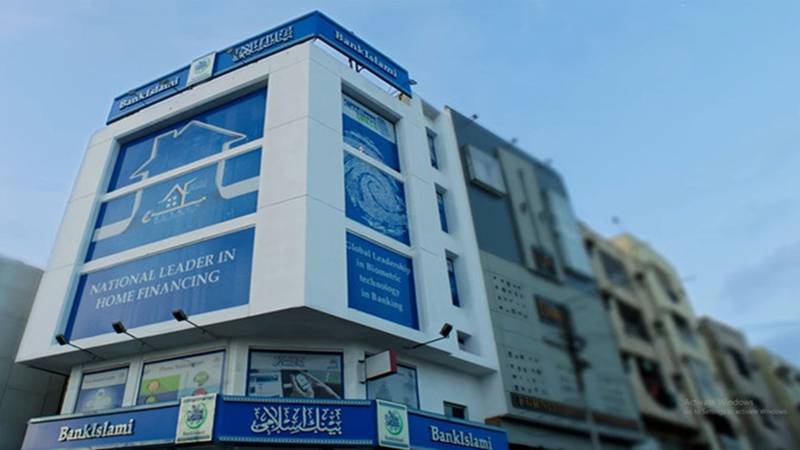
Based on the works of Javed Ahmad Ghamidi, Dr Shehzad Saleem has written several articles on the economic law of Islam. He argues that Islam has provided broad directives instead of an economic system that appends Islamic terminology to capitalism. Several Islamic economists concede that Islamic banking is based on riba (interest).
Saleem argues that “interest-free banking” is an oxymoron based on the analogy that running a bank without interest is like resuscitating a human being after cutting his jugular vein.
Contrary to the textbook economics idea that banks collect deposits to loan out, they create money out of thin air at zero cost. Modern Monetary Theory (MMT) has already shown that, and Islamic economists like Asad Zaman agree.
Banks can always borrow at a lower cost from the central bank and loan out at a higher interest. This means they always profit with easy money. They have no skin in the game, be it for speculation in real estate or the stock market. The capitalist system is inherently prone to financial crises.
The brothers Zaman (Arshad and Asad) have argued that the powerful retain the interest-based system, as they profit from creating dependence. Saleem references an analogy from Sheikh Mahmood Ahmad that foreign aid is like pushing drugs: it creates dependence, and the price (interest) extracted goes up. He makes an interesting observation that mental servitude arises with such dependence (economic slavery).
Banks collect money from many small depositors but loan out to a few large capitalists, translating economic power into political power—a concentration of wealth that Islam outright condemns
Despite other differences, Shehzad Saleem and Asad Zaman agree that banking leads to the concentration of wealth. This is because banks collect money from many small depositors but loan out to a few large capitalists. The economic power of the latter translates into political power. No wonder Islam condemns the concentration of wealth and instead advocates its circulation.
Both agree on the idea that the banking system restricts credit to those with collateral. Many capable projects from brilliant young minds go unfunded as the funds are channelled towards rich capitalists.
Both also agree that riba is not confined to personal loans. Saleem references Amin Ahsan Islahi, stating that loans in 7th-century Arabia were for commercial purposes, as going to a professional moneylender brought shame on the tribe. Thus, Saleem argues that whilst we are rightfully moved by the exploitation of the indebted through interest, we also need to look at the systemic exploitation through the interest-based system.
There is some difference of opinion on Ghamidi and Saleem’s argument that zakat is the only tax imposed by the Islamic government to support the public interest (welfare state). The late Umar Chapra, one of the most prominent names in modern Islamic economics, stood for the imposition of other taxes.
Asad Zaman views the role of the government as secondary and instead emphasises the role of the community in providing social services. He highlights the role of awqaf (endowments or trusts) in this regard and contrasts them as institutions of public cooperation with banks as institutions of private accumulation.
Ghamidi and Saleem’s opinion on taxes has merit considering the abuse of tax power by the modern government. This has precedent in Islamic history, as Ibn Khaldun and other scholars also pushed back at the encroachment of the Caliphs. Both then and now, the issues of transparency and public accountability remain.
Islamic economics is notorious for heavy disagreement amongst its advocates, especially as there is no consensus on the very definition of the subject. Zaman provides a list of 30 different definitions.
There is criticism that Islamic economics ought to address contemporary economic issues instead of peddling in identity politics (à la Timur Kuran). Salman Ahmed Shaikh critiques that juristic differences create loopholes for zakat. There is already an admission that ruses are used for interest.
Shaikh argues that labour is exploited in several Muslim countries and little trade occurs amongst Islamic countries. Both conditions do not bode well for an Islamic economic union. So much for the ummah (community).
Overall, despite its various criticisms, Islamic economics remains one viable heterodox alternative to mainstream capitalist economics, alongside approaches that support decolonisation, MMT, and degrowth.
If anything, it condemns the concentration of wealth, calls to treat resources as amanah (trust), bans the oppressive interest-based system, rejects israf (extravagance) and tabzir (waste), and teaches against both covetousness and obscene display.
If all it does is shift the focus from rampant consumerism to simple living, values, and morality, then it has done its part in curbing the major ills of our time—financial crises, ecological imbalance, and inequality.