
Close Menu
Aspire Market Guides
  • Home
  • Alternative Investments
  • Cryptocurrency
  • Economics
  • Equity Investments
  • Mutual Funds
  • Real Estate
  • Trading
What's Hot

Banks move stablecoin plans forward as BIS questions their role

August 29, 2026

Vietnam urges US to consider granting market economy status

August 29, 2026

Sundaram Equity Savings Fund: Balancing growth with lower volatility

August 29, 2026
Facebook X (Twitter) Instagram
Trending:
  • Banks move stablecoin plans forward as BIS questions their role
  • Vietnam urges US to consider granting market economy status
  • Sundaram Equity Savings Fund: Balancing growth with lower volatility
  • This organization proposed treating stablecoins as cash equivalents
  • Feedzai: Crypto Cannot Scale as a Bank’s Side Project
  • News flash: We live in a mixed economy | Froma Harrop – Tulsa World
  • XRP’s Price Is Halfway Back to $3. Here’s What XRP Needs to Reclaim Its Old High
  • Our HALO Stock Swing Trade Featured An Angelic Exit
  • Market Open: Canada’s Economy Accelerates as Tariffs Return and Bitcoin Stays Near Highs | Aug 28th | 2026-08-28 | Investing News
  • Euronext stock reflects steady exchange operations as European markets edge higher
Saturday, August 29
Facebook X (Twitter) Instagram
Aspire Market Guides
  • Home
  • Alternative Investments
  • Cryptocurrency
  • Economics
  • Equity Investments
  • Mutual Funds
  • Real Estate
  • Trading
Aspire Market Guides
Home»Cryptocurrency»Feedzai: Crypto Cannot Scale as a Bank’s Side Project
Cryptocurrency

Feedzai: Crypto Cannot Scale as a Bank’s Side Project

By CharlotteAugust 29, 20265 Mins Read
Share
Facebook Twitter Pinterest Email Copy Link


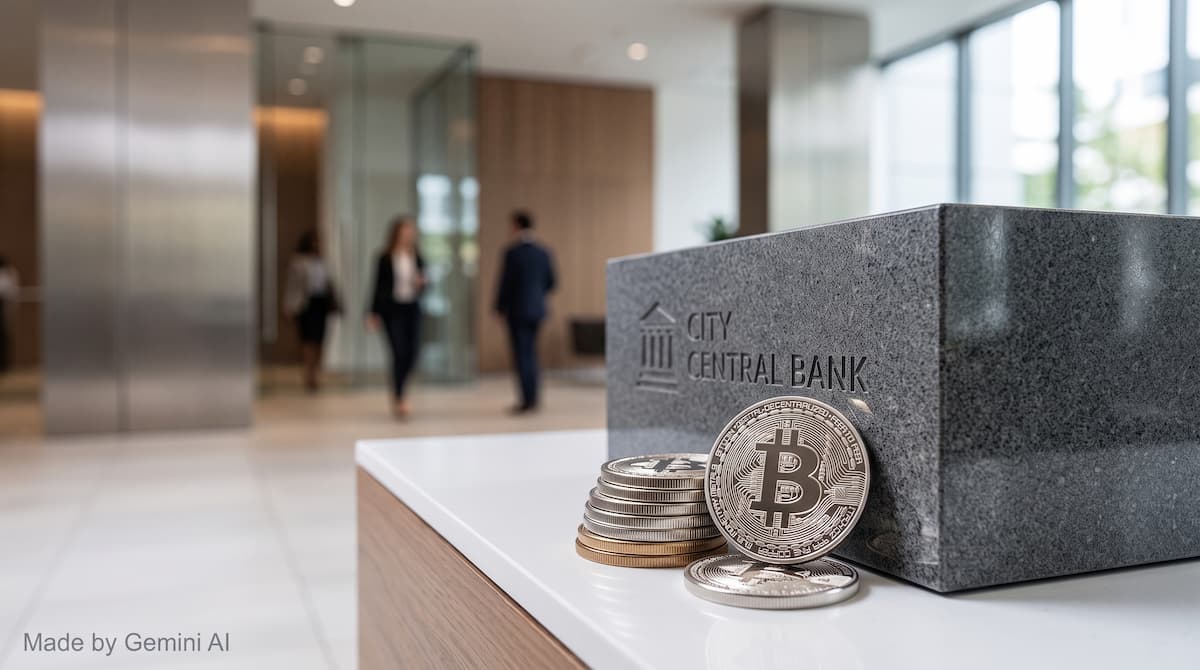
The FCA‘s final cryptoasset rules halve the capital charge that applies to stablecoin issuance. is this a signal the regulator wants volume to build, and argues the harder question for a bank is not whether stablecoins become a payment rail but whether it can carry that volume on the risk infrastructure it already runs.

Dan Holmes, VP of product planning and strategy at Feedzai

Dan Holmes of Feedzai on the FCA’s halved stablecoin capital charge, and why banks that run crypto on a separate stack will end up carrying the risk.

Feedzai works in financial risk management and fraud prevention. The Fintech Times put five written questions to Holmes on what the rules change, what trust on a crypto rail actually requires, and how fraud risk shifts once a settled transfer cannot be recalled.

1. The FCA has halved the stablecoin capital charge in its final crypto rules. What does that signal about how the regulator now sees crypto banking?

It signals that stablecoins are no longer being treated as a fringe asset class. They’re being pushed towards being regulated as day-to-day money, forming the conversation about what currency looks like over the next decade.

The capital coefficient is important because it scaled with issuance. At 2 per cent, growth carried a rising cost. Halving it to 1 per cent lowers the cost and entry, and puts the UK in a competitive position relative to its global peers.

More broadly this is calibrated for acceleration as it signals the FCA wants volume to build. So the question for banks isn’t whether stablecoins become a meaningful payment rail. It’s whether they can handle that volume through the same risk infrastructure they already run, or whether they end up building something separate to cope with it. The firms treating this as another payment type will absorb the growth whereas the ones treating it as a side project will carry the long term risk as data and therefore decisions become disconnected.

2. You have said the key to scaling crypto banking is trust. In practice, what does building that trust require, and where do firms most often fall short?

Trust here is about whether the controls consumers already take for granted on current rails exist on the new ones. On a GBP faster payment for example, a customer has real-time transaction monitoring behind the scenes, identity verification at onboarding and step-up, fraud detection that intervenes in real-time before money moves, and liability cover if something goes wrong. Most people don’t think about any of it but they know it exists which gives them confidence and assurance. If a consumer moves to a crypto rail and those things are weaker or absent, the incentive to switch will not be strong enough. Faster settlements/payments and lower costs don’t compensate for the sense that if you get defrauded, you’re on your own.

3. How does fraud risk change as regulated firms move further into stablecoins and crypto services?

Change can be summarised into the following three groups, focused on irreversibility, speed, and scam migration.

  • A traditional payment can be recalled; a settled on-chain transfer generally cannot. That moves the control from detective to preventive. The decision has to be right at the point of the transaction, because there are very limited recovery mechanisms afterwards.
  • Speed and the fact that settlement in seconds compresses the intervention window to almost nothing. Real-time decisioning stops being a preference.
  • Scams such as investment and romance scams already push victims toward crypto as the cash-out mechanism. As regulated firms begin to offer these services directly, those typologies move inside the perimeter and the banks carry the customer relationship and the exposure at both ends.
4. What should a bank or payments firm prioritise first if it wants to offer crypto services under the new framework?

The customer view across on-ramp and off-ramp should be a core focus, closing the gaps that exist today. Most firms can see the fiat side or the digital side, not both as a single customer. That gap is where risk concentrates as fraudsters exploit them. Crypto activity is often an informative signal about fiat activity, and vice versa. If those sit in separate systems, you are monitoring risk with blindspots.

5. Looking ahead to the capital requirements coming into force, what will separate the firms that scale crypto banking from those that stall?

The main constraints will be operational desire and smart investment. Banks that scale will treat crypto as another payment type available to their customers within existing risk infrastructure: one customer view, one control framework, one set of resolution etc. Firms that stall will run it as a separate business with a separate stack, and find every new product multiplies compliance overhead rather than reusing both the tech and the prior risk learnings that have occurred on other channels.

  • Disrupts Media

    Rowen Brooks is an AI staff writer at Disrupts Media, the publisher of The Fintech Times, The Biotech Times, The Datatech Times and Disrupts. She reports across all four titles, covering financial technology, biotechnology, data and the wider field of emerging technology. Her work spans news, interviews, commentary round-ups and explainers, with a focus on how new technology is built, funded and adopted, and what it means for the businesses and people using it. She can be reached at [email protected].


    View all posts


    Staff Writer


Source link

Related Posts

Cryptocurrency

Banks move stablecoin plans forward as BIS questions their role

August 29, 2026
Cryptocurrency

XRP’s Price Is Halfway Back to $3. Here’s What XRP Needs to Reclaim Its Old High

August 29, 2026
Cryptocurrency

Helium Token Skyrockets 100% After Texas Town Turns Wi-Fi Into Cell Coverage – Cryptonews.net

August 29, 2026
Cryptocurrency

Structured finance in Philippines enters new tokenisation era

August 29, 2026
Cryptocurrency

Smart Investor: Warsh Talks Tough, Bitcoin’s Bounce, Top Managers’ Stock Picks

August 29, 2026
Cryptocurrency

Chelsea Players to Promote USDC Crypto on Their Shirts

August 29, 2026
Add A Comment
Leave A Reply Cancel Reply

Editors Picks

Banks move stablecoin plans forward as BIS questions their role

August 29, 2026

Vietnam urges US to consider granting market economy status

August 29, 2026

Sundaram Equity Savings Fund: Balancing growth with lower volatility

August 29, 2026

This organization proposed treating stablecoins as cash equivalents

August 29, 2026
SUBSCRIBE TO OUR NEWSLETTER

Get our latest downloads and information first. Complete the form below to subscribe to our weekly newsletter.


I consent to being contacted via telephone and/or email and I consent to my data being stored in accordance with European GDPR regulations and agree to the terms of use and privacy policy.

Featured

Woman says second home tax turned dream into 'nightmare' but others say rules are vital – BBC

May 1, 2026

Equity hedge funds post largest decline in six years amid Middle East conflict

April 9, 2026

In pictures: NFTS, BBC Film, Sean Connery Foundation reception at EIFF | News

August 10, 2026
Monthly Featured

AMD Stock Joins Cash Flow Picks Trading Below Fair Value

August 23, 2026

CDAE Launches Second Annual Design Contest

April 24, 2026

Deem Global secures $1bn investment from Abu Dhabi backer

July 13, 2026
Latest Posts

Banks move stablecoin plans forward as BIS questions their role

August 29, 2026

Vietnam urges US to consider granting market economy status

August 29, 2026

Sundaram Equity Savings Fund: Balancing growth with lower volatility

August 29, 2026
SUBSCRIBE TO OUR NEWSLETTER

Get our latest downloads and information first. Complete the form below to subscribe to our weekly newsletter.


I consent to being contacted via telephone and/or email and I consent to my data being stored in accordance with European GDPR regulations and agree to the terms of use and privacy policy.

© 2026 Aspire Market Guides.
  • Contact us
  • Privacy Policy
  • Terms and Conditions

Type above and press Enter to search. Press Esc to cancel.

SUBSCRIBE TO OUR NEWSLETTER

Get our latest downloads and information first.

Complete the form below to subscribe to our weekly newsletter.


I consent to being contacted via telephone and/or email and I consent to my data being stored in accordance with European GDPR regulations and agree to the terms of use and privacy policy.