
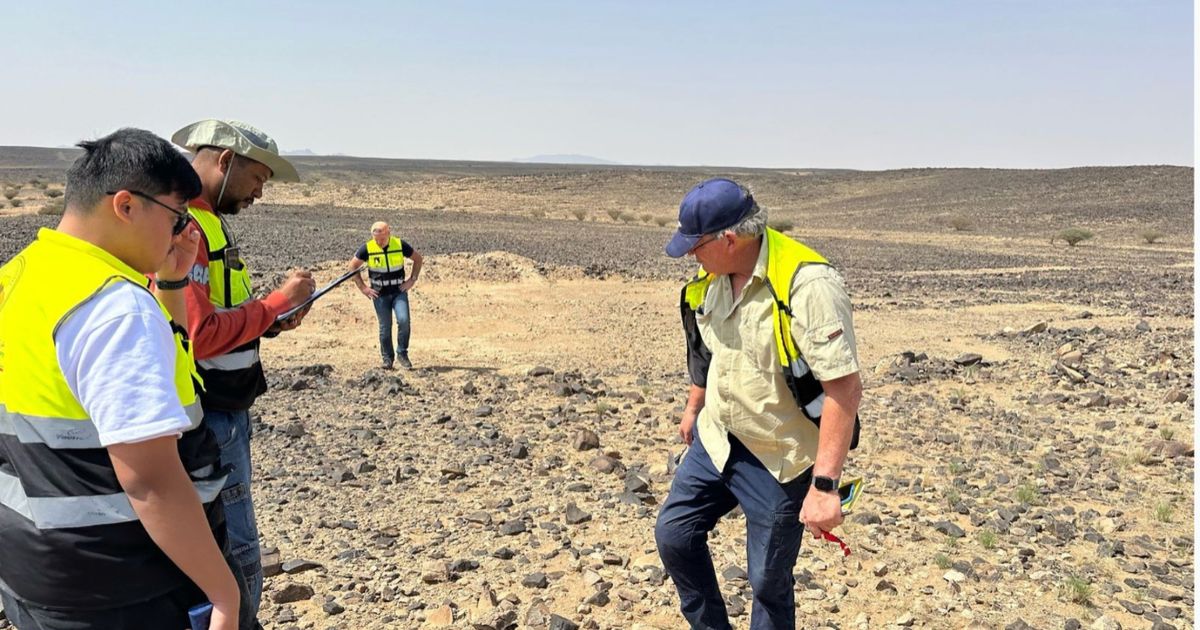
Resource Minerals International Ltd (ASX:RMI) has outlined large-scale magnetic anomalies and structurally controlled targets at its Wadi Salamah project in Saudi Arabia following completion of a detailed ground magnetic survey, strengthening the case for a significant multi-commodity mineral system.
The survey, which totalled 1,010 line-kilometres across a ~100 square kilometre project area, represents the first systematic geophysical program undertaken at Wadi Salamah and has provided a framework for drill targeting across both copper-molybdenum and gold systems.
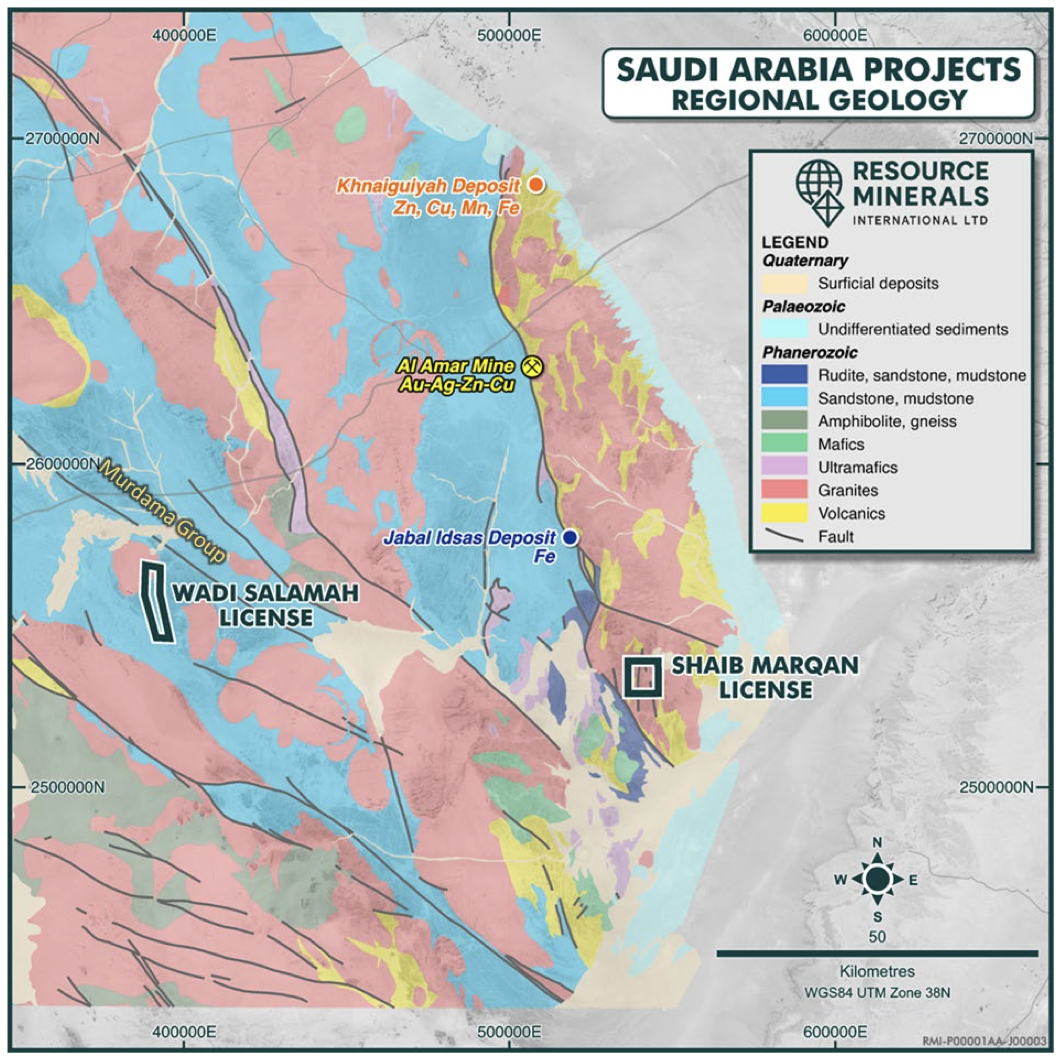
1:1 million scale regional geology Wadi Salamah and Wadi Salamah license areas.
Large intrusive system indicated
Key to the results is the identification of two deep-seated magnetic anomalies (H1 and H2) in the northern sector, covering around 16 square kilometres. These features are interpreted as large intrusive bodies, potentially representing the source of a porphyry-style copper-molybdenum system.
“The magnetic data from Wadi Salamah is exceptional. The scale of the H1 and H2 anomalies over a 16km2 area suggests we are looking at a very large magmatic system. When you combine this scale with the high-grade gold samples already recovered from the southern structures, Wadi Salamah presents another highly compelling exploration asset in Saudi Arabia that we intend to aggressively explore,” executive chairman Asimwe Kabunga said.
From an exploration standpoint, the scale of these anomalies is significant. Large magnetic signatures of this nature are commonly associated with intrusive complexes capable of hosting Tier-1 porphyry deposits, particularly where favourable contact zones and structural pathways are present.
RMI has defined the Z1 target over these anomalies, where contact zones between intrusive bodies and surrounding rocks are considered highly prospective for polymetallic mineralisation. The company also noted that fault structures, particularly F5, may act as hydrothermal conduits linking mineralised zones and enhancing the potential for copper and molybdenum deposition.
Structural controls highlight gold potential
Beyond the northern porphyry targets, the survey has significantly improved understanding of the project’s structural architecture, with six major fault systems identified across the licence area.
This has direct implications for gold exploration in the southern sector, where mineralisation appears structurally controlled. Two priority zones, Z2 and Z3, have been outlined within this framework.
Z2 is defined by a well-developed fault network (F1–F3), where exploration will focus on identifying concealed mineralised bodies at depth. Meanwhile, Z3 is supported by previous surface sampling, which returned grades of up to 10.66 grams per ton (g/t) gold and 13.95 g/t silver over a 700-metre strike, indicating the presence of high-grade mineralisation at surface.
Although magnetic signatures in Z3 are subdued, the alignment of mineralisation with fracture zones, combined with historical workings and mapped structures, suggests the system remains open and potentially extensive.
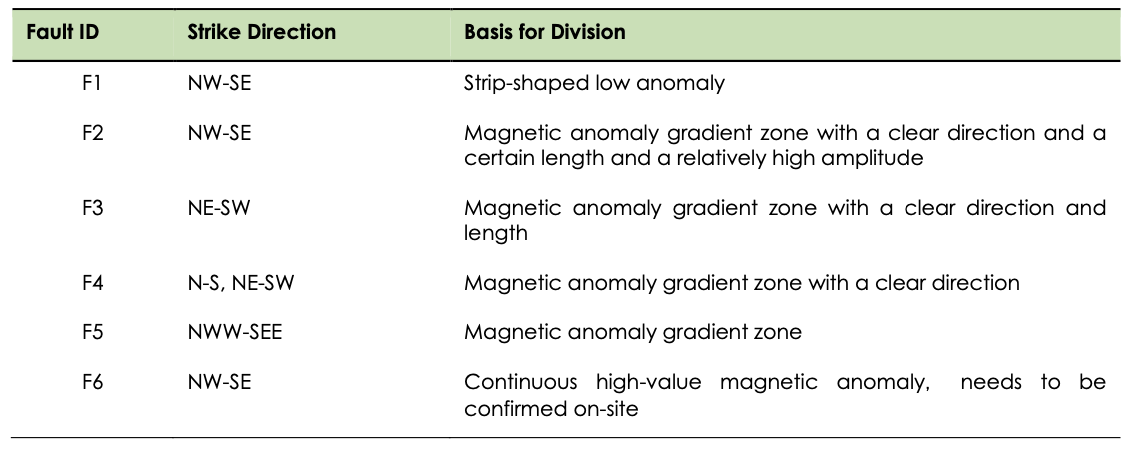
Main Structures in Wadi Salamah (based on magnetic survey results).
Survey sharpens drill focus
Importantly, the magnetic survey has shifted Wadi Salamah from an early-stage exploration asset with scattered surface results to a project with defined, geophysically supported drill targets.
The company has outlined three priority zones (Z1–Z3) for follow-up and is progressing plans for a 5,000-metre diamond and reverse circulation drilling program aimed at testing both the depth extent of gold mineralisation and the core of the copper-molybdenum system.
The results point to the potential for multiple mineralisation styles within the project area, with a large intrusive-driven porphyry system in the north and structurally controlled gold-silver mineralisation in the south.