
The sale of the Strawberry Hill collection in 1842 is, if you work in an auction house such as Christie’s or Sotheby’s, referred to with alarming frequency. It is one of the few Great Collection sales with a fame that has reached far beyond auction-house insiders. Others of this kind include the Stowe sale in 1848 and the sale of William Beckford’s collection from Fonthill Abbey in 1823. They are held in such high esteem because of the quality of the collections that were broken up during these auctions.
Horace Walpole (1717–97) assembled a collection of over 4,000 items, including antiquities such as a head of the Emperor Nero that had been excavated in Pompeii, outstanding majolica and paintings by Raphael and Reynolds. The collection was the work of a self-declared antiquary, gathered to fill what he called his ‘caprice’ of a house, Strawberry Hill. Yet not everything within this wide-ranging and expertly assembled collection was antique or even particularly old.
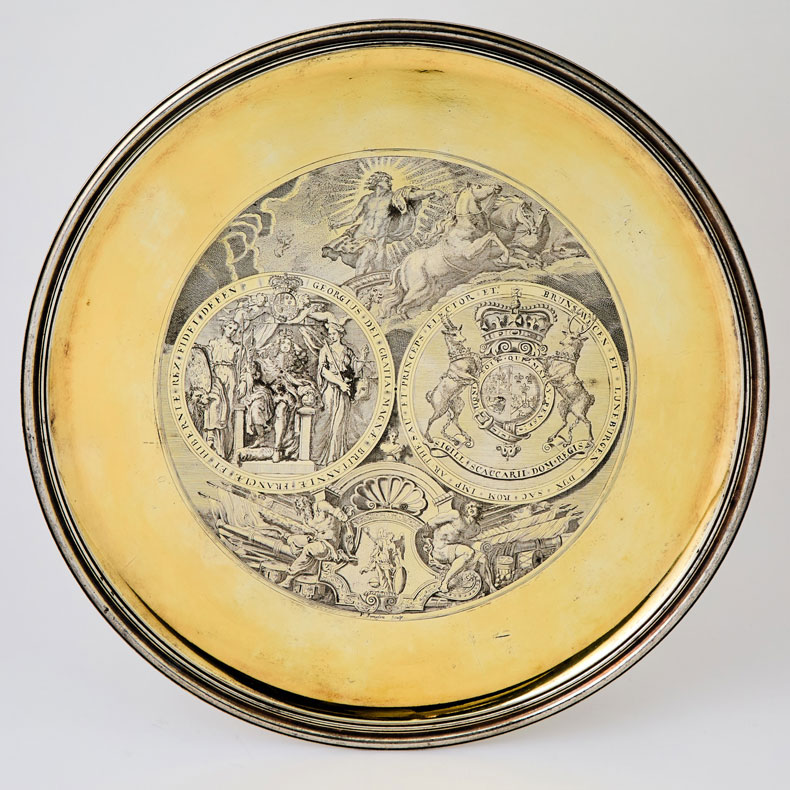
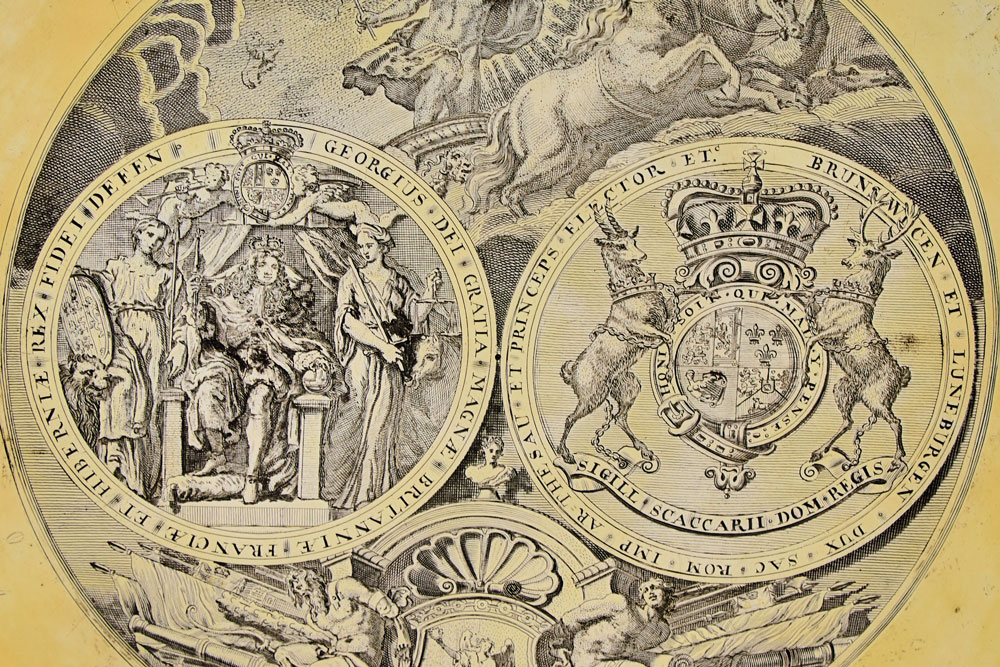
The youngest son of Sir Robert Walpole, Horace inherited both his father’s title and, as the silver salver that is coming up for sale at Doyle in New York on 13 May makes apparent, many of his father’s possessions; he was obsessed with his family history. Robert Walpole is often regarded as the first prime minister of England. He was instrumental in shaping the court and politics of the country under the rule of both George I and George II. While his youngest is remembered for building follies and Strawberry Hill, Sir Robert’s tastes were, in some ways, more patrician. In 1722 he commissioned one of the wonders of Georgian architecture, Houghton Hall. Walpole enjoyed luxury even as he was keen to keep an eye on costs. It was said that when he hosted a dinner the train of carriages bringing foods and ice to the house from London formed an unbroken chain. Houghton was one of the first two houses in England to use mahogany in the interiors, though Walpole removed the tax on the material while the house was being built in order to save money.
One of the perks of a Crown office-holder in the 18th century, in a tradition dating back 200 years, was that, when an official seal became obsolete, the silver matrices of that seal were broken up or defaced and returned to the office-holder. The holder would frequently use that matrix to fashion a silver salver, since the flat plate was the perfect surface on which to display the seal.
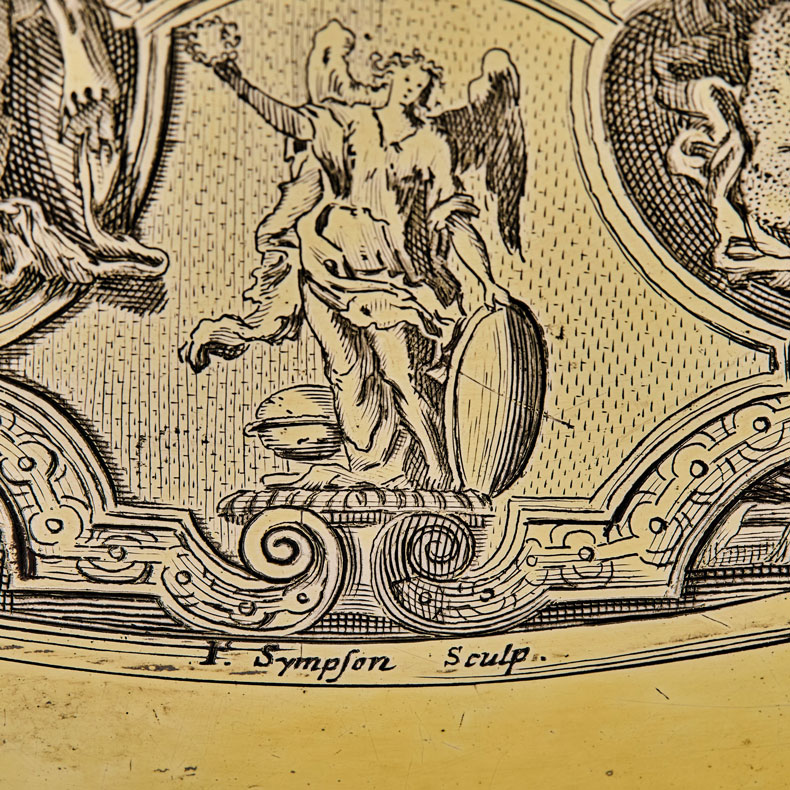
This salver, in the form of a tazza, was made from the seal of Walpole’s first period as First Lord of the Treasury and Chancellor of the Exchequer in 1715–17. The tazza is recorded only in an ink impression in the British Museum, which also sold during the Strawberry Hill sale. It was made by silver smith William Lukin and engraved by Joseph Sympson. Its sibling salver, made from the seal of Walpole’s second sitting as First Lord of the Treasury, was acquired by the Victoria and Albert Museum in 1956. It could be the finest example of silver by Paul de Lamarie (1688–1751) in the museum; the engraving is attributed to William Hogarth. The first salver was bought by the Earl of Derby in the Strawberry Hill sale and stayed in the family until the 1940s when it was sold to a private collector and disappeared from view. Its appearance in New York is being offered up as a rediscovery of a magnificent piece of silver smithery and a commemoration of a family that changed the culture of Britain, both politically and aesthetically.