
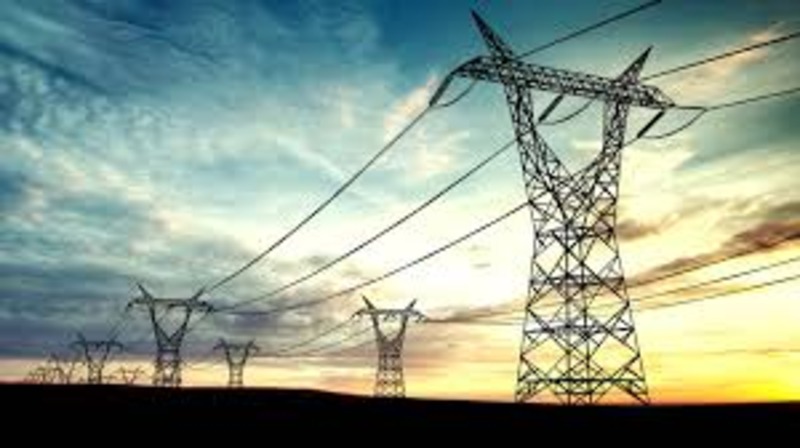
Nigeria has enough installed generation to power a mid-sized country. Yet most of it never reaches the grid. The financing model that built Africa’s infrastructure over the last two decades was not designed for this moment. Here is what needs to change and why the window is narrowing.
In the first article of this series, I argued that the global power industry is undergoing a structural shift driven by artificial intelligence. The rise of AI is not only increasing electricity demand; it is reshaping supply chains, OEM priorities, maintenance economics, and ultimately, access to reliable power infrastructure itself.
But if that analysis is correct, an equally important question follows: Who will finance Africa’s response and how? The AI economy is not simply creating new demand for electricity. It is creating new demand for speed, resilience, localisation, and operational capability. And the financing structures that built much of Africa’s infrastructure over the last two decades were not designed for this world.
That is the deeper issue now coming into view. The traditional model, large standalone projects, sovereign guarantees, imported technology, long development cycles, and dependence on external expertise, supply chains, and foreign companies to maintain critical infrastructure, is beginning to strain. Not because it failed. But because the world around it changed. The following is a discussion of how the new imperatives are reshaping the financing conversation and what Africa must do differently.
One of the least discussed consequences of the AI revolution is that it is compressing infrastructure timelines everywhere. Demand that might have emerged gradually over ten years is now appearing in two or three. Capital allocation decisions are accelerating. Supply chains are reprioritising in real time. Countries and companies able to move quickly are securing access to equipment, technical capability, and long-term service arrangements. Those moving slowly are increasingly left to compete for what remains.
This matters enormously for Africa because infrastructure finance traditionally moves slowly. Projects often take years to structure, negotiate, guarantee, and close. By the time financing is fully arranged, market conditions may already have shifted. In a stable world, that delay was manageable. In the current environment, it is becoming a strategic disadvantage. The AI age rewards countries that can mobilise capital quickly, coordinate industrial strategy, and build capability in parallel not sequentially. That changes the financing conversation completely.
For years, Africa’s power infrastructure debate has focused primarily on one question: how to finance more generation capacity. That remains important. But it is no longer sufficient. The new power economy requires investment across a much wider ecosystem: transmission modernisation, distribution resilience, maintenance infrastructure, localised supply chains, technical training, digital operational systems, spare-parts manufacturing, and AI-enabled diagnostics. Africa does not only need more megawatts. It needs the local capability to sustain them.
This distinction is critical because many of these investments do not fit neatly into traditional project-finance models. A gas-fired power plant may be bankable. A regional turbine repair ecosystem or an AI-enabled maintenance platform is harder to structure, even if its long-term strategic importance may ultimately be just as high. That financing gap is becoming increasingly visible and increasingly urgent.
There is a common assumption in infrastructure discussions that Africa’s challenge is simply a shortage of capital. That is no longer entirely accurate. Global liquidity exists. Institutional investors around the world continue searching for long-duration infrastructure exposure. Pension funds, sovereign funds, private credit platforms, and strategic investors all have capital to deploy. The problem is not the absence of capital. The problem is that capital rarely enters markets dominated by fragmentation and uncertainty at scale.
What Africa increasingly needs is catalytic capital, patient, strategic capital that moves early, reduces uncertainty, organises fragmented markets, and creates the conditions that larger pools of private investment require before committing. Catalytic capital does not replace private capital. It makes large-scale private investment possible. Financing a localised maintenance ecosystem or a technical capability platform requires a fundamentally different risk appetite than financing an independent power plant with a guaranteed off-take agreement. That is precisely why catalytic capital matters now and why the institutions designed to deploy it are becoming so important.
The Infrastructure Corporation of Nigeria (InfraCorp) was established to play exactly this role in Nigeria’s infrastructure landscape. As Nigeria’s dedicated infrastructure investment platform, InfraCorp operates at the intersection of national strategic necessity and commercial bankability, the gap that too often goes unfilled. Its mandate goes beyond financing individual projects. It includes coordinating long-term infrastructure priorities, crowding in private institutional capital, structuring local-currency financing vehicles, and building the conditions under which larger pools of long-term capital feel confident enough to participate at scale. In practical terms, what InfraCorp is attempting to demonstrate is that infrastructure need not be organised as a series of isolated, high-risk transactions. With the right structuring, the right risk allocation, and the right institutional anchoring, it can be organised as an investable system, one where private capital participates not despite the complexity, but because the complexity has been managed on its behalf.
Periods of structural transition rarely organise themselves efficiently. Markets alone do not automatically build the ecosystems of capabilities, suppliers, skills, and supporting industries that infrastructure needs to remain functional, particularly in emerging economies. This is where catalytic institutions become decisive. Not because governments should dominate infrastructure markets. But because fragmented systems rarely move fast enough during periods of major technological change. What InfraCorp brings to that environment is the ability to hold a long-term view, absorb early-stage risk, and create the pathway that larger private capital follows.
In Part Two of this series, I will show what this looks like in practice — in Nigeria’s transmission gap, in the new financing philosophy emerging from its regulatory framework, and in the deeper question of whether African capital will finally begin to build the continent’s own infrastructure at the scale and speed this moment demands.
Dr Lazarus Angbazo is Managing Director/CEO of InfraCorp, Nigeria’s dedicated infrastructure investment platform focused on capital mobilisation, private institutional investment, and local capability development across critical infrastructure sectors. He also serves as non-executive chairman of Emerald Industrial Co., bringing practical operating experience across Nigeria’s power, oil & gas, and industrial sectors.

