
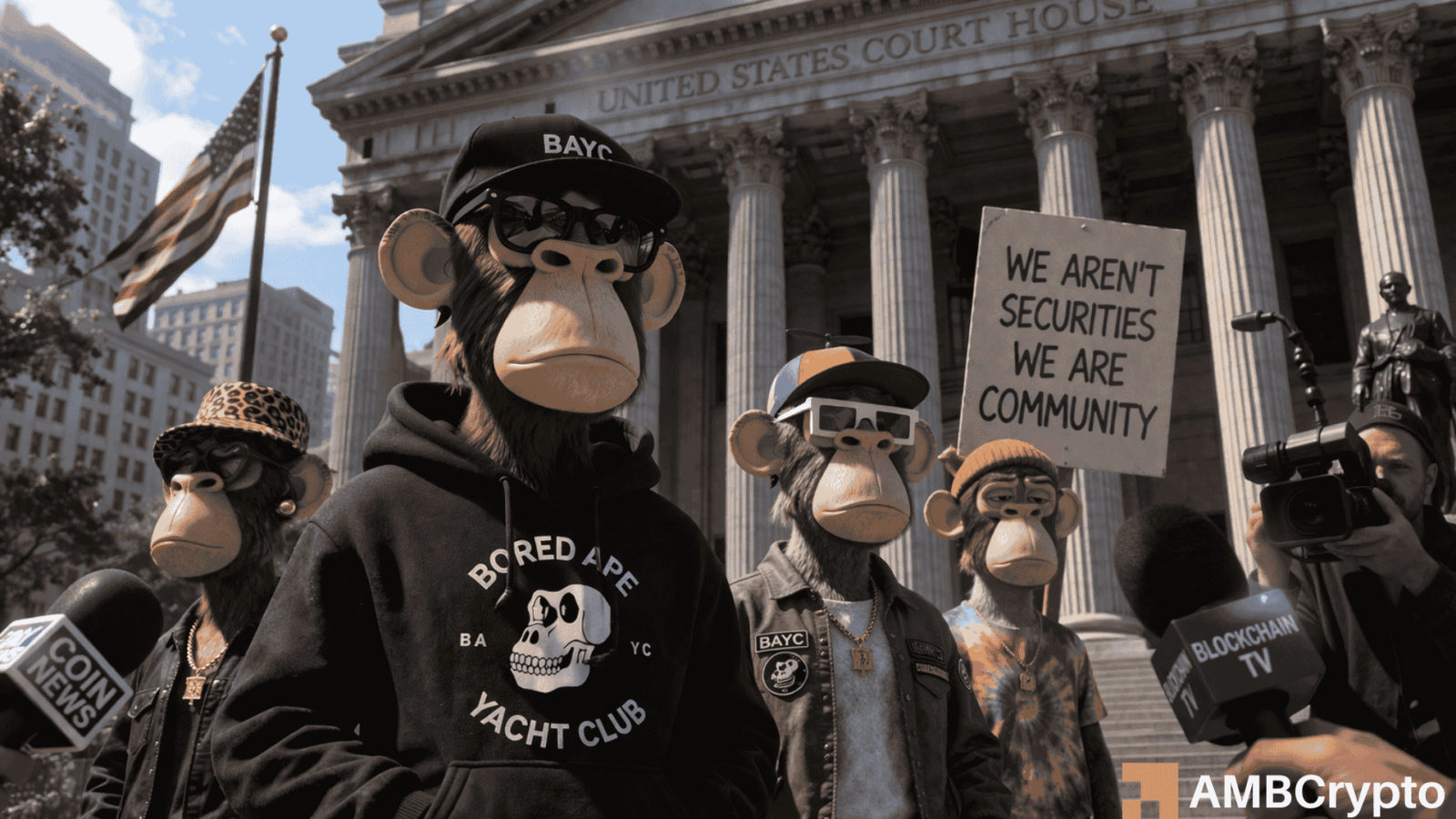
Yuga Labs has reached a settlement with artists Ryder Ripps and Jeremy Cahen. It brings an end to a long-running legal dispute over the use of Bored Ape Yacht Club [BAYC] branding in rival NFT collections.
The agreement resolves a case that has been closely watched across the NFT industry, centered on whether derivative collections framed as artistic critique can use established NFT branding without violating trademark law.
Settlement imposes broad restrictions on BAYC usage
Court filings show the settlement includes a stipulated permanent injunction that places extensive limits on the defendants’ activities.
Under the terms, Ripps and Cahen are permanently barred from using BAYC-related trademarks, including names, logos, and associated branding, in connection with any goods or services.
This applies across NFTs, websites, social media accounts, and other digital or physical products.
The restrictions also extend to the RR/BAYC collection itself, prohibiting any further minting, marketing, sale, or promotion of the NFTs, as well as the collection of royalties tied to them.
RR/BAYC ecosystem effectively shut down
As part of the settlement, the defendants must transfer any remaining RR/BAYC NFTs, related domain names, and associated assets to Yuga Labs within a defined timeframe.
The agreement also grants Yuga Labs control over key infrastructure, including smart contracts, websites, and social media accounts linked to the collection.
In addition, the defendants are required to remove existing online content that references BAYC branding and certify compliance with the injunction.
Together, these measures effectively dismantle the RR/BAYC ecosystem and prevent any future activity tied to the project.
Case closes ahead of potential trial
The lawsuit, filed in 2022, accused the defendants of trademark infringement and cybersquatting after they launched the RR/BAYC collection, which reused imagery from the original BAYC NFTs.
The case had progressed through multiple legal stages, including an appeal that set the stage for a potential trial. However, both parties have now confirmed they have reached an agreement to resolve all claims.
Financial terms of the settlement were not disclosed.
What this means for NFTs and IP enforcement
While the case concludes without a final jury ruling, the outcome reinforces how intellectual property rights are being applied in the NFT space.
The scope of the injunction suggests that NFT collections can be treated as commercial goods subject to traditional trademark protections, even when deployed through decentralized infrastructure.
It also highlights the limits of using artistic or satirical framing when projects rely on recognizable branding that could create consumer confusion.
More broadly, the settlement demonstrates that courts are willing to recognize and enforce control over NFT-related infrastructure, including smart contracts and associated digital assets.
Final Summary
- The settlement imposes a sweeping ban on RR/BAYC NFTs, reinforcing trademark protections for established NFT brands.
- While not a definitive court ruling, the outcome signals stronger enforcement of intellectual property rights across NFT ecosystems.