
In the first quarter of 2026, the U.S. government made one point unmistakable. Washington wants more data center capacity, more AI infrastructure, and more domestic power. But it no longer views these projects as conventional commercial real estate.
Across the White House, DOE, FERC, EPA, EIA, and the federal permitting apparatus, data centers are now being treated as strategic infrastructure. That designation brings tangible support in the form of faster permitting, access to federal land, and a more explicit embrace of large-scale power development.
It also comes with conditions: stricter expectations around who funds transmission upgrades, who provides new generation, how water is managed, and how much operational data operators must disclose.
This is the new federal posture: accelerate the buildout, but impose discipline on its consequences. Washington is not pulling back in the face of local opposition. It is pushing forward, while making clear that the next phase of data center growth must carry its own infrastructure burden.
Who Will Pay?
The question is no longer whether the United States will support the next wave of hyperscale and AI campus construction. The question is under what terms, and whether utilities, communities, and ratepayers will be asked to subsidize it. The outcome of that debate will be set less by local politics than by the federal rules now taking shape.
The clearest signal came on March 4, when President Trump announced the “Ratepayer Protection Pledge.” Amazon, Google, Meta, Microsoft, OpenAI, Oracle, and xAI committed to “build, bring, or buy” new generation for their data centers and to fund the full cost of required grid and transmission upgrades. The administration also said those companies would coordinate with grid operators to provide backup generation in emergencies. The message was direct: data centers can grow, but the costs and reliability risks tied to that growth should not be shifted to households.
The pledge does more than name participants. It resets the federal compact around digital infrastructure. For years, data center expansion operated within a haze of policy ambiguity. Utilities pursued large loads as economic development wins. State and local governments chased tax base and jobs. The costs of generation and transmission were often absorbed into complex rate structures, largely invisible to the public.
The March 4 action cuts through that ambiguity. It ties data center growth directly to affordability politics and establishes a new expectation: if a project requires massive new power infrastructure, its developers are expected to pay for it.
The Emerging Federal Rulebook
That framing was reinforced on March 20, when the White House released its National Policy Framework for Artificial Intelligence: Legislative Recommendations. The document urges Congress to ensure that residential ratepayers do not see increased electricity costs from AI data center growth, while also calling for streamlined federal permitting so developers can build or procure on-site power.
That pairing is the point. Washington is not simply trying to contain costs. It is trying to accelerate the buildout of the energy infrastructure required to support AI. The model now taking shape is clear: faster deployment paired with stricter cost internalization.
In practical terms, that signals a change in how projects will be structured. Expect more dedicated generation, more co-located power, more take-or-pay agreements, more developer-funded transmission upgrades, and more explicit utility contracts designed to shield residential and small-business customers. The federal government is not mandating a single commercial model, but its directional preference is clear: if a project adds hundreds of megawatts of demand, it is expected to bring its own energy solution, or pay its way into the system.
From Policy to Platform: DOE’s Expanding Role
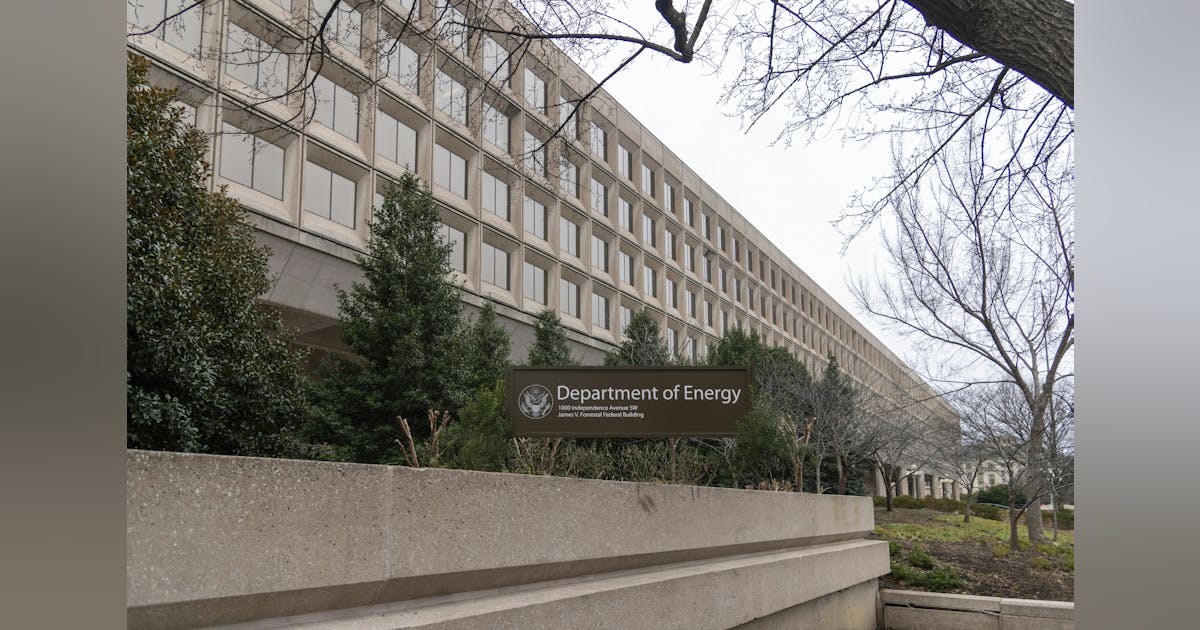
The Department of Energy is already moving to operationalize that model. In a recent request for information on AI infrastructure on DOE lands, the agency identified 16 potential federal sites suitable for rapid data center construction, with existing energy infrastructure and the ability to fast-track permitting for new generation, including nuclear. The target is to bring selected sites online by the end of 2027.
This is no incremental siting policy. It is a federal effort to assemble a portfolio of AI-ready industrial campuses: locations where data centers and energy infrastructure can be co-developed under a more centralized permitting and land-control regime than most private projects can achieve.
The implications are significant. This strategy directly addresses several of the largest barriers to new development: site assembly, permitting uncertainty, energy availability, and interconnection timelines. It also creates a mechanism for shaping how next-generation campuses are built, including their integration with nuclear, natural gas, transmission, and other forms of firm generation. The Department of Energy is no longer acting solely as a regulator or research body; it is emerging as a platform provider for AI infrastructure.
DOE’s recent actions in Ohio offer a concrete preview. In an April fact sheet, the agency outlined the Portsmouth project in Pike County, where SB Energy and SoftBank Group are planning 10 gigawatts of data center capacity backed by 10 gigawatts of new generation, including at least 9.2 gigawatts of natural gas. The project also includes $4.2 billion in transmission infrastructure developed with AEP Ohio, with SB Energy committed to covering those costs rather than passing them on to ratepayers.
That example carries a broader policy signal. It shows how willing the federal government is to treat gas-fired generation as a primary solution when the objective is rapid deployment of very large AI loads. While industry rhetoric often emphasizes nuclear, renewables, or long-duration storage, DOE’s recent posture makes clear that timeline and reliability are now decisive factors. For developers and utilities, the message is direct. Federal support for AI infrastructure is not contingent on a purely low-carbon pathway: firm, scalable capacity delivered on schedule is the priority.
Rewiring Federal Permitting for AI Infrastructure
The federal permitting system is being refitted around this new priority. On April 2, the Permitting Council announced that QTS Richmond Technology Park Data Center 5 became the first data center project to receive FAST-41 coverage, linking the decision directly to the 2025 executive order on accelerating data center permitting.
FAST-41 does not eliminate environmental review or override statutory requirements. What it does is impose structure—coordinated agency timelines, greater transparency, and a defined path through a process that has historically been fragmented and unpredictable. For developers, especially those navigating wetlands, transmission corridors, Army Corps approvals, or other federal triggers, that clarity matters.
More importantly, the QTS designation establishes a precedent. Data centers are now being treated as nationally significant infrastructure projects, not just private developments that happen to require federal sign-off. That shift lowers timing risk for large campuses, particularly those pursuing co-located energy or major transmission interconnections.
The White House Council on Environmental Quality is reinforcing that effort. In April, CEQ introduced a “Permitting Innovators” program with NASA’s Center of Excellence for Collaborative Innovation and issued updated guidance on categorical exclusions, positioning them as a way to avoid unnecessary layers of environmental review where appropriate. These moves are not data center–specific, but the intent is clear: the administration is not just calling for faster permitting; it is reworking the machinery to deliver it.
FERC and the Next Set of Constraints
If permitting defines how quickly projects can move, FERC will define how—and whether—they connect.
On April 16, the Commission said it would act by June 2026 on its large-load interconnection proceeding, aimed at establishing clearer rules for integrating significant new electrical demand into the grid. The need is obvious. Data center-scale loads are straining an interconnection framework built for a different era. In response, FERC has already required PJM to formalize rules for large loads co-located with generation and approved SPP’s High Impact Large Load initiative.
This is where the hardest questions will be answered: when large loads can be served, who pays for the required upgrades, how co-location is treated, and what protections remain for existing customers. The White House may be setting the political framework, but FERC will define the enforceable rules. The Commission’s direction is becoming clear: faster integration of large loads, but under more transparent and disciplined cost allocation and reliability standards.
FERC is also tightening the operational backbone. Updated Critical Infrastructure Protection standards strengthen cybersecurity requirements for bulk power systems, particularly at the lower-impact tiers that have historically received less scrutiny.
As the grid becomes more entangled with ultra-large, digitally intensive loads, regulators are doing two things at once: making room for AI infrastructure while hardening the systems that support it. The result is a grid that is not just expanding to meet demand, but being restructured to manage it.
Data, Disclosure, and Federal Oversight
Another control mechanism is emerging through information policy. On March 25, the Energy Information Administration (EIA) launched three voluntary pilot studies on data center energy use in Texas, Washington state, and the Northern Virginia–Washington region. The surveys cover energy sources, electricity consumption, site characteristics, server metrics, and cooling systems.
On the surface, that may seem incremental next to White House pledges or DOE land strategies. It is not. It targets a critical federal blind spot: data center development has been scaling faster than public energy data systems can track it. Without better visibility, transmission planning, cost allocation, and environmental oversight are all operating with incomplete information.
That gap is already drawing political attention. In late March, Senators Elizabeth Warren and Josh Hawley called for mandatory reporting requirements, citing the implications of data center load growth for grid reliability, air quality, and electricity prices. By April 15, Warren’s office said EIA was moving toward a mandatory data center survey in response. Whether that mandate is formalized in the near term or not, the direction is clear—Washington wants a far more granular view of how these facilities consume power and how quickly demand is scaling.
Congressional activity reinforces that trajectory. On April 9, Representative Paul Tonko introduced the Power for the People Act, aimed at protecting grid reliability while ensuring that data centers—not ratepayers—fund the infrastructure required to serve them. Lawmakers on both sides of the aisle are pressing for greater transparency and stronger consumer protections. The result is not an anti–data center stance, but a tightening framework: large-load growth will be allowed, but it will not remain opaque or implicitly subsidized.
EPA’s posture reflects the same balance. In its FY 2027 Budget in Brief, the agency introduced an explicit objective—“Powering AI”—focused on encouraging data centers to use domestic energy sources and more efficient water reuse systems. The agency also signaled continued efforts to streamline permitting while promoting water-efficient technologies and infrastructure capable of supporting high-density AI workloads.
Taken together, these moves point to a federal government that is not just accelerating development, but insisting on visibility into its impacts. The next phase of data center growth will be measured more closely, reported more consistently, and evaluated against a clearer set of public-interest constraints.
Water Constraints and the Next Permitting Battleground
Water is emerging alongside power as a defining constraint on data center development. Many of the most contentious local disputes now center on water demand, wastewater management, and competition with municipal systems.
Federal signals suggest this is no longer a secondary issue. EPA’s posture indicates that water efficiency and reuse are becoming part of the implicit bargain for sustaining the AI buildout. Projects that combine high-density computing with lower-water cooling designs, reuse systems, or redevelopment of industrial sites are likely to face fewer obstacles as federal support frameworks evolve.
The Federal Bargain for AI Infrastructure
Taken together, the policy moves of early 2026 point to a new federal doctrine for data center development. Washington is accelerating the buildout of AI infrastructure by opening federal land, streamlining permitting, and supporting the power systems required to serve it. At the same time, it is imposing stricter expectations around cost allocation, operational transparency, and the management of power and water impacts.
For developers, this is a green light with conditions. For utilities, it is a clear signal that economic development alone will no longer justify socializing large-scale infrastructure upgrades.
For the market, the message is direct: the next phase of data center expansion will proceed under a more explicit federal contract: move fast, build at scale, but carry the full weight of the infrastructure required to support it.