
Close Menu
Aspire Market Guides
  • Home
  • Alternative Investments
  • Cryptocurrency
  • Economics
  • Equity Investments
  • Mutual Funds
  • Real Estate
  • Trading
What's Hot

Sebi lets mutual funds use intraday borrowing

July 11, 2026

Not a red flag: The market-economy disconnect – Chase Bank

July 11, 2026

Garlenix Reviews: Is Garlenix Trading Platform Worth Trying?

July 11, 2026
Facebook X (Twitter) Instagram
Trending:
  • Sebi lets mutual funds use intraday borrowing
  • Not a red flag: The market-economy disconnect – Chase Bank
  • Garlenix Reviews: Is Garlenix Trading Platform Worth Trying?
  • Belgium’s Golden Generation serves up Spain win ‘on a silver platter’
  • 5 Altcoins Stand to Gain From Tokenized Stocks, Grayscale Says – Cryptonews.net
  • Amazon Stock Leads 3 AI Infrastructure Picks In The Apple OpenAI Rift
  • IMF to assess BD macroeconomic situation, negotiate new credit prog
  • Mobile money frameworks are key to stablecoin r… – Pluang
  • Hedge Funds Edge Higher in June
  • Washington’s Growing Portfolio: Tracking U.S. Government Investments
Saturday, July 11
Facebook X (Twitter) Instagram
Aspire Market Guides
  • Home
  • Alternative Investments
  • Cryptocurrency
  • Economics
  • Equity Investments
  • Mutual Funds
  • Real Estate
  • Trading
Aspire Market Guides
Home»Alternative Investments»2026 World Cup Faces Elevated Cyber Risk Across Multi-Nation Infrastructure
Alternative Investments

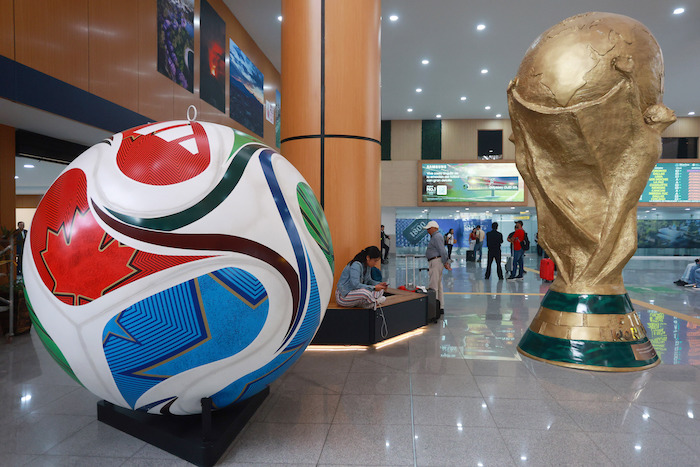
2026 World Cup Faces Elevated Cyber Risk Across Multi-Nation Infrastructure

By CharlotteMay 31, 20263 Mins Read
Share
Facebook Twitter Pinterest Email Copy Link


Unit 42 warns of likely state-linked disruptions, ransomware, and fraud targeting the tournament and multiple city systems

Palo Alto Networks’ Unit 42 warns that the 2026 FIFA World Cup will face a significantly expanded cyber threat landscape due to its unprecedented scale, distributed infrastructure and reliance on interconnected municipal and commercial systems across the United States, Mexico and Canada. 

The tournament will span 16 host cities and depend on layered digital and physical networks that include stadium operations, ticketing platforms, transport systems, energy grids, water utilities and emergency services – all of which are assessed as potential targets for disruption or exploitation.

The report assesses that disruptive cyber intrusions, ransomware operations and politically motivated DDoS and hack-and-leak activity are highly likely during the tournament window. It identifies a convergence of threat actors, including Iran-nexus groups targeting industrial control systems and municipal infrastructure, Russia-aligned hacktivist collectives conducting large-scale politically timed disruption campaigns, and financially motivated cybercriminal ecosystems focused on fraud, credential theft and hospitality-related attacks.

A central concern highlighted by Unit 42 is the reliance on existing city infrastructure temporarily adapted for tournament use, effectively creating a “multi-ring” environment in which stadium systems, vendor networks and host-city public services are tightly interdependent. This increases the risk that disruption in one layer could cascade into operational impact across others, particularly during high-attendance matches or globally broadcast events.

The report places the 2026 risk landscape within the context of repeated cyber campaigns against major sporting events over the past decade. Previous incidents include the 2016 Rio Olympics, where Russia-linked actors conducted DDoS activity and leaked anti-doping data; the 2018 Pyeongchang Winter Olympics, where the “Olympic Destroyer” wiper disrupted Wi-Fi, ticketing and broadcast systems; and the Tokyo 2020 Olympics, which saw hundreds of millions of intrusion attempts and sustained phishing campaigns. 

More recently, the 2022 FIFA World Cup in Qatar was accompanied by a large fraud ecosystem involving thousands of fake domains and compromised fan accounts, while the Paris 2024 Olympics recorded more than 140 cyber incidents, including intrusions, ransomware attempts and large-scale DDoS activity, though without disruption to competition.

Unit 42 notes that while no major sporting event in recent years has suffered full-scale cancellation or loss of competition integrity due to cyberattacks, the volume, sophistication and geopolitical alignment of threat actors has continued to increase. 

The report specifically highlights Iran-linked activity targeting operational technology environments and Russia-aligned hacktivist operations that leverage politically symbolic events to amplify disruption campaigns, alongside a mature cybercriminal market that consistently targets tourism, ticketing and hospitality systems at scale.

Against this backdrop, Unit 42 concludes that the 2026 World Cup will require sustained, cross-border coordination between public and private stakeholders, with particular emphasis on resilience of municipal infrastructure, protection of fan-facing digital services, and segmentation of operational systems to prevent cascading failures across host-city environments.


Source link

Related Posts

Alternative Investments

Belgium’s Golden Generation serves up Spain win ‘on a silver platter’

July 11, 2026
Alternative Investments

Amazon Stock Leads 3 AI Infrastructure Picks In The Apple OpenAI Rift

July 11, 2026
Alternative Investments

Hedge Funds Edge Higher in June

July 10, 2026
Alternative Investments

1,200-Year-Old Hoard of 59 Arab Silver Dirhams Found Near Kaliningrad, Russia

July 10, 2026
Alternative Investments

Why Private Equity is Flocking Toward Pro Sports Franchises

July 10, 2026
Alternative Investments

Get 20% Off This Fancy Rose Gold Handheld Fan and Mister (Because You’re Sweaty, Yet Chic)

July 10, 2026
Add A Comment
Leave A Reply Cancel Reply

Editors Picks

Sebi lets mutual funds use intraday borrowing

July 11, 2026

Not a red flag: The market-economy disconnect – Chase Bank

July 11, 2026

Garlenix Reviews: Is Garlenix Trading Platform Worth Trying?

July 11, 2026

Belgium’s Golden Generation serves up Spain win ‘on a silver platter’

July 11, 2026
SUBSCRIBE TO OUR NEWSLETTER

Get our latest downloads and information first. Complete the form below to subscribe to our weekly newsletter.


I consent to being contacted via telephone and/or email and I consent to my data being stored in accordance with European GDPR regulations and agree to the terms of use and privacy policy.

Featured

Why institutional investors are piling into private secondaries

May 1, 2026

Bored Ape Maker Yuga Labs Rescues Dozens of Ethereum NFTs From Exploit

June 9, 2026

Outdoor Recreation Infrastructure Scheme 2026 / 2027

July 6, 2026
Monthly Featured

Sun Life acquiring two specialized alternative investment managers

April 7, 2026

What Is the KDJ Stochastic Indicator and How Do Traders Use It in Real Trading?| KuCoin

April 13, 2026

Egypt economic outlook trimmed slightly due to Iran war: Reuters poll | The Mighty 790 KFGO

April 26, 2026
Latest Posts

Sebi lets mutual funds use intraday borrowing

July 11, 2026

Not a red flag: The market-economy disconnect – Chase Bank

July 11, 2026

Garlenix Reviews: Is Garlenix Trading Platform Worth Trying?

July 11, 2026
SUBSCRIBE TO OUR NEWSLETTER

Get our latest downloads and information first. Complete the form below to subscribe to our weekly newsletter.


I consent to being contacted via telephone and/or email and I consent to my data being stored in accordance with European GDPR regulations and agree to the terms of use and privacy policy.

© 2026 Aspire Market Guides.
  • Contact us
  • Privacy Policy
  • Terms and Conditions

Type above and press Enter to search. Press Esc to cancel.

SUBSCRIBE TO OUR NEWSLETTER

Get our latest downloads and information first.

Complete the form below to subscribe to our weekly newsletter.


I consent to being contacted via telephone and/or email and I consent to my data being stored in accordance with European GDPR regulations and agree to the terms of use and privacy policy.