
Share this article


If you have argued in favour of market-based solutions in some area of society which is under government control, you may have received objections along the lines of ‘I don’t believe the market can handle X’, ‘companies only look at the short term’ or ‘companies are motivated by greed and cannot be trusted to handle X’, where X might be healthcare, care for the elderly or the environment. Why is that?
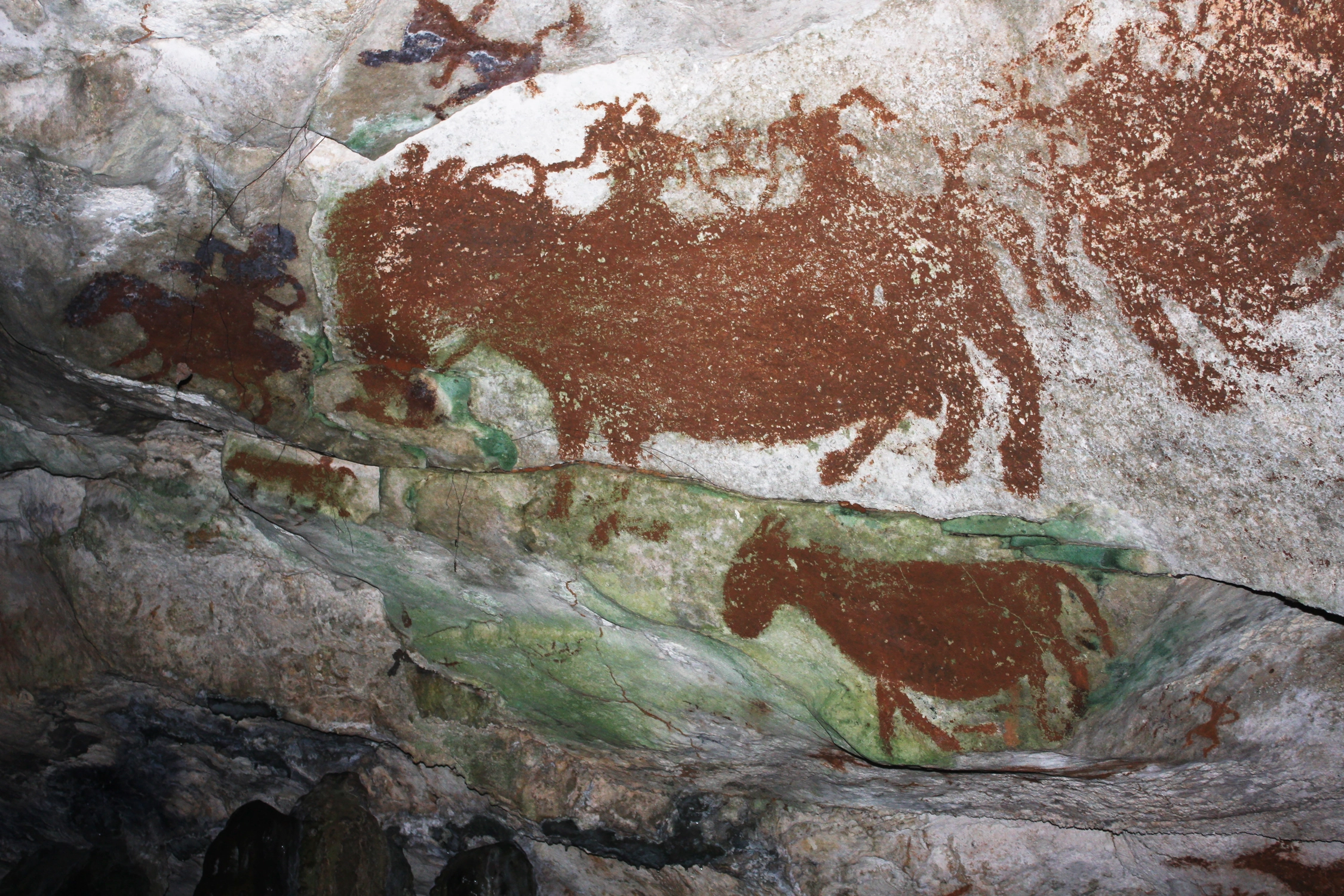
As I demonstrate in my essay ‘Evolutionary Economics’, based on my book ‘Evolution and Social Order’, at its heart, the reason is a fundamental mismatch between our hunter-gatherer brain and the market economy. Up until a relative blink of an eye, humans lived as hunter-gatherers for close to 2 million years, some 70,000–80,000 generations, successions of mothers and fathers, sons and daughters. For at least 150,000 years, our ancestors were exactly like us and lived in groups of 20–70, within tribes, whole countries, of about 500.
There is a fundamental mismatch between our hunter-gatherer brain and the market economy
There was a strict division of labour, where men hunted, while women mainly gathered, looked after children and cooked. Big-game hunting and gathering not only provided different sources of food, but they were also subject to two different rules for sharing. Big-game hunting is hit and miss in the most literal sense. Big games are large, high-variability resources, and in all hunter-gatherer tribes, they are shared equally, according to strict rules. Woe betides the successful hunter who keeps more than his predetermined share. He faces ostracism or worse. Gathered food is not subject to such variability, and no one, except certain kin, has any right to what a woman gathers.
In countries of some 500 people, there existed two kinds of social coordination. First, the intuitive ones between people who know each other. Secondly, in smaller and larger groups, we can also deliberately organise ourselves, using bureaucratic rules. Both modes of organisation, and particularly the first one, constitute our human micro-cosmos.
We no longer live as hunter-gatherers, and our societies now consist of tens of millions in a world with over 8 billion inhabitants. Within a market economy, there is a third kind of coordination, based on three rules that David Hume pointed out: secure property rights, that we may freely buy and sell products and services and that contracts are respected. With these three rules in place, we may interact with people whom we have never met, or even know exist, on the other side of the planet.
These three rules hold sway in our macro-cosmos and create what Adam Smith called a Great Society. Friedrich Hayek gave the self-organisation of the market and beyond the name the extended order.
The market is an example of a Complex Adaptive System (CAS), a complex system that can learn and adapt. Other examples of CASs are flocks of birds, schools of fish and anthills. There are no ant CEOs, ant managers or ant accountants. Nor is there an ant ‘hive mind’. There are just ants, walking about doing ‘ant things’, and the result is the ant hill.
This is where the hunter-gatherer brain and the workings of a free society collide. First, the Great Society ‘does not compute’ to the hunter-gatherer brain. Second, we have this innate rule that external high-variability resources should be shared equally. For such resources, as for big-game hunting, there is no causal link that can be identified between effort and reward. You may work 80 hours per week for years to start a business and fail, or you may work equally hard and have a runaway success. Or you may not work that hard, but even so, ‘strike oil’ and make it big, because you had some idea or noticed some opportunity. No one can determine ‘the merit’ of anyone in the Great Society.
Through cultural learning, we may learn and accept the appropriate behaviour in the market, and the way the economic game is played and acknowledge that the outcomes are based on a combination of skill and luck. Experience, as well as insight from authors such as Adam Smith, will also tell us that if we leave this chaotic thing, which is the market economy, to its own devices, incredible prosperity will be generated for society as a whole, but without anyone being able to predict individual outcomes. We may, therefore, mainly through culture, move away from our innate hunter-gatherer gut feelings towards that bourgeois culture that created our flourishing societies.
Others, such as students, journalists, politicians and academics, who are not participants in the market economy and who, as a result, lack the appropriate culture and insights, will instead obsess about Gini coefficients, high salaries, bonuses, windfall profits and the like, just like a group of hunter-gatherers obsesses about the equal sharing of a newly felled gnu.
Share this article