
Close Menu
Aspire Market Guides
  • Home
  • Alternative Investments
  • Cryptocurrency
  • Economics
  • Equity Investments
  • Mutual Funds
  • Real Estate
  • Trading
What's Hot

Multicoin unveils ‘significant’ zcash position as privacy trade returns

June 21, 2026

USDA Long-Term Meat Trade Projections: A Comprehensive Evaluation | Journal of Agricultural and Applied Economics

June 21, 2026

Private equity heats up: ACC backs patience, scale and staying power – BusinessDesk | NZ

June 21, 2026
Facebook X (Twitter) Instagram
Trending:
  • Multicoin unveils ‘significant’ zcash position as privacy trade returns
  • USDA Long-Term Meat Trade Projections: A Comprehensive Evaluation | Journal of Agricultural and Applied Economics
  • Private equity heats up: ACC backs patience, scale and staying power – BusinessDesk | NZ
  • Top Aggressive Hybrid Mutual Funds to Consider in June 2026: A Simple Guide for Steady Growth
  • New silver chariot worth Rs 3 crore donated to Sri Mookambika Temple in Karnataka's Kollur – Deccan Herald
  • Inside Alternatives | BlackRock Switzerland
  • Emerging technologies: The Philippine workforce in the human-machine hybrid economy
  • Ethereum Based Meme Coin Pepeto Surpasses $7,000,000 in
  • Think You Might Not Pay That Semiliquids Fee? You Will
  • Elon Musk Is the World’s First Trillionaire. Here’s Where His Wealth Is Stored.
Sunday, June 21
Facebook X (Twitter) Instagram
Aspire Market Guides
  • Home
  • Alternative Investments
  • Cryptocurrency
  • Economics
  • Equity Investments
  • Mutual Funds
  • Real Estate
  • Trading
Aspire Market Guides
Home»Economics»How macroeconomic orthodoxy is sabotaging youth employment
Economics

How macroeconomic orthodoxy is sabotaging youth employment

By CharlotteJune 21, 20267 Mins Read
Share
Facebook Twitter Pinterest Email Copy Link


As we commemorate Youth Month this June, the national discourse will inevitably overflow with political
platitudes about the leaders of tomorrow. Yet, beneath the ceremonial rhetoric lies a catastrophic structural
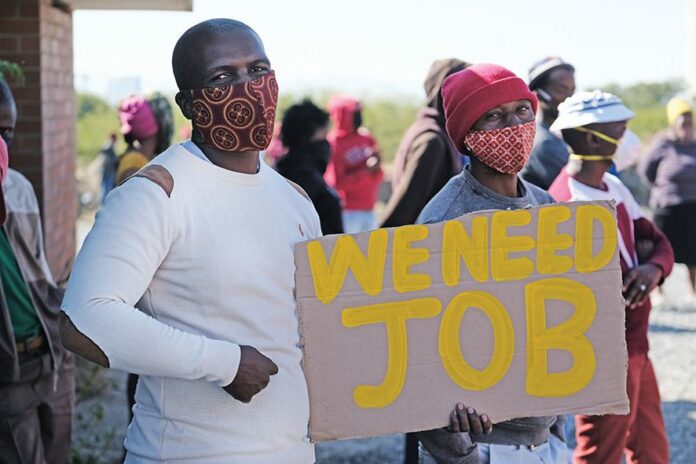
failure, the economic exclusion of a generation. Youth unemployment in South Africa is not merely a social
crisis; it is a profound macroeconomic failure.

Employment creation is fundamentally a macroeconomic objective. It requires the state to actively deploy
both its fiscal and monetary arsenals to absorb labour force. Over the years, the government has attempted
to use fiscal policy to tackle this crisis, for example, routinely pointing to corporate tax incentives such as the
Employment Tax Incentive (ETI) as its flagship solution.

Yet, by the state’s own quiet admissions and a glaring lack of supportive data, the ETI in its current form has
fundamentally failed to achieve its objectives. Instead of creating new, sustainable jobs, it has largely served
as a deadweight subsidy (drained over R 45-billion of fiscus over 10-yrs), rewarding corporations for hiring
young people they would have employed anyway. This failure highlights a deeper, more systemic pathology
within our state apparatus, a chronic lack of empirical evidence guiding crucial policy decisions.

This unscientific approach to macroeconomic policymaking becomes painfully obvious when we look at the
state’s contradictory treatment of programmes that actually work. While pouring billions into failed,
unproven corporate tax incentives, the state simultaneously implemented aggressive austerity measures,
effectively halving the budget for proven Public Employment Programmes (PEPs).

To slash funding for programmes that provide immediate, verifiable livelihoods while maintaining failed fiscal incentives reveals
a state operating on rigid ideological orthodoxy rather than data-driven logic.

The policy confusion deepens when we look at monetary policy, which remains the ultimate elephant in the
room. For far too long, the state has allowed the Monetary Authority to sacrifice critical macroeconomic
objectives, such as employment, growth, and structural equality, on the altar of strict price stability.

By deploying blunt, aggressive interest rate hikes to fight imported inflation, monetary authority actively destroys domestic
demand and stifle the private sector expansion necessary to absorb young workers.

Furthermore, the state infrastructure spending has failed to meet the NDP targets over the years. Theconstruction sector has historically been the most effective vehicle for mass labour absorption, uniquely
capable of taking in both skilled and unskilled youth. Slashing infrastructure budgets actively chokes off this
vital employment pipeline.

This macroeconomic paralysis brings a bizarre and tragic bureaucratic reality to the fore. Across all spheres
of government, communities suffer from collapsing service delivery. Yet, year in and year out, these exact
same failing departments and entities chronically under-spend their allocated budgets. We sit with a literal
army of unemployed, energetic, and capable young South Africans waiting to work, while funds meant for
service delivery are returned to the Treasury unspent.

National Youth Development Agency (NYDA) must be fundamentally reimagined. This phenomenon points to, in part, a catastrophic lack of national coordination. It is here that the NYDA must be fundamentally reimagined. The NYDA possesses a powerful, existing legislative and policy framework that could easily position it as the central, national coordinator for mass youth employment.
Instead of existing as an isolated agency, the NYDA should operate as a deployment hub.

It must map areas of the state where service delivery is failing and strategically deploy unemployed youth to plug those gaps.
How do we fund this? By actively redirecting the billions in chronically unspent departmental funds, as well
as the substantial, often fragmented capability building and training budgets that sit idle across various
government and its entities.

Orthodox critics frequently argue that mass public employment programmes (PEP) foster state dependency. This is
a neoliberal myth. Public employment does not create dependency; it creates public value and systemic
resilience. Beyond providing immediate livelihood support, a scaled-up PEP framework serves as a powerful
incubator for national capacity building. It provides young South Africans with much-needed, verifiable work
experience and technical skills, effectively bridging the gap between historical structural exclusion and formal
economic participation.

Simultaneously, by anchoring these young workers within localised public service networks, from
maintaining municipal infrastructure and digitizing state records to supporting clinics and schools, the state
can finally ensure the sustainable delivery of vital public services.

Rather than relying on expensive, erratic private consultants or hyper-inflated tender systems, deploying a coordinated youth workforce allows the state to rebuild its own internal capabilities in a fiscally sustainable, cost-effective manner. By actively
bringing youth into the productive economy, the state directly improves macroeconomic performance, it
stimulates domestic demand (growth), rapidly upskills the labour force through practical experience, and
narrows the chasm of spatial inequality.

We do not have to look far for global proof that active, coordinated state intervention can fundamentally
reverse a structural employment catastrophe. Spain provides an exceptional blueprint; through a deliberate,
multi-faceted strategy, the country successfully engineered a dramatic decrease in its unemployment rate
from a staggering peak of 27% in 2013 to 11.39% by 2024, falling even further to 10.29% by mid-2025.

This historic turnaround was not achieved via passive macroeconomic policy, but through a calculated
combination of structural labour market reforms that eliminated precarious temporary contracts, combined
with heavily funded, targeted youth initiatives like the Youth Guarantee Plus and public sector first
professional experience programs.

Crucially, Spain did not just give passive tax breaks to big business; it actively fostered youth entrepreneurship
through its state-owned company, ENISA, providing participatory loans based strictly on business plan
viability rather than demanding the personal collateral or guarantees that routinely shut out young people.
Spain’s success demonstrates that when the State acts as an innovator, structural coordinator, and direct
investor in human capital, mass youth unemployment can be systematically dismantled.

The way forward: A developmental action plan

To reverse this trajectory, we must stop treating youth unemployment as a standalone welfare issue and treat
it as the central target of our macroeconomic framework. The following steps are urgently required:
● Evidence-based fiscal reform: The state must subject its tax incentives, particularly the ETI, to rigorous
empirical audits. Funds wasted on underperforming corporate subsidies must be immediately redirected
toward proven, direct job-creation mechanisms.
● Realign macroeconomic mandates: We must abandon the overly passive macroeconomic approachesBoth fiscal and monetary policy must be constitutionally and practically aligned to mandate labour
absorption.
● Empower the NYDA as a National Coordinator: The NYDA must be granted the authority to
coordinate across departments and entities, transforming from an advisory body into a war room for
youth deployment into service-deficient areas, utilizing models like Spain’s demand-led vocational and
public bridging initiatives.
● Innovative SMME Financing (The ENISA Model): Establish a state-backed participatory loan facility
through the NYDA/SEFA that finances youth startups based on business viability rather than personal
asset guarantees.
● Ring-fence unspent funds for employment: Legislation should be amended so that chronically
unspent service delivery and capability-building budgets are automatically diverted to fund locally
managed, youth-driven public employment initiatives.
● Reverse austerity on infrastructure and PEPs: The Presidency must immediately restore and expand
the budgets for public employment programmes and capital infrastructure projects, recognizing them
based on empirical evidence as vital economic multipliers that build sustainable state capacity.

The youth of 1976 dismantled a political system that excluded them. The youth of 2026 are demanding the
dismantling of an orthodox macroeconomic system that locks them out of the economy. It is time the state’s
policies matched the empirical reality of our crisis


  • Prof Jantjies is a lead macroeconomic and fiscal analyst, professor of practice at the University of Johannesburg, and chairperson of the African Network of Parliamentary Budget Offices.


Visit SW YouTube Channel for our video content


Source link

Related Posts

Economics

USDA Long-Term Meat Trade Projections: A Comprehensive Evaluation | Journal of Agricultural and Applied Economics

June 21, 2026
Economics

Emerging technologies: The Philippine workforce in the human-machine hybrid economy

June 21, 2026
Economics

Fuel price shock: what policy responses reveal about resilience

June 21, 2026
Economics

Humans versus Chatbots: Scaling Up Behavioral Interventions to Reduce Teacher Shortages

June 21, 2026
Economics

Center for Experimental and Applied Economics embraces new leadership

June 21, 2026
Economics

Mixed Messages From the Fed Even as the Economy Runs Hot

June 21, 2026
Add A Comment
Leave A Reply Cancel Reply

Editors Picks

Multicoin unveils ‘significant’ zcash position as privacy trade returns

June 21, 2026

USDA Long-Term Meat Trade Projections: A Comprehensive Evaluation | Journal of Agricultural and Applied Economics

June 21, 2026

Private equity heats up: ACC backs patience, scale and staying power – BusinessDesk | NZ

June 21, 2026

Top Aggressive Hybrid Mutual Funds to Consider in June 2026: A Simple Guide for Steady Growth

June 21, 2026
SUBSCRIBE TO OUR NEWSLETTER

Get our latest downloads and information first. Complete the form below to subscribe to our weekly newsletter.


I consent to being contacted via telephone and/or email and I consent to my data being stored in accordance with European GDPR regulations and agree to the terms of use and privacy policy.

Featured

Why Aya Gold & Silver (TSX:AYA) Is Up 15.2% After Striking High-Grade Moroccan Silver Intercepts

June 3, 2026

Just keep mining for the silver lining – Kingsport Times News

April 11, 2026

Morgan Stanley’s Bitcoin ETF on track to pull in $7bn in year one, says Ric Edelman

April 10, 2026
Monthly Featured

NFTS: Inside one of the world’s most elite film schools

May 31, 2026

5 Measures to Stabilize the Rupiah, According to Analyst

June 5, 2026

How can I stay safe from gift card, cryptocurrency scams?

June 10, 2026
Latest Posts

Multicoin unveils ‘significant’ zcash position as privacy trade returns

June 21, 2026

USDA Long-Term Meat Trade Projections: A Comprehensive Evaluation | Journal of Agricultural and Applied Economics

June 21, 2026

Private equity heats up: ACC backs patience, scale and staying power – BusinessDesk | NZ

June 21, 2026
SUBSCRIBE TO OUR NEWSLETTER

Get our latest downloads and information first. Complete the form below to subscribe to our weekly newsletter.


I consent to being contacted via telephone and/or email and I consent to my data being stored in accordance with European GDPR regulations and agree to the terms of use and privacy policy.

© 2026 Aspire Market Guides.
  • Contact us
  • Privacy Policy
  • Terms and Conditions

Type above and press Enter to search. Press Esc to cancel.

SUBSCRIBE TO OUR NEWSLETTER

Get our latest downloads and information first.

Complete the form below to subscribe to our weekly newsletter.


I consent to being contacted via telephone and/or email and I consent to my data being stored in accordance with European GDPR regulations and agree to the terms of use and privacy policy.