
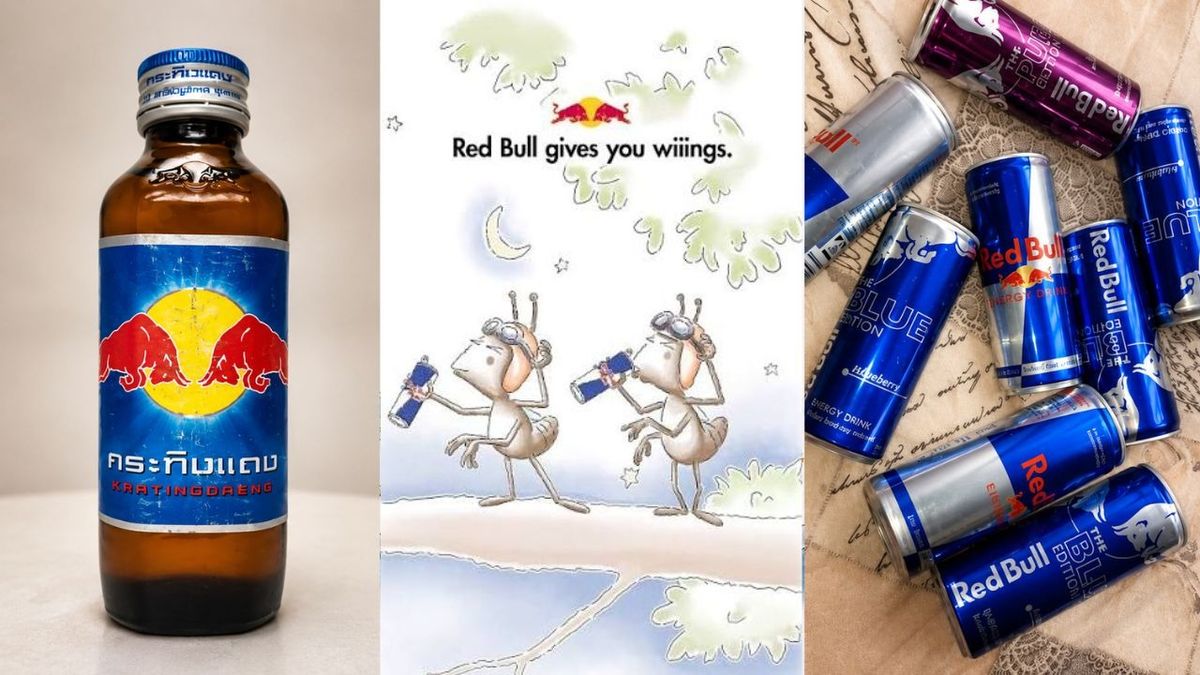
New Delhi: In 1984, Austrian marketer Dietrich Mateschitz was travelling in Thailand for work when he came across a local energy tonic called Krating Daeng. Popular among truck drivers and labourers, the drink was used to stay awake during long hours of work.
After trying it, Mateschitz immediately saw an opportunity. He believed the product could work outside Thailand, not just as a drink but as an entirely new category.
He partnered with the drink’s creator, licensed the formula and returned to Austria. There, he carbonated the beverage, packaged it in a slim silver-and-blue can and spent nearly three years and most of his savings preparing for launch.
Market researchers were unconvinced. They said the drink tasted too medicinal, the can was too small, and the price was too high.
Mateschitz launched it anyway in Austria in 1987. The drink was Red Bull.
Building a category that did not exist
At the time, there was no energy drink market in the West. Red Bull was not competing with existing brands. It was creating an entirely new category.
The company also refused to change the product to appeal to mainstream consumers.
The taste remained unusual, the cans were smaller than regular soft drinks, the price was significantly higher than that of competing beverages, and there were no health claims, celebrity endorsements or major television campaigns in the early years.
Instead, Red Bull focused on creating demand in specific communities.
The company distributed free cans at college campuses, nightclubs, ski resorts and late-night venues. The drinks were given to students studying overnight, DJs working until early morning, and athletes pushing physical limits.
The strategy created exclusivity, and consumers had to search for the product, making it feel more valuable when they found it.
By the early 1990s, Red Bull had built a strong reputation before establishing a large retail network.
Giving the brand a voice
During the 1990s, advertising agency Kastner & Partners created what would become one of the world’s most recognised marketing slogans: “Red Bull gives you wings.”
The slogan was not a claim about ingredients or performance. Instead, it represented ambition, energy and possibility.
The company’s animated television commercials became famous for their simple cartoons, unusual situations and the same closing line at the end of every advertisement. The product itself was rarely the focus.
From sponsoring sports to owning them
As Red Bull increased its marketing spending, it avoided traditional sponsorship deals and instead built its own sports properties. The company sponsored and eventually created entire sports events.
Red Bull Flugtag invites amateur teams to build homemade flying machines and launch them from a pier. Red Bull Rampage is an invite-only freeride mountain biking competition held on near-vertical cliffs in Utah. The Red Bull Air Race became a global series of low-altitude speed flying through obstacle courses.
Red Bull expanded further into sports ownership by acquiring Formula One teams in 2005 and 2006 and investing in football clubs across Austria, the United States, Brazil and Ghana.
The strategy went beyond sponsorship. Red Bull owned the events, the athletes, the venues, the broadcasts and the stories surrounding them.
The jump that became a global spectacle
On October 14, 2012, Austrian skydiver Felix Baumgartner jumped from a capsule positioned 39 kilometres above the Earth, around three times higher than the cruising altitude of a commercial aircraft.
During the descent, he became the first person to break the sound barrier in freefall before landing safely in the New Mexico desert.
More than eight million people watched the event live on YouTube, making it the platform’s biggest live stream at the time.
The project, known as Red Bull Stratos, was entirely produced, funded and broadcast by Red Bull. The mission reportedly cost around $65 million but generated an estimated $6 billion in media value.
Selling an identity rather than a product
Red Bull rarely focused its advertising on ingredients, taste or product comparisons. Its famous animated advertisements often did not show anyone drinking the product at all.
Instead, the company sold an identity built around ambition, risk-taking and pushing limits.
Whether it was a student studying late into the night, an office worker finishing a project or an athlete preparing for competition, Red Bull positioned itself as the drink for people trying to achieve more.
Today, Red Bull sells more than 12 billion cans annually across 171 countries, controls around 40% of the global energy drink market and is valued at more than $25 billion.