
AGRICULTURE
Dirk Schlebusch|Published


South African agriculture has always required a high tolerance for volatility.
Yet, the systemic shocks currently hitting the sector are fundamentally redrawing the risk map for producers and packhouses.
Today, the most pressing threats to margin stability exist far beyond the physical gates of the packhouse. They are driven by shifting global trade terms, severe climate anomalies, and a punishing domestic fuel climate.
When global tariffs spike or export markets suddenly become uneconomical, demand contracts sharply.
Producers are forced to either absorb these aggressive tariff barriers or risk losing vital foreign market share entirely.
At the same time, localised climate disruptions, from intense heatwaves that slash operational working hours to floods and failed harvests, have shattered historically reliable seasonal crop patterns.
Compounding these trade and climate factors are unpredictable domestic diesel prices.
Subjected to ongoing macroeconomic volatility, the cascading effect of these soaring fuel costs creates an unsustainable, compounding cost spiral for agribusinesses across the entire supply chain.
The flaw in traditional labour structures
These concurrent shocks expose a critical structural vulnerability in traditional agricultural operating models: conventional labour structures.
For most South African producers, labour represents the second largest controllable operational cost after fuel.
Under traditional Temporary Employment Services (TES) or standard hourly employment frameworks, producers essentially buy time, paying a fixed cost for labour hours regardless of actual throughput or yield.
This creates a severe, high-risk mismatch when expected crop volumes fail to materialise.
If a sudden tariff barrier shuts down an export corridor, or an adverse weather event drops packhouse intake by half, a producer remains legally and financially burdened by fixed overheads.
In a low-yield or zero-yield scenario, labour costs quickly outpace corresponding revenue, completely eroding thin operational margins. Agribusinesses can no longer afford to carry the entire operational risk of volume volatility alone.
Shifting the risk map through BPO
To maintain long-term sustainability, South African packhouses must transition from static processing hubs into highly adaptive service platforms.
This means moving away from traditional headcount procurement and adopting outcome-linked Business Process Outsourcing (BPO) models.
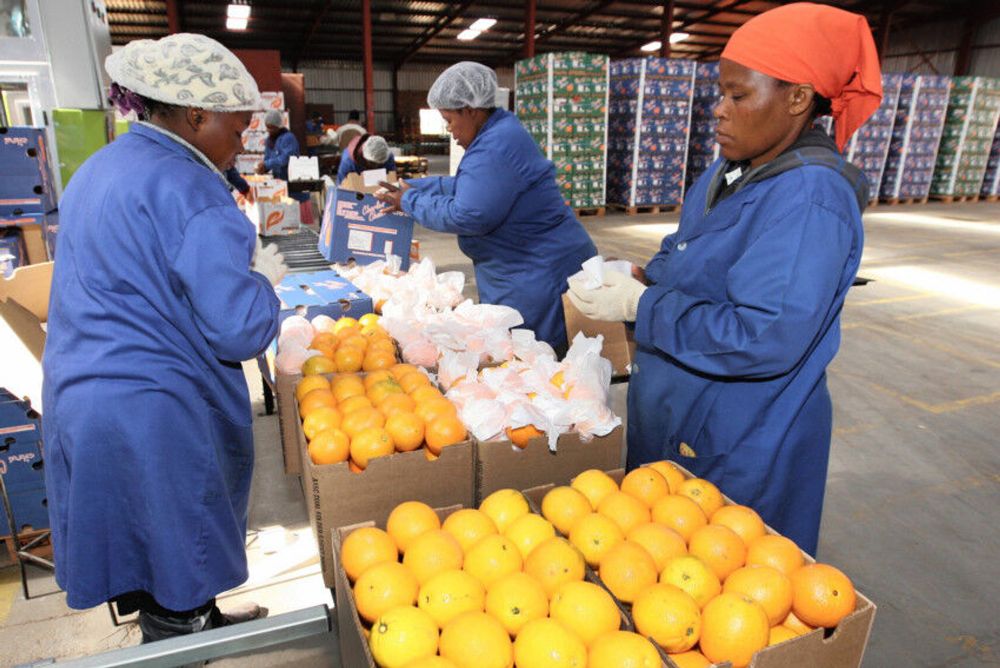
In a performance-based BPO structure, the service provider assumes full operational ownership of non-core functional departments, such as inventory intake, sorting, picking, packing, and dispatch.
Rather than billing for hours clocked, the model operates strictly on a predictable, unit-based pricing structure aligned directly to actual output, such as a fixed cost per case packed or unit handled.
This structural shift transforms a massive fixed overhead into a truly variable cost.
If external disruptions or climate events cause packhouse volumes to drop, the operational cost exposure reduces proportionally.
Conversely, during peak volumes, the BPO partner provides the necessary workforce flexibility to scale capacity rapidly, ensuring that work productivity, shift allocations, and hourly outputs are optimised through data-driven performance metrics.
Partnering with a data-driven BPO specialist creates a collaborative ecosystem where operational risk is shared, not carried alone.
With a dedicated team managing the complexities of labour tracking, payroll, and workforce deployment, producers gain the breathing room needed to withstand a volatile market.
They can step back from daily administrative firefighting to concentrate on long-term sustainability: crop health, yield optimisation, and global market development.
How performance-based models transform agricultural planning
Adopting a performance-based operating model changes the nature of multi-seasonal financial planning.
Instead of forcing boardroom conversations into reactionary, short-term cost cutting, this approach allows leadership to focus on strategic, long-term variable cost modelling.
This level of granularity gives producers total visibility over expenses, which drastically improves budgeting accuracy and enables smarter capital allocation during macroeconomic instability.
This operational resilience directly protects the broader agricultural ecosystem.
Because many South African farming entities operate as cooperatives, workers are often local stakeholders and shareholders.
Under a traditional fixed-cost model, any unmitigated operational dip causes economic pain that ripples heavily through the immediate community. Conversely, an optimised, productive, and agile packhouse protects the commercial viability of the entire enterprise, safeguarding both shareholder returns and long-term community employment.
Securing margins in a volatile market
As volatility becomes a permanent feature of global supply chains, legacy agricultural models will continue to struggle.
But, by embracing output-linked functional outsourcing, South African producers can insulate profit margins from external shocks, share systemic operational risks, and secure a sustainable footing for future seasons.
Dirk Schlebusch, Financial Manager at Programmed Process Outsourcing (PPO).
Follow Business Report on Facebook, X and on LinkedIn for the latest Business and tech news.