
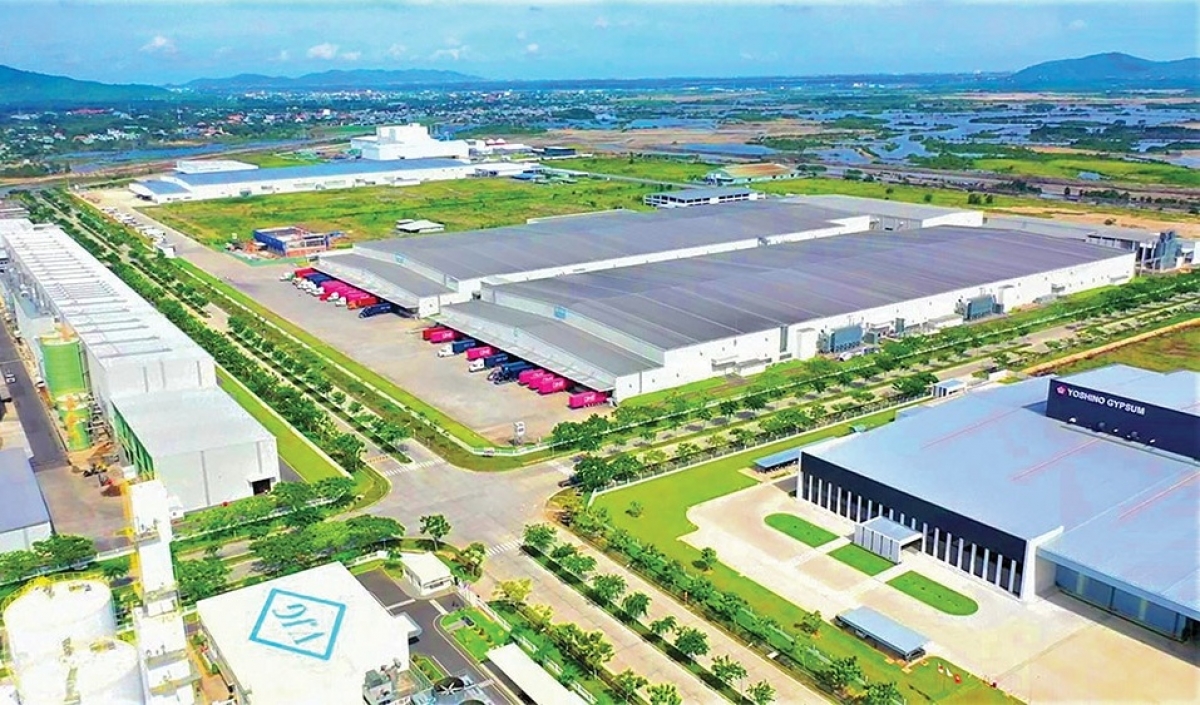
According to an analysis report released by ACB Securities in late June, Vietnam is strengthening its position as a top destination for multinational corporations. The recovery in foreign direct investment (FDI) inflows is expected to further drive demand for industrial land leases and production expansion across industrial parks (IPs) in the coming period.
Notably, manufacturing remained the primary recipient of foreign investment, accounting for nearly 63 per cent of total newly registered FDI, the report said. The sector also generates the strongest demand for industrial land and integrated logistics infrastructure.
Similarly, analysis by VNDirect Securities noted that the outlook for Vietnam’s industrial real estate sector is becoming increasingly positive as foreign investors resume medium- and long-term supply chain restructuring plans.
It said that the country’s continued investment in transport, logistics, and energy infrastructure, together with ongoing institutional reforms to remove regulatory impediments, will provide a solid foundation for attracting high-quality FDI.
“As Vietnam’s industrial real estate market enters a new growth cycle, the ability to develop eco-IPs that meet environmental standards, alongside infrastructure quality and the capacity to attract high-tech manufacturing projects, will become the key factors determining each developer’s competitive advantage. These trends are also expected to drive an increasingly clear differentiation among developers in the years ahead,” the VNDirect report stated.
The ongoing restructuring of global supply chains is creating significant opportunities for developers with large industrial land banks. In particular, those capable of developing green, smart IPs that comply with environmental, social, and governance standards are expected to gain a decisive competitive edge.
According to CBRE Vietnam, Ho Chi Minh City’s industrial market is also witnessing a shift in the composition of FDI inflows. Investment is gradually moving away from traditional labour-intensive manufacturing towards core technology sectors, particularly AI and digital infrastructure.
CBRE data for the first half reveals continued demand recovery within the industrial real estate sector. Total industrial land net absorption reached 124 hectares, representing a robust 125 per cent on-year increase. The southern tier-1 hubs of former Binh Duong province and Dong Nai city captured 83 per cent of this total absorbed area, with demand primarily fuelled by the electronics and logistics sectors.
Beyond absorption growth, the market also recorded a strategic pivot in FDI inflows into Ho Chi Minh City, characterised by a reallocation of capital from traditional manufacturing towards core technologies. The rising investment commitment to AI and digital infrastructure is distinctly evidenced by two landmark data centre projects in Saigon High-Tech Park worth over $500 million and $480 million respectively, both from Singapore. These investments reinforce the ongoing supply chain restructuring towards high-value-added industries in the southern region.
In the ready-built warehouse and ready-built factory segment, southern tier-1 markets recorded approximately 470,000sq.m of net leasable area in new supply during the first half. This met with healthy net absorption of over 370,000sq.m.
Demand for ready-built warehouses continued to be driven by logistics and e-commerce companies, while electronics manufacturers remained the key tenant group for ready-built factories.
A notable transaction in the second quarter of 2026 involved the development of an automated sorting centre of more than 60,000sq.m at Nam Thuan IP from an international logistics and e-commerce company.
Although the project is not included in the total absorption figures for the traditional ready-built warehouse and factory segment, it highlights how the built-to-suit model is becoming an increasingly appealing option for large-scale logistics facilities due to its ability to meet specialised technical requirements.
Thanh Pham, research and consulting director in Ho Chi Minh City at CBRE Vietnam, commented that there is a high volume of new industrial real estate supply, particularly in the ready-built factory segment.
“This is driven by its capacity to offer flexibility in leasable areas and lease terms, whilst optimising capital expenditure and shortening the time-to-market for tenants,” Pham said. “This trend also reflects the strategy of in IP developers to diversify their product portfolios, thereby enhancing their appeal to a broader tenant base. Against the backdrop of mounting supply, warehousing/factory asking rents are projected to experience modest growth of 2-3 per cent per annum as a result of competitive pricing pressures.”
She added that long-term strategic growth catalysts will be led by the progress of key transport infrastructure projects and the planned establishment of free trade zones.
“These flagship infrastructure initiatives are anticipated to reshape the industrial landscape across emerging key clusters, most notably the vicinity of Long Thanh International Airport and the economic corridors along ring roads 3 and 4,” she added.
 |
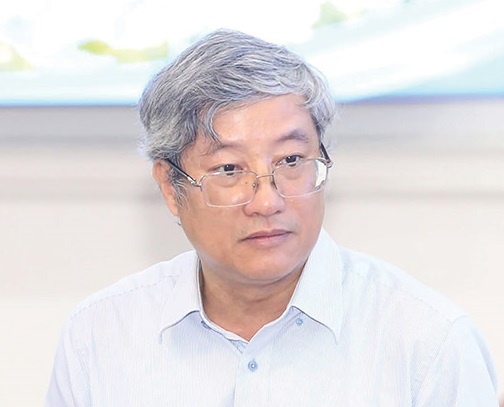
Pham Binh An, deputy director Ho Chi Minh City Institute for Development Studies
 |
Following the administrative merger last year involving Ho Chi Minh City, the number of operational industrial complexes has risen to nearly 60, and this could exceed 100, covering a combined area of around 50,000 hectares. The city’s development priority is no longer expanding industrial land or increasing occupancy rates but enhancing value-added production and accelerating the green transition.
This has become increasingly urgent as the EU’s Carbon Border Adjustment Mechanism came into effect for carbon-intensive sectors in January, requiring businesses to reduce emissions or face additional carbon costs.
Ho Chi Minh City is pursuing IP transformation at both the national and local levels. Hiep Phuoc IP is one of five pilot eco-IPs under the national programme, while the city is piloting the transformation of five out of its 17 existing areas into high-tech, circular, and green zones. Models such as Phu My 3 Specialised IP and an eco-IP in Binh Duong have already demonstrated encouraging results.
On the policy front, the city now places greater emphasis on supporting high-tech industries and the green transition. However, given fiscal constraints, support is being provided selectively, primarily through preferential financing and interest rate subsidies. Financial assistance is capped at around $7.6 million per project, which remains modest relative to the investment required for technological upgrading and green transformation.
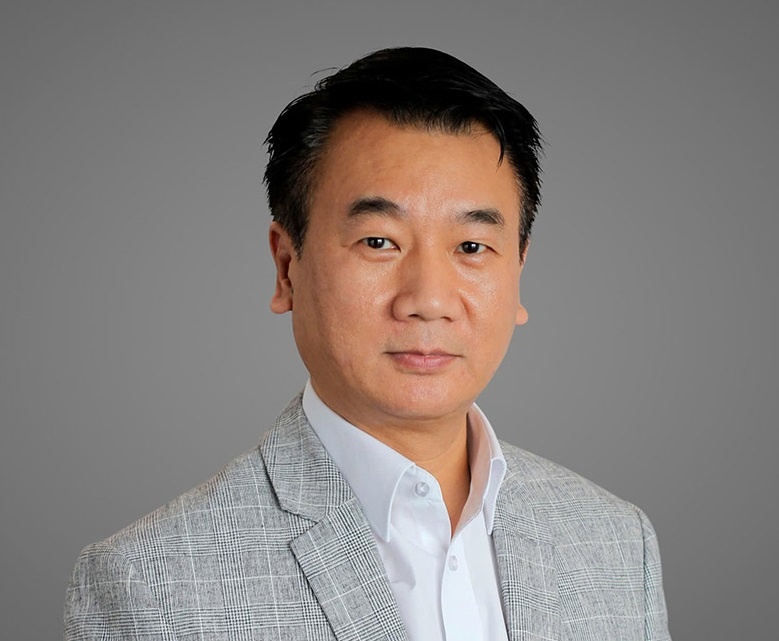
Hardy Diec, COO, KCN Vietnam
 |
From our experience working with manufacturing investors, sustainability has become an increasingly important consideration in site selection and investment decisions. Green development is rapidly becoming a key competitive advantage for both IPs and manufacturers.
As environmental, social, and governance and carbon reduction requirements become more deeply embedded in global supply chains, locating operations in eco-IPs or choosing green certified factories, warehouses enables companies to meet international customer expectations more effectively and operate more efficiently.
In addition, our ready-built projects at DEEP C Haiphong and Nhon Trach 6D, which have achieved LEED Gold certification, the company’s upcoming projects are being designed and constructed in line with green building standards to optimise energy and resource efficiency throughout their operational lifecycle.
At the same time, our roadmap includes integrating renewable energy solutions, such as solar panel, or installing electric vehicle charging facilities, and provide additional services that will help tenants achieve their objectives.
However, developing green industrial spaces is a long-term undertaking that requires collaboration across multiple stakeholders. Beyond developers’ efforts, wider adoption of clean energy, integrated infrastructure, circular economy initiatives, and supportive policy frameworks will all be essential.
|
Vietnam Industrial Property Forum 2026 Global markets continue to be reshaped by geopolitical tensions, trade realignments, shifting tariff regimes, and accelerating sustainability mandates. These forces are driving a new wave of supply chain restructuring, capital reallocation, and industrial transformation across the global economy. Against this backdrop, Vietnam is reinforcing its position as one of Asia’s most dynamic destinations for manufacturing, logistics, technology, and industrial investment. Rapid expansion of transport infrastructure, ports, airports, and expressways, together with rising investment in semiconductors, data centres, advanced manufacturing, logistics, and green production, is unlocking the next phase of growth for Vietnam’s industrial property market. Under the theme “Opportunities Amid Uncertainty”, the sixth Vietnam Industrial Property Forum will explore the evolving dynamics of global capital flows and supply chain transformation, while highlighting Vietnam’s opportunities in attracting next-generation investment. The forum will also examine emerging trends in green, smart, and integrated industrial development linked to logistics, data centres, and advanced manufacturing. In addition, discussions will address key issues related to the green transition, energy security, infrastructure quality, regional competitiveness, and institutional reform to position Vietnam for the next wave of strategic investment. Date: August 26, 2026 Venue: The Reverie Saigon, 22-36 Nguyen Hue Boulevard, Saigon Ward, Ho Chi Minh City. Website: vipf.vir.com.vn |