
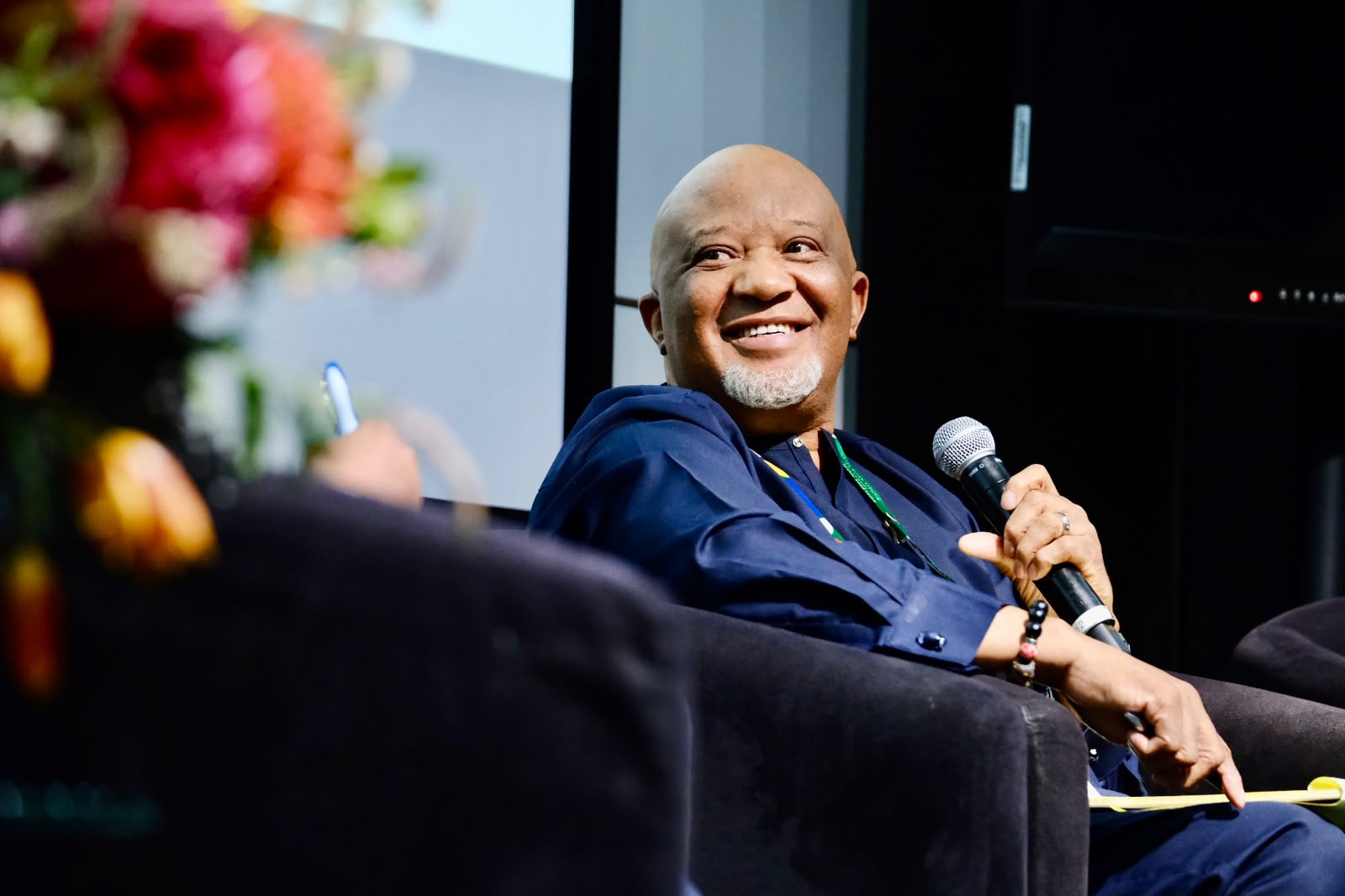
Africa’s long-term prosperity will depend less on how the continent responds to issues of migration and more on how it expands economic opportunity, strengthens regional integration and enables more people to participate meaningfully.
That was the key message from MTN Group President and CEO Ralph Mupita during the Kgalema Motlanthe Foundation (KMF) Winter Seminar, where leaders from government, business, the diplomatic corps, academia and civil society gathered to examine the relationship between migration, development and Africa’s future.
“The future of Africa will not be determined by the borders that separate us, but by the economic opportunities that connect us. Governments must set predictable policy and regulations. Businesses will follow and allocate resources and capital. Together, we can build a continent where opportunity is more evenly shared and prosperity is more widely created,” he said.
As a sponsor of this year’s KMF seminar, MTN Group believes platforms that bring together diverse perspectives are essential to building practical solutions to some of the continent’s most complex challenges.
Speaking during a panel discussion, Mupita said migration should not be viewed in isolation from the broader economic conditions shaping people’s lives and economic progress.
“If our discussion ends with the language of crisis around migration, we will have treated the symptom and missed the deeper challenge. People move because opportunity is unevenly distributed. The defining question is whether we can build economies in which mobility is matched by opportunity.”
He argued that Africa’s demographic advantage would only become an economic advantage if countries invested in the conditions that allow people to participate productively. These included skills, infrastructure, finance, markets and institutions.
“MTN was born in South Africa and has grown alongside the continent. Our prosperity is inseparable from Africa’s prosperity,” Mupita said, adding that digital infrastructure and services have become increasingly important enablers of economic participation. They connect people to each other, but also to education, entrepreneurship, financial and public services, and to markets.
This is why MTN continues to support platforms that encourage thoughtful, evidence-based dialogue on issues that shape Africa’s future.
“MTN believes that Africa’s strength lies in its connectivity – not only through networks, but through people, ideas and shared identity. This initiative is about building bridges, not borders,” Mupita concluded.