
The National Infrastructure Fund will require investments to generate a minimum equity return of 7 per cent under a new policy now before Parliament.
The National Infrastructure Fund Investment Policy, seen by Kenyans.co.ke, has been submitted to the National Assembly’s Finance and National Planning Committee for consideration.
The policy is intended to guide how the Fund’s resources will be invested and managed as President William Ruto’s administration seeks to mobilise private capital for major infrastructure projects.
Under the proposed 7 per cent minimum return, projects backed through equity investments will be expected to meet a commercial return threshold.
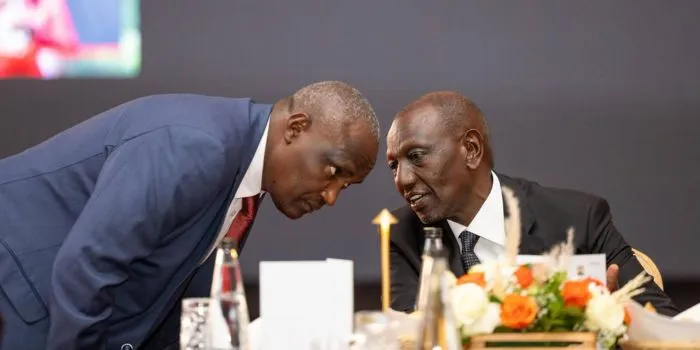
Treasury CS John Mbadi speaking during an event at State House, Nairobi, on June 30, 2026.
PCS
The return target is slightly above the 6.5 per cent coupon offered on the seven-year Infrastructure Bond issued in 2023. The bond was tax-free, as is the case with infrastructure bonds.
However, the two rates are not directly comparable.
The Infrastructure Bond is government debt with a fixed coupon, while the NIF’s 7 per cent figure is a minimum expected return on equity investments.
The proposed policy also seeks to limit the Fund’s exposure to individual projects and sectors to manage investment risks.
According to the policy document, no single project will be allowed to account for more than 20 per cent of the Fund’s assets, while exposure to one sector would be capped at 40 per cent.
Treasury further proposes that projects should have a minimum debt capacity of 60 per cent through non-recourse project debt, while the Fund would not be allowed to undertake balance-sheet borrowing.
Eligible investments under NIF include national highways, railway networks, airports, seaports, and electricity generation, transmission, and distribution infrastructure.
NIF would also be allowed to invest in ICT infrastructure, water reservoirs, irrigation, and agribusiness infrastructure through equity, quasi-equity, debt instruments, project finance structures, special purpose vehicles and other investment vehicles.
Parliament has invited members of the public to submit memoranda on the policy, with submissions due by August 24, 2026.
KeNHA Board of Directors and officials inspecting the Rironi-Mau Summit Highway on Friday, July 10, 2026.
Photo
KeNHA