
North Koreans’ income is 70% dependent on the market…Polarization due to economic shock
Lack of institutional protection…Opportunity inequality along political connections
Continues income polarization for a considerable period of time after shock recovery
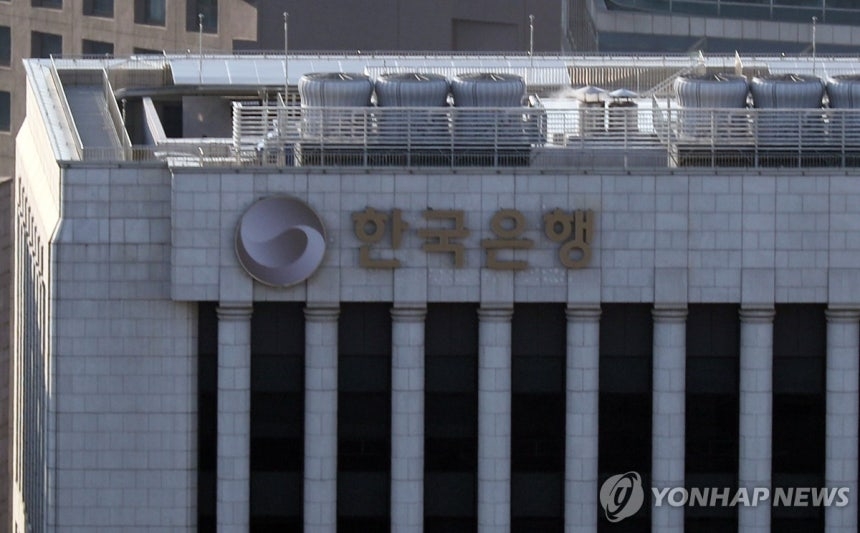
![the Bank of Korea. [HAN]](https://wimg.mk.co.kr/news/cms/202608/23/news-p.v1.20260823.9c60c579bbfd4538a20a31a5ad05eaab_P1.jpg)
Although North Koreans rely on informal markets such as marketplaces for about 70% of their income, polarization has intensified in the event of an economic shock as legal and institutional protections to support the market have not been established.
On the 21st, the Bank of Korea analyzed the distribution of informal income before and after the economic shock using survey data on North Korean defectors from 2011 to 2020 in its report “Economic Shock and Income Polarization in a Semi-market Economy: The Case of North Korea.”
According to the Bank of Korea’s analysis, the polarization of informal income in 2015-2019, after economic shocks such as severe drought and a sharp drop in foreign exports between 2014 and 2015, expanded statistically significantly from 2011-2014. The deepening of polarization was largely due to a significant increase in the proportion of the lower-income class rather than an increase in the proportion of the upper-income class. In particular, the relative concentration of the lowest 10% of income was more than 4.5 times higher than before.
Researchers at the Bank of Korea noted that North Korea’s dependence on marketplaces has increased. In North Korea, the distribution system collapsed after the economic crisis in the mid-to-late 1990s, and marketplaces began to spread. Since then, the informal market has expanded from agricultural products to general consumer goods. Recently, it is analyzed that market mechanisms also work on production factors such as labor and capital. According to related studies, the market accounts for a large portion of the livelihood of North Koreans, with 70% of the total income of North Koreans dependent on the market.
However, despite widespread market activity, no mechanism has been established to protect the market, such as fair competition-related systems, tax and redistribution systems, and private property rights. Accordingly, the researchers analyze that the North Korean market sector is showing a quasi-marketization in which economic opportunities are unevenly distributed according to political connections or access to capital.
As a result, North Korea’s top measurements were able to benefit from arbitrage transactions in the process of material shortages, while the lower classes with weak economic bases had no choice but to absorb the shock intact.
It was found that income polarization in North Korea remained for a considerable period of time even after entering a recovery period after the economic shock.