
Close Menu
Aspire Market Guides
  • Home
  • Alternative Investments
  • Cryptocurrency
  • Economics
  • Equity Investments
  • Mutual Funds
  • Real Estate
  • Trading
What's Hot

Ben Delo: Who is the Reform UK donor and crypto billionaire?

September 13, 2026

Shiba Inu Surpasses 1.8 Million Addresses Across ETH and Shibarium

September 13, 2026

87 new homes approved for Brotton housing development

September 13, 2026
Facebook X (Twitter) Instagram
Trending:
  • Ben Delo: Who is the Reform UK donor and crypto billionaire?
  • Shiba Inu Surpasses 1.8 Million Addresses Across ETH and Shibarium
  • 87 new homes approved for Brotton housing development
  • Gold and silver prices: Analysts warn of volatility ahead
  • Economics Needs a New Approach to Inflation
  • Mubadala Makes Significant Minority Investment In Luckin Coffee In Approximately $1 Billion Transaction
  • Show me the money: UK golf ventures into the private equity era
  • Top 100 Viral Altcoin Explodes by 325% Daily, BTC Struggles at $77K: Weekend Watch
  • ING: Dutch economic growth streak is not guaranteed
  • Palantir Co-Founder Peter Thiel’s Hedge Fund Just Made a Big Bet on This AI Stock
Sunday, September 13
Facebook X (Twitter) Instagram
Aspire Market Guides
  • Home
  • Alternative Investments
  • Cryptocurrency
  • Economics
  • Equity Investments
  • Mutual Funds
  • Real Estate
  • Trading
Aspire Market Guides
Home»Economics»Although North Koreans rely on informal markets such as marketplaces for about 70% of their income, ..
Economics

Although North Koreans rely on informal markets such as marketplaces for about 70% of their income, ..

By CharlotteAugust 23, 20263 Mins Read
Share
Facebook Twitter Pinterest Email Copy Link


North Koreans’ income is 70% dependent on the market…Polarization due to economic shock
Lack of institutional protection…Opportunity inequality along political connections
Continues income polarization for a considerable period of time after shock recovery

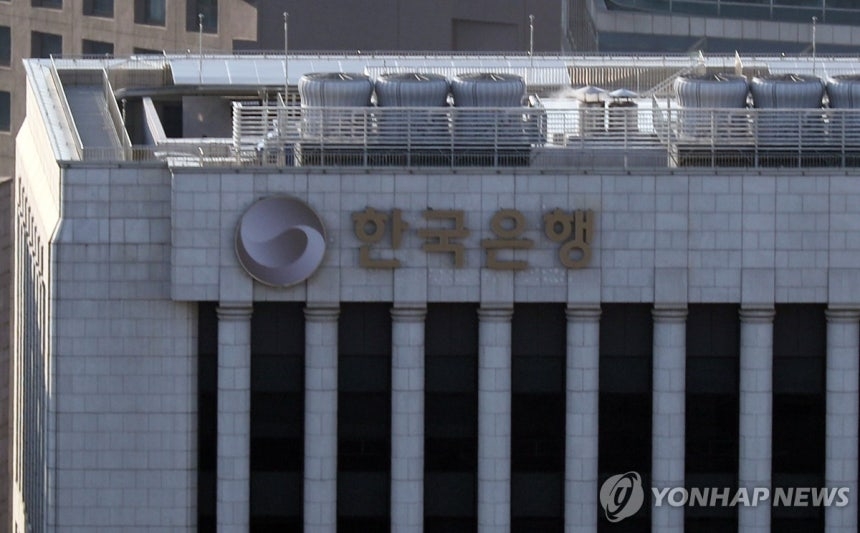
the Bank of Korea. [HAN]

Although North Koreans rely on informal markets such as marketplaces for about 70% of their income, polarization has intensified in the event of an economic shock as legal and institutional protections to support the market have not been established.

On the 21st, the Bank of Korea analyzed the distribution of informal income before and after the economic shock using survey data on North Korean defectors from 2011 to 2020 in its report “Economic Shock and Income Polarization in a Semi-market Economy: The Case of North Korea.”

According to the Bank of Korea’s analysis, the polarization of informal income in 2015-2019, after economic shocks such as severe drought and a sharp drop in foreign exports between 2014 and 2015, expanded statistically significantly from 2011-2014. The deepening of polarization was largely due to a significant increase in the proportion of the lower-income class rather than an increase in the proportion of the upper-income class. In particular, the relative concentration of the lowest 10% of income was more than 4.5 times higher than before.

Researchers at the Bank of Korea noted that North Korea’s dependence on marketplaces has increased. In North Korea, the distribution system collapsed after the economic crisis in the mid-to-late 1990s, and marketplaces began to spread. Since then, the informal market has expanded from agricultural products to general consumer goods. Recently, it is analyzed that market mechanisms also work on production factors such as labor and capital. According to related studies, the market accounts for a large portion of the livelihood of North Koreans, with 70% of the total income of North Koreans dependent on the market.

However, despite widespread market activity, no mechanism has been established to protect the market, such as fair competition-related systems, tax and redistribution systems, and private property rights. Accordingly, the researchers analyze that the North Korean market sector is showing a quasi-marketization in which economic opportunities are unevenly distributed according to political connections or access to capital.

As a result, North Korea’s top measurements were able to benefit from arbitrage transactions in the process of material shortages, while the lower classes with weak economic bases had no choice but to absorb the shock intact.

It was found that income polarization in North Korea remained for a considerable period of time even after entering a recovery period after the economic shock.


Source link

Related Posts

Economics

Economics Needs a New Approach to Inflation

September 13, 2026
Economics

ING: Dutch economic growth streak is not guaranteed

September 13, 2026
Economics

Dangote Refinery IPO: Macroeconomic Impact, Investment Opportunities and Market Implications

September 13, 2026
Economics

The European Institute to host Workshop on Behavioural Macroeconomics and Finance with the Bank of England

September 13, 2026
Economics

Macroeconomic Forecast – August 2026

September 13, 2026
Economics

The state of the Ukrainian economy is deteriorating rapidly across all key indicators

September 13, 2026
Add A Comment
Leave A Reply Cancel Reply

Editors Picks

Ben Delo: Who is the Reform UK donor and crypto billionaire?

September 13, 2026

Shiba Inu Surpasses 1.8 Million Addresses Across ETH and Shibarium

September 13, 2026

87 new homes approved for Brotton housing development

September 13, 2026

Gold and silver prices: Analysts warn of volatility ahead

September 13, 2026
SUBSCRIBE TO OUR NEWSLETTER

Get our latest downloads and information first. Complete the form below to subscribe to our weekly newsletter.


I consent to being contacted via telephone and/or email and I consent to my data being stored in accordance with European GDPR regulations and agree to the terms of use and privacy policy.

Featured

Is Crypto Just a Meme Coin Casino?

June 22, 2026

Understanding Price Elasticity’s Impact on Supply and Demand

April 15, 2026

What investors need to know about this alternative asset manager now

April 9, 2026
Monthly Featured

Best money market account rates today, Friday, May 29, 2026: Up to 4.01% APY return

May 31, 2026

Market madness for mega IPOs could soon make Aussie economy shiver: ‘Will the crash be big?’

June 12, 2026

Askari Metals strengthens Ethiopian portfolio as Nejo gold-copper project advances

June 29, 2026
Latest Posts

Ben Delo: Who is the Reform UK donor and crypto billionaire?

September 13, 2026

Shiba Inu Surpasses 1.8 Million Addresses Across ETH and Shibarium

September 13, 2026

87 new homes approved for Brotton housing development

September 13, 2026
SUBSCRIBE TO OUR NEWSLETTER

Get our latest downloads and information first. Complete the form below to subscribe to our weekly newsletter.


I consent to being contacted via telephone and/or email and I consent to my data being stored in accordance with European GDPR regulations and agree to the terms of use and privacy policy.

© 2026 Aspire Market Guides.
  • Contact us
  • Privacy Policy
  • Terms and Conditions

Type above and press Enter to search. Press Esc to cancel.

SUBSCRIBE TO OUR NEWSLETTER

Get our latest downloads and information first.

Complete the form below to subscribe to our weekly newsletter.


I consent to being contacted via telephone and/or email and I consent to my data being stored in accordance with European GDPR regulations and agree to the terms of use and privacy policy.