

Close Menu
Aspire Market Guides
  • Home
  • Alternative Investments
  • Cryptocurrency
  • Economics
  • Equity Investments
  • Mutual Funds
  • Real Estate
  • Trading
What's Hot

Developing the Mixed Economy of Care: Emerging Issues for Voluntary Organisations* | Journal of Social Policy

September 8, 2026

Australia’s tokenisation debate enters decisive phase

September 8, 2026

‘Apollo premium’ drives up debt costs for private equity giant’s portfolio companies – Financial Times

September 8, 2026
Facebook X (Twitter) Instagram
Trending:
  • Developing the Mixed Economy of Care: Emerging Issues for Voluntary Organisations* | Journal of Social Policy
  • Australia’s tokenisation debate enters decisive phase
  • ‘Apollo premium’ drives up debt costs for private equity giant’s portfolio companies – Financial Times
  • Open borders: Why is implementing the AfCFTA stalling?
  • TBC Capital Publishes Macroeconomic Update: Base Scenario Holds as Two-Way Risks Intensify
  • Cash Removal Will Damage The Market Economy – OpEd
  • 3 long-dead programming languages that can still land you a good job
  • EMT Sets Up Committee To Harmonise Nigeria’s Macroeconomic Projections
  • Investors Shift to CSI Derivatives for China Bets
  • Mixed Economic Signals From China
Tuesday, September 8
Facebook X (Twitter) Instagram
Aspire Market Guides
  • Home
  • Alternative Investments
  • Cryptocurrency
  • Economics
  • Equity Investments
  • Mutual Funds
  • Real Estate
  • Trading
Aspire Market Guides
Home»Economics»Open borders: Why is implementing the AfCFTA stalling?
Economics

Open borders: Why is implementing the AfCFTA stalling?

By CharlotteSeptember 8, 20264 Mins Read
Share
Facebook Twitter Pinterest Email Copy Link


Editorial


Thaïs Brouck

Business journalist at Jeune Afrique, specialised in macroeconomics.


See more

Thaïs Brouck

unfinished project

Despite institutional progress, the world’s largest free trade area is not delivering the results expected of it. Who is responsible?
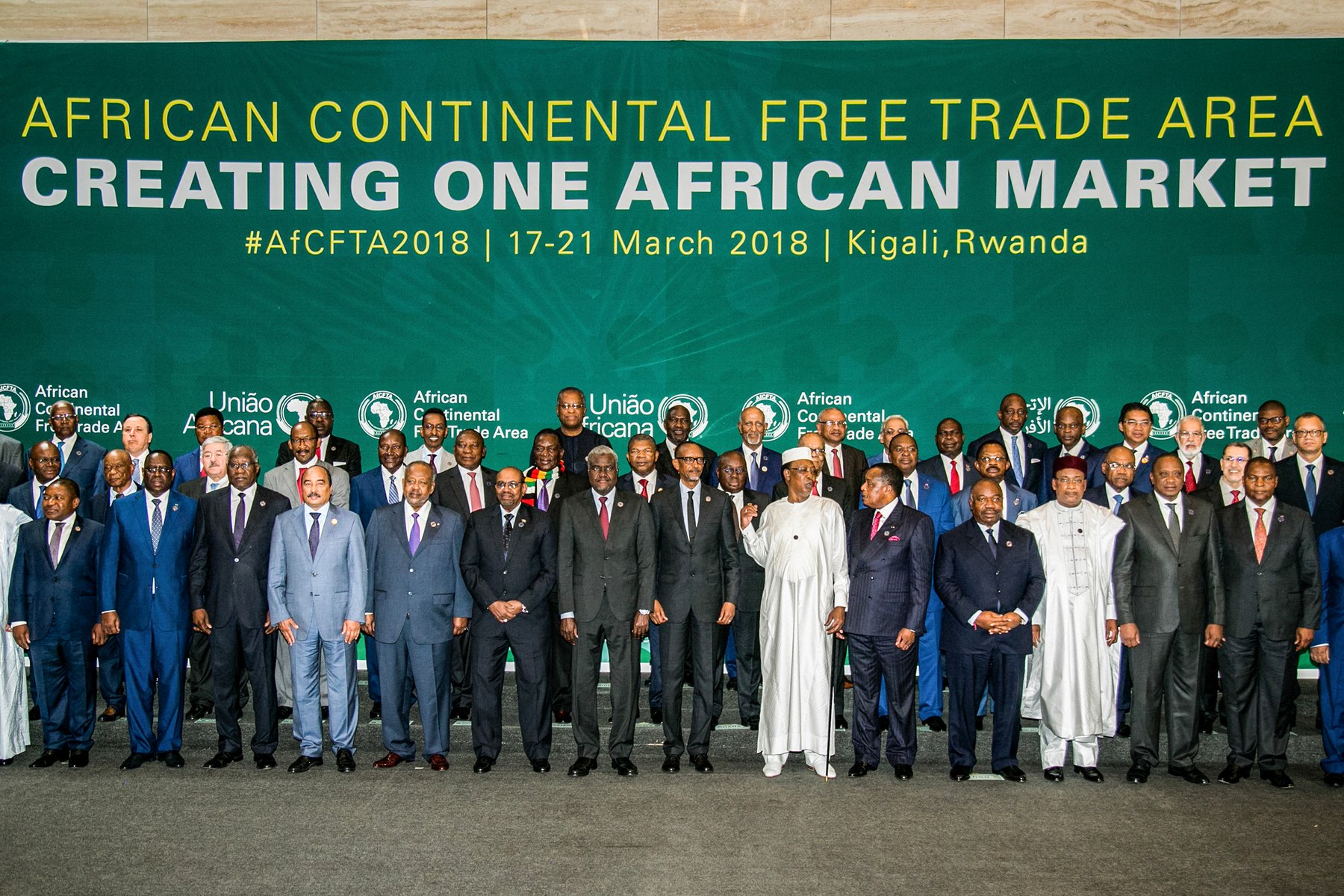
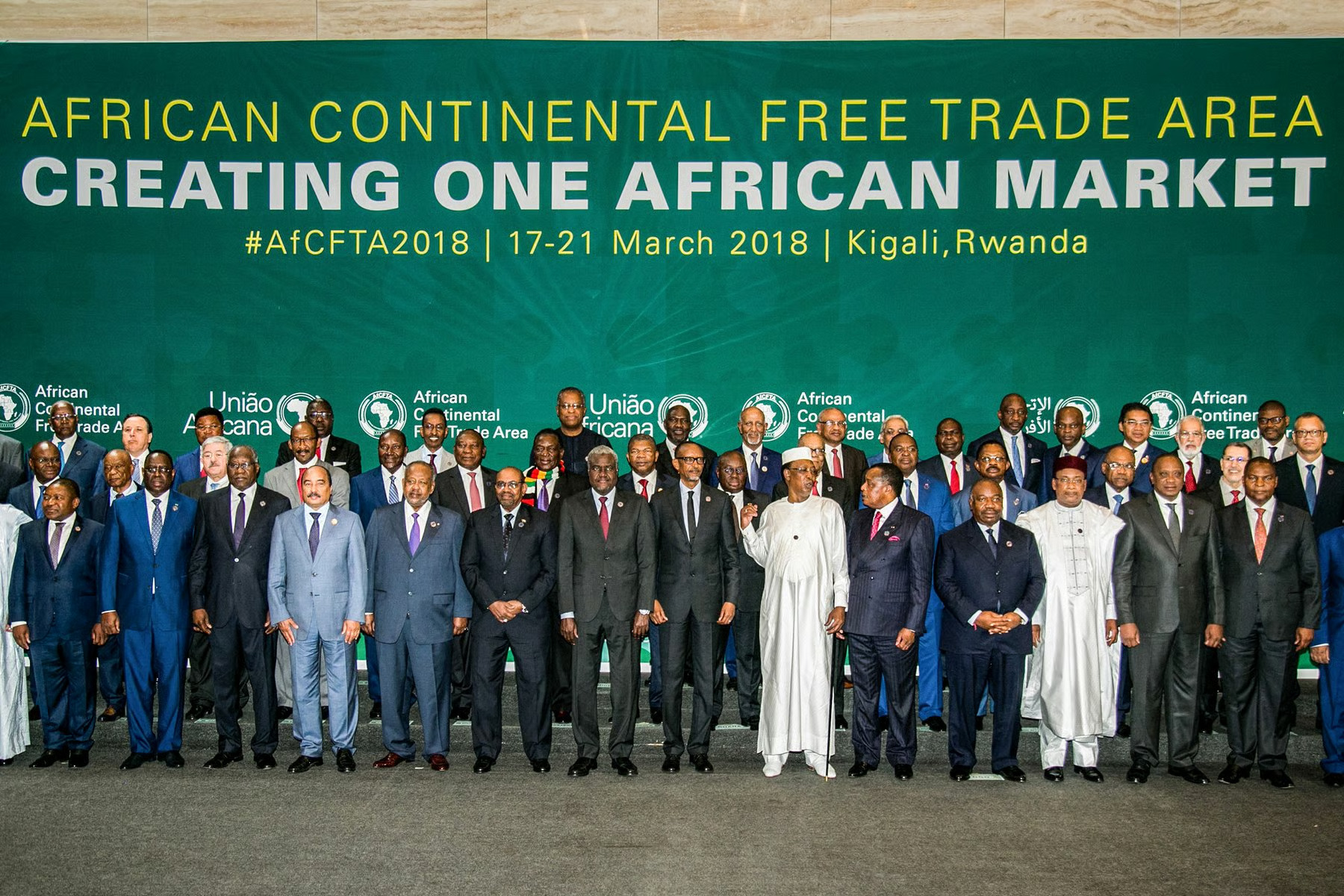
African heads of state and government during the AU summit dedicated to the creation of the AfCFTA, in Kigali, 21 March 2018.

African heads of state and government during the AU summit dedicated to the creation of the AfCFTA, in Kigali, 21 March 2018. © AFP

Published
on September 07, 2026
at
11:26 am (GMT +1)

It was meant to transform Africa’s economic landscape and drive its industrialisation. Its rollout was supposed to allow the continent to assert its financial and commercial independence in the face of global superpowers – its sovereignty, in short.

But seven years after its launch and five years after it came into force, the African Continental Free Trade Area (AfCFTA) has yet to deliver on its promises.

On paper, almost everything is in place. All African countries except Eritrea have signed the agreement, and nearly all have ratified it. Rules of origin have been largely harmonised, states have committed to progressively eliminating tariffs on 90% of tariff lines, and the Pan-African Payment and Settlement System (PAPSS) covers 23 countries. Since 2024, the first trade flows under the AfCFTA regime have gotten underway.

Nothing has changed

At summits, self-congratulation often reigns supreme. In the pages of The Africa Report, Wamkele Mene, the AfCFTA’s secretary-general, has hailed a “remarkable pace of adoption”. But in the ports, at the borders and within customs administrations, the reality is far less impressive.

Many signed the agreement as one signs a statement of principle

Since the AfCFTA came into force, intra-African trade has grown by around 7%, rising from just over $200bn in 2022 to nearly $220bn in 2025. That is progress in absolute terms, certainly, but intra-African trade’s share of the total has not budged, remaining stuck at around 15% of the continent’s overall trade.

In short, despite the AfCFTA’s launch, little or nothing has changed: Africa remains locked into a model of exporting raw materials, and the continent’s economies are more closely connected to external markets than to their neighbours.

This is all the more troubling given that the results so far – slow, uneven and fragmented – are out of step with the economic urgency the continent faces. At a time when global value chains are being reshaped, when trade tensions between major powers are opening windows of opportunity, and when Africa is desperately seeking sources of growth beyond raw materials, continental trade integration cannot afford to remain bogged down in technical negotiations.

Is the AfCFTA’s Secretariat to blame? Its leadership and strategy can certainly be questioned. But given the institution’s limited resources, it cannot be held responsible for everything.

Does the blame lie with member states, then? Many signed the agreement as one signs a statement of principle, without ever seriously preparing their economies for the opening up of the continental market.

Exposed to competition

Because opening up a market means accepting that certain domestic industries will be exposed to competition. It means giving up customs revenue, harmonising standards, modernising customs services and investing in transport infrastructure. In short, it means carrying out politically costly reforms.

African governments still often regard their neighbours as competitors. Protectionist reflexes die hard. As long as national interests take precedence over continental commitments, the AfCFTA will remain a symbol.

Finally, Africa created the AfCFTA without giving it any authority to enforce it. Unlike the European Union, this zone has neither a commission with binding powers, nor a substantial budget, nor a credible enforcement mechanism.

This is not a failure, but an unfinished project. Integration cannot simply be decreed – it has to be managed. And in the meantime, it is stalling.


Source link

Related Posts

Economics

Developing the Mixed Economy of Care: Emerging Issues for Voluntary Organisations* | Journal of Social Policy

September 8, 2026
Economics

TBC Capital Publishes Macroeconomic Update: Base Scenario Holds as Two-Way Risks Intensify

September 8, 2026
Economics

Cash Removal Will Damage The Market Economy – OpEd

September 8, 2026
Economics

EMT Sets Up Committee To Harmonise Nigeria’s Macroeconomic Projections

September 7, 2026
Economics

Mixed Economic Signals From China

September 7, 2026
Economics

Inflation likely to stay elevated until 2027 amid sticky price pressures

September 7, 2026
Add A Comment
Leave A Reply Cancel Reply

Editors Picks

Developing the Mixed Economy of Care: Emerging Issues for Voluntary Organisations* | Journal of Social Policy

September 8, 2026

Australia’s tokenisation debate enters decisive phase

September 8, 2026

‘Apollo premium’ drives up debt costs for private equity giant’s portfolio companies – Financial Times

September 8, 2026

Open borders: Why is implementing the AfCFTA stalling?

September 8, 2026
SUBSCRIBE TO OUR NEWSLETTER

Get our latest downloads and information first. Complete the form below to subscribe to our weekly newsletter.


I consent to being contacted via telephone and/or email and I consent to my data being stored in accordance with European GDPR regulations and agree to the terms of use and privacy policy.

Featured

Chicago Teachers adds 2nd international equity portfolio to watch list for performance reasons – Pensions & Investments

June 26, 2026

Bitcoin, Ethereum, Solana, XRP ETFs See Billions In Outflows, Only HYPE Stays In The Green

June 6, 2026

Aberdeen Cranks Up Tokenised Private Markets Access

September 7, 2026
Monthly Featured

A scientometric analysis on blockchain and NFTs: trends and development

July 30, 2026

A Look At Dream Industrial REIT (TSX:DIR.UN) Valuation After CA$200 Million Debenture Offering

April 22, 2026

Barry Moore obituary | Economics

August 8, 2026
Latest Posts

Developing the Mixed Economy of Care: Emerging Issues for Voluntary Organisations* | Journal of Social Policy

September 8, 2026

Australia’s tokenisation debate enters decisive phase

September 8, 2026

‘Apollo premium’ drives up debt costs for private equity giant’s portfolio companies – Financial Times

September 8, 2026
SUBSCRIBE TO OUR NEWSLETTER

Get our latest downloads and information first. Complete the form below to subscribe to our weekly newsletter.


I consent to being contacted via telephone and/or email and I consent to my data being stored in accordance with European GDPR regulations and agree to the terms of use and privacy policy.

© 2026 Aspire Market Guides.
  • Contact us
  • Privacy Policy
  • Terms and Conditions

Type above and press Enter to search. Press Esc to cancel.

SUBSCRIBE TO OUR NEWSLETTER

Get our latest downloads and information first.

Complete the form below to subscribe to our weekly newsletter.


I consent to being contacted via telephone and/or email and I consent to my data being stored in accordance with European GDPR regulations and agree to the terms of use and privacy policy.