
Close Menu
Aspire Market Guides
  • Home
  • Alternative Investments
  • Cryptocurrency
  • Economics
  • Equity Investments
  • Mutual Funds
  • Real Estate
  • Trading
What's Hot

Evaluation of EcoSec’s Microeconomic Initiatives in Libya 2019-2024

August 30, 2026

Microeconomics of Bitcoin: Why Do Investors Choose Cryptocurrency?

August 30, 2026

Cryptocurrency prices show mixed movements with Bitcoin at $78,847 and notable gains in some altcoins. – Pluang

August 30, 2026
Facebook X (Twitter) Instagram
Trending:
  • Evaluation of EcoSec’s Microeconomic Initiatives in Libya 2019-2024
  • Microeconomics of Bitcoin: Why Do Investors Choose Cryptocurrency?
  • Cryptocurrency prices show mixed movements with Bitcoin at $78,847 and notable gains in some altcoins. – Pluang
  • Debt Funds Have Risks Too: 3 Key Risks Every Investor Should Know Before Investing
  • Nomura Strategic Income Fund Q2 2026 Commentary – Seeking Alpha
  • Patriots Swing Trade for Depth RB: How This Impacts Current Roster Cuts
  • ‘Everyone’s scared’ despite Bitcoin climbing past the $80K level – Here’s why
  • Local manufacturing is reshaping commercial vehicle economics
  • Will Hong Kong see fewer creditor-led commercial property sales as assets stabilise?
  • Trump Media plans launch of ‘utility token’ and digital wallet tied to streaming service – Fortune
Sunday, August 30
Facebook X (Twitter) Instagram
Aspire Market Guides
  • Home
  • Alternative Investments
  • Cryptocurrency
  • Economics
  • Equity Investments
  • Mutual Funds
  • Real Estate
  • Trading
Aspire Market Guides
Home»Economics»Barry Moore obituary | Economics
Economics

Barry Moore obituary | Economics

By CharlotteAugust 8, 20264 Mins Read
Share
Facebook Twitter Pinterest Email Copy Link


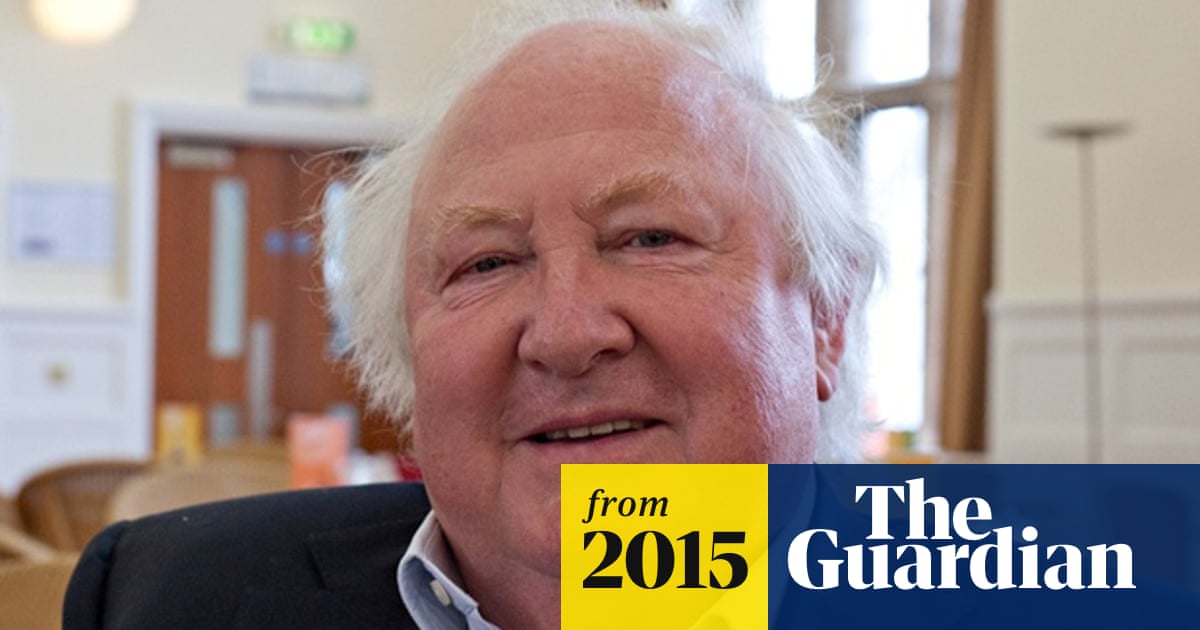
Many practitioners of the “gloomy science” are the object of scathing criticism these days, either for having taken their eyes off the financial ball in the run-up to the banking crisis or for retreating into mathematical byways. But Barry Moore, who has died aged 74 of a heart attack, belonged to the old school of “applied” economists – a breed always concerned with practical issues, and much in demand around the world.

His early speciality lay in regional policy – a subject that almost fell into desuetude from the later years of Margaret Thatcher’s government, once Michael Heseltine had used development corporations to revive the fortunes of Merseyside and London Docklands, but which now seems to have been rediscovered by their Conservative successors.

While a member of the highly regarded and at times controversial Cambridge Economic Policy Group, headed by Wynne Godley and known to some as “the Treasury in exile”, Barry produced two notably influential papers with John Rhodes: Evaluating the Effects of British Regional Economic Policy (1973) and The Relative Decline of the UK Manufacturing Sector (1976). The latter anticipated many of the subsequent arguments about the causes and extent of deindustrialisation in the UK economy. The importance of assisting ailing regions to revive with new sectors for economic growth has been supplemented by the development of city “hubs”. These are closely connected with the encouragement of public and private sector co-operation on research and innovation, not least with an emphasis on the science base, for which the Cambridge Silicon Fen – a British equivalent to California’s Silicon Valley – has become world famous.

Barry was a pioneer in demonstrating how the economic expertise and research methods developed in the academic environment of a university could be successfully applied and exploited in the commercial sector. From 1985 he pursued this aim as one of the founders of PACEC (Public and Corporate Economic Consultants), sometimes in conjunction with the Centre for Business Research, of which he was a research fellow.

He came to be regarded as a leading international authority in the evaluation of innovation and science policy, and his work was held in the highest regard by policymakers. Both a macro- and micro-economist, he managed to combine an active teaching career with the publication of eight books and more than 100 academic articles and papers.

Born in Ruskin College, Oxford, to which his mother had been evacuated during the second world war, Barry was the son of Rena (nee Vandersteen) and Charles, who both worked in the clothing industry. From Beal grammar school (now Beal high school) in Ilford, Essex, he went to the London School of Economics, where he gained a BSc in economics (1965), followed by master’s degrees both there (1968) and at Cambridge (1973).

He held research posts at the department of applied economics in Cambridge between 1970 and 1985, joining shortly before Godley became director, and to his appointment as director of studies in economics at Downing College, Cambridge (1979-90), he added a range of university posts. He went to the department of land economy as assistant director of research in 1985 and became reader there in 2003.

For nearly three decades, he taught international economic issues to visiting Americans through Instep, the Institute of Economic and Political Studies. Many benefited not only from his economic knowledge but also from his encyclopedic knowledge of wine. I, too, knew him as a well-rounded character, a jovial bon vivant who was wonderful company.

He belonged to the true Keynesian tradition of serious application to study combined with thorough enjoyment of the good things in life. But whereas Keynes’s leisure pursuits were associated with Bloomsbury, Barry preferred Soho. A cousin who was vicar of St Anne’s church, Soho, introduced Barry at the age of 16 to the pubs and clubs of the area, where he got to know Francis Bacon, Lucian Freud and that rather different category of artist, Jeffrey Bernard. Favourite venues were the French House and the Groucho Club. Keith Waterhouse proposed him for membership of Gerry’s Club, another haunt of actors and Soho types.

Barry is survived by his wife, Lesley (nee Simm), whom he married in 1966, and their three daughters, Charlotte, Natasha and Jessica.

Barry Charles Moore, economist, born 18 March 1941; died 18 August 2015


Source link

Related Posts

Economics

Evaluation of EcoSec’s Microeconomic Initiatives in Libya 2019-2024

August 30, 2026
Economics

Microeconomics of Bitcoin: Why Do Investors Choose Cryptocurrency?

August 30, 2026
Economics

Local manufacturing is reshaping commercial vehicle economics

August 30, 2026
Economics

BlackRock Executive Says Macroeconomic Backdrop Is Favorable for Bitcoin

August 30, 2026
Economics

The turning points in Singapore’s economic development

August 30, 2026
Economics

Ethiopia Moves to Replace Macroeconomic Forecasting Tool with IMF Support

August 30, 2026
Add A Comment
Leave A Reply Cancel Reply

Editors Picks

Evaluation of EcoSec’s Microeconomic Initiatives in Libya 2019-2024

August 30, 2026

Microeconomics of Bitcoin: Why Do Investors Choose Cryptocurrency?

August 30, 2026

Cryptocurrency prices show mixed movements with Bitcoin at $78,847 and notable gains in some altcoins. – Pluang

August 30, 2026

Debt Funds Have Risks Too: 3 Key Risks Every Investor Should Know Before Investing

August 30, 2026
SUBSCRIBE TO OUR NEWSLETTER

Get our latest downloads and information first. Complete the form below to subscribe to our weekly newsletter.


I consent to being contacted via telephone and/or email and I consent to my data being stored in accordance with European GDPR regulations and agree to the terms of use and privacy policy.

Featured

Bitcoin Held Above $63,000 Even As US Stocks Slid

July 29, 2026

Zerohash launches crypto copy-trading infrastructure with dub as its first partner

July 7, 2026

GCF-SLEA public lecture on ‘Sri Lanka’s Current Macroeconomic Policy Directions in the Context of Global Volatility’ tomorrow

May 7, 2026
Monthly Featured

Plans to turn derelict Ravensworth garden centre into 75 homes

June 11, 2026

Hull KR land new head coach with World Cup winner identified

June 22, 2026

Private Banking vs Wealth Management: What the 2026 Rankings Show

August 26, 2026
Latest Posts

Evaluation of EcoSec’s Microeconomic Initiatives in Libya 2019-2024

August 30, 2026

Microeconomics of Bitcoin: Why Do Investors Choose Cryptocurrency?

August 30, 2026

Cryptocurrency prices show mixed movements with Bitcoin at $78,847 and notable gains in some altcoins. – Pluang

August 30, 2026
SUBSCRIBE TO OUR NEWSLETTER

Get our latest downloads and information first. Complete the form below to subscribe to our weekly newsletter.


I consent to being contacted via telephone and/or email and I consent to my data being stored in accordance with European GDPR regulations and agree to the terms of use and privacy policy.

© 2026 Aspire Market Guides.
  • Contact us
  • Privacy Policy
  • Terms and Conditions

Type above and press Enter to search. Press Esc to cancel.

SUBSCRIBE TO OUR NEWSLETTER

Get our latest downloads and information first.

Complete the form below to subscribe to our weekly newsletter.


I consent to being contacted via telephone and/or email and I consent to my data being stored in accordance with European GDPR regulations and agree to the terms of use and privacy policy.