
That is no longer enough. Infrastructure is becoming a geopolitical asset — and, consequently, a geopolitical target.
Infrastructure as leverage: How trade routes became instruments of power
The COVID-19 pandemic provided the first serious warning. Port closures, container shortages, and production disruptions sent maritime shipping costs soaring, with container freight rates rising four- to sevenfold at the height of the crisis. This episode demonstrated that logistics is not merely a supporting function, but a factor that can directly affect inflation and economic stability.
Today, geopolitics is delivering the next stress test.
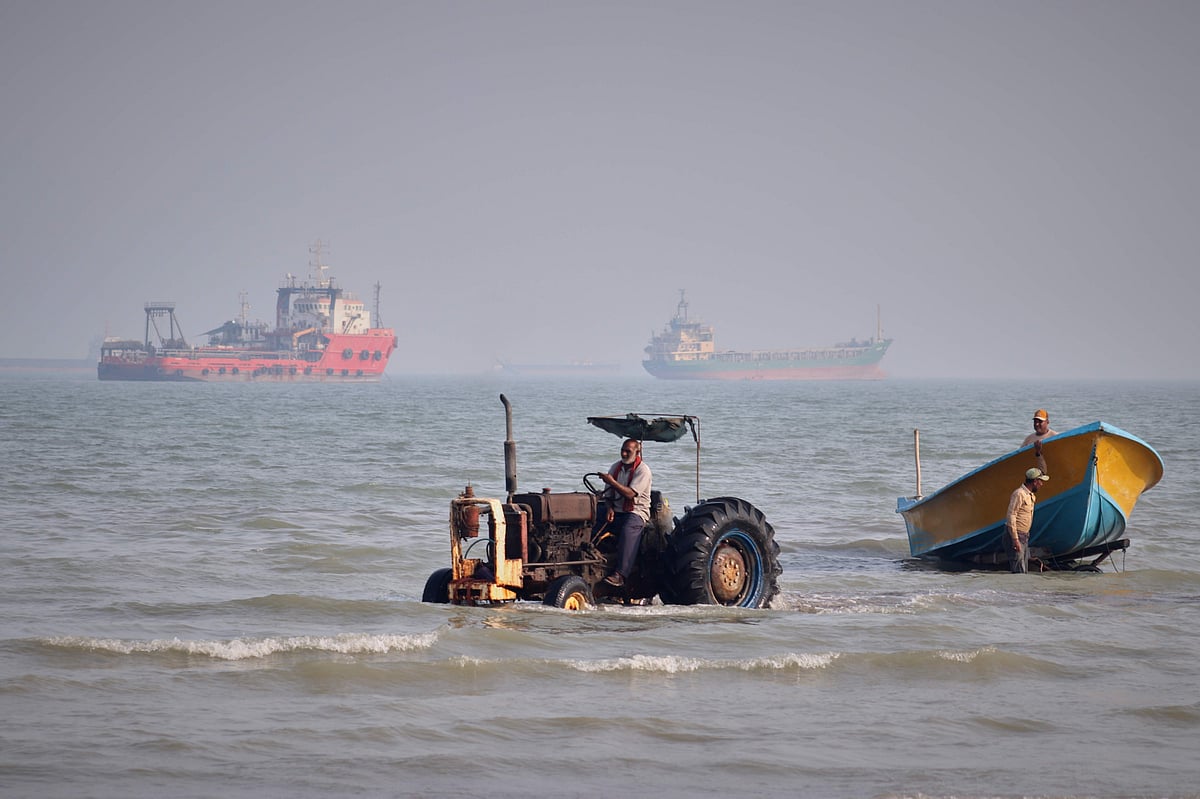
More than 80% of global trade by volume is carried by sea, meaning that disruption at any critical chokepoint can quickly have global consequences. The Red Sea crisis, which began in late 2023 as a spillover from the Israel–Hamas conflict, and the threats that emerged around the Strait of Hormuz in the spring of 2026 have forced shipping companies to reroute vessels, avoid high-risk areas, and price a persistent geopolitical risk premium into freight rates.
A global trade chokepoint need not be physically closed to cause disruption. Making passage through it sufficiently dangerous can be enough to affect supply chains across sectors ranging from energy to agricultural commodities and fertilisers.
Geopolitical risk does not necessarily kill a project. But it can fundamentally alter its economics, forcing investors to factor in substantial expenditure on physical protection, security, redundancy, and contingency planning.
Globalisation is not ending — it is becoming more expensive
It would be a mistake to argue that globalisation is disappearing. The world economy remains deeply interconnected. What is changing is the cost of maintaining those connections.
In the past, companies optimised supply chains primarily for cost and efficiency. Today, security, political predictability, and redundancy are becoming economic variables in their own right — alongside labour costs, taxation, and proximity to customers.
A company may choose a geographically diversified supplier base instead of relying on a single supplier to maximize efficiency.
It may hold larger inventories, pay for access to alternative port capacity, insure against additional risks, or distribute production across several countries.
From the perspective of traditional logistics, these choices may look inefficient. From the perspective of resilience, they are precisely the opposite.
Geopolitical fragmentation is therefore becoming a kind of hidden tax on the global economy. Every additional border, sanction, insurance premium, security check, alternative route, and buffer stock adds to the final cost of goods.
The world may remain globalised. But globalization will cost more.
A new logic for business
Geopolitical risk cannot be eliminated entirely. Companies can, however, change the way they manage it.
First, logistics can no longer be treated purely as an operational function. It is becoming an integral part of strategic risk management.
Second, supply chains need to be assessed not only at the supplier and country level, but also at the level of critical nodes. Businesses need to understand which straits, canals, ports, railways, pipelines, and border crossings their operations ultimately depend on.
Third, companies need to quantify the economic value of redundancy. A second supplier or an alternative route may appear unnecessary under normal conditions. During a crisis, it may determine whether a company can continue operating at all.
Finally, geopolitical risk must be incorporated into infrastructure projects from the design stage. Security can no longer be added to the economic model as an afterthought.
The central question is no longer, “What is the cheapest route?”
It is: “What is the cheapest route that will still be available when the geopolitical environment changes?”
The end of the illusion of normality
For much of the past 60 to 70 years, the global economy operated on the assumption of relative predictability. Armed conflicts occurred, but they generally remained localised. Trade routes were largely separate from military confrontation. Infrastructure was considered relatively insulated from political conflict.
That logic no longer holds.
A commercial vessel, a strait, a subsea cable, or a pipeline can all become targets.
Technological advances make the situation even more complex. The proliferation of relatively inexpensive drones means that threats to critical infrastructure are likely to persist. A small group of drone operators can potentially pose a disproportionately large risk to billions of dollars’ worth of infrastructure.
This also places limits on what diplomacy alone can achieve. A political agreement between states does not necessarily guarantee the physical security of infrastructure located thousands of kilometers away.
Perhaps this is precisely why a return to the old “normal” may prove impossible.
We are entering an era in which logistics is no longer a neutral system underpinning global trade. Logistics itself is becoming geopolitics.
Governments and companies that recognise this shift early will have an advantage over those that continue to plan their supply chains as if the world of the past several decades still existed.