

alexsl/iStock via Getty Images
TINA (There is No Alternative) has reversed. A flood of capital requirements has created a situation where there are too many opportunities for mid-to-high yield investment. It is playing out in exactly the opposite way that TINA did in the zero-interest rate era and creating substantial price dislocations.
This article will detail the reverse TINA environment and point to clear opportunities that have surfaced.
TINA – what it is and what happened
During COVID, the Federal Reserve reduced the Fed Funds rate to effectively zero to stimulate the economy. It worked in the sense that it made the recession short-lived, but there were side effects. The Fed Funds rate stayed at basically 0 from early 2020 through early 2022.
FRED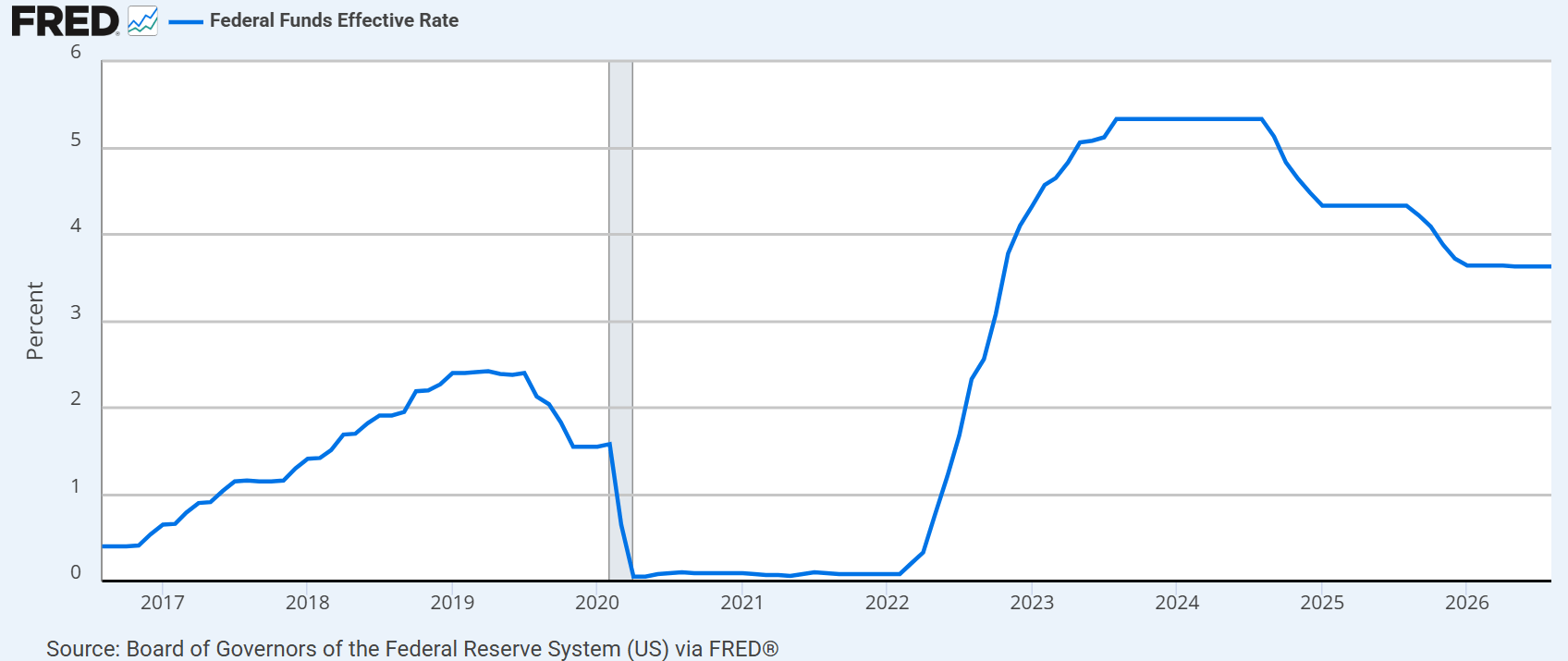
During this period, the cost of capital was incredibly low, causing the market to be awash with capital. Investors started to have trouble finding yield.
- Savings/checking accounts paid almost no interest
- CD rates were low
- Treasury yields were below inflation
- Corporate bond yields were low on anything investment grade
Yet a vast amount of capital is needed to earn yield. Retirees needed income and to get it they had to move out on the risk curve.
Capital that would have normally been earmarked for reasonably safe investments like Treasuries got poured into junk bonds and high dividend yield equities.
Why?
Because There Is No Alternative.
As more and more capital flowed into dividend stocks and junk bonds, the prices of these instruments soared well above fair value causing the yield to drop to very low levels.
Even the moderate risk level yield plays started to have yields that were too low. So income seekers had to move even further out on the risk curve. Only the junkiest of bonds and riskiest of dividend-focused equities still had yields in the 6%+ range.
That was the dislocation caused by TINA.
Yield was scarce so anything with decent yield got bid up to irrational levels.
The reverse is happening now.
Reverse TINA or There Are Infinite Alternatives (TAIA)
Moderate-to-high yield has become ubiquitous. Corporate capital demand is surging at a time when Treasury yields are being propped up by both the Fed and geopolitical factors.
Demand for capital:
- AI infrastructure buildout
- Corporate debt issuance
- National debt à treasury issuance
Trillions of dollars are being spent on the buildout of AI infrastructure. This includes chips, data centers, power generation, LLMs, and countless other spending buckets. While there are high hopes for these powerful AI tools to generate massive revenue in the future, the current revenue is a mere fraction of the buildout cost. Thus, the capital expense needs to be funded externally.
At first, the hyperscalers had cash hoards they could throw at it, but the cash has run out and they have turned to the debt market.
The previous pace of hyperscaler debt issuance used to be about $35 billion annually, but in 2025 as AI buildout commenced, $93B of debt was raised. That figure already jumped to $132B year-to-date in 2026 (as of 7/31/26).
Vanguard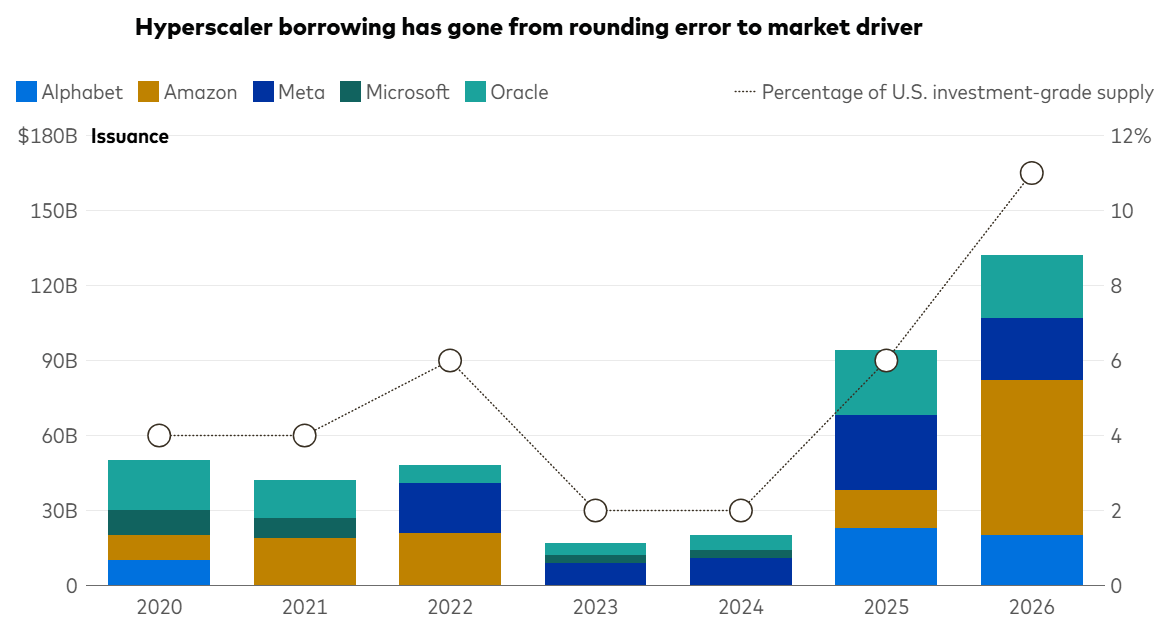
Source: Vanguard
According to a Vanguard report, total AI-related debt issuance is expected to hit $300-$570B in 2026:
“Estimates of total AI-related debt issuance for full-year 2026—extending beyond the hyperscalers to the wider ecosystem of chipmakers, data-center developers, and utilities—range from roughly $300 billion to $570 billion.”
While corporate America is trying to vacuum up capital for its funding, the U.S. government is also in need of capital inflows.
National debt surpassed $40 trillion in August and continues to rise.
FRED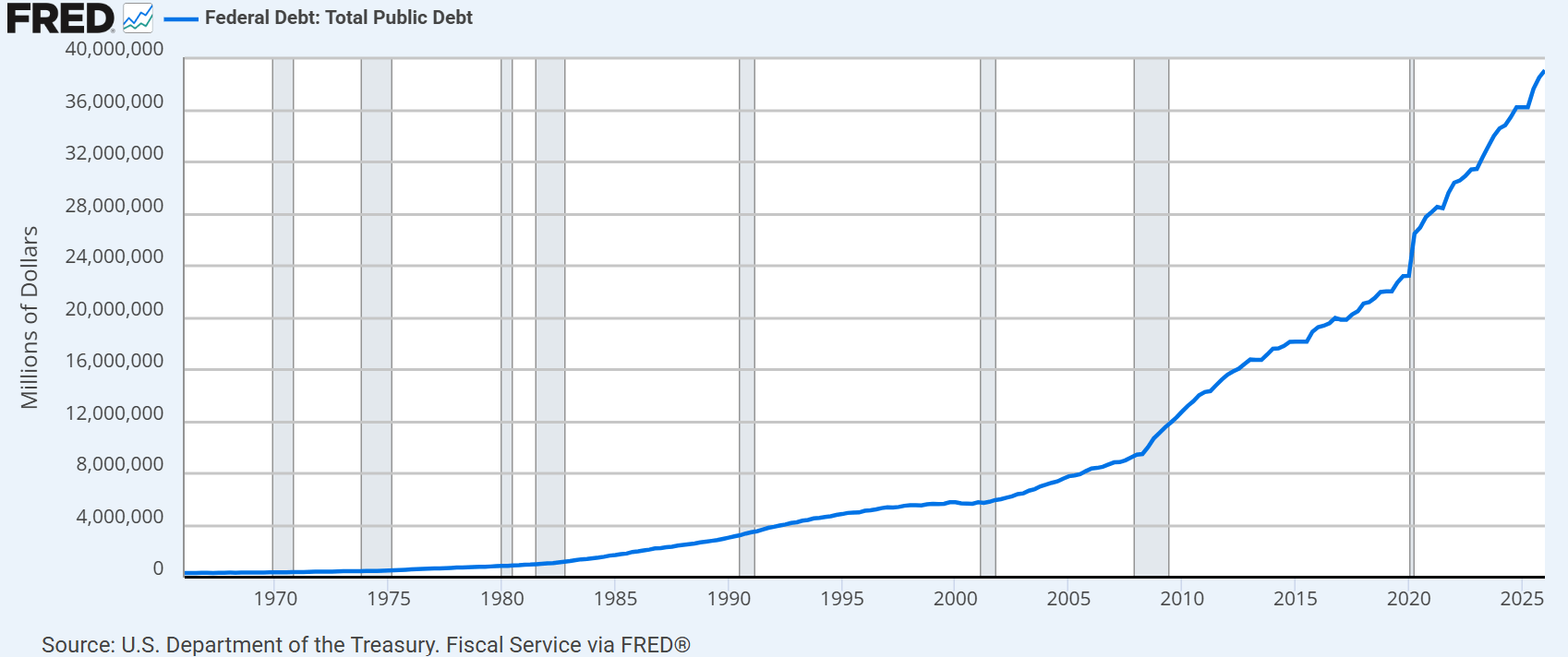
Much of this is funded by Treasury issuance.
Simultaneously with this surge in demand for capital, supply of capital seems to be waning:
Factors reducing the supply of capital
Both China and Japan have pulled back their investment in U.S. Treasuries.
TradingEconomics TradingEconomics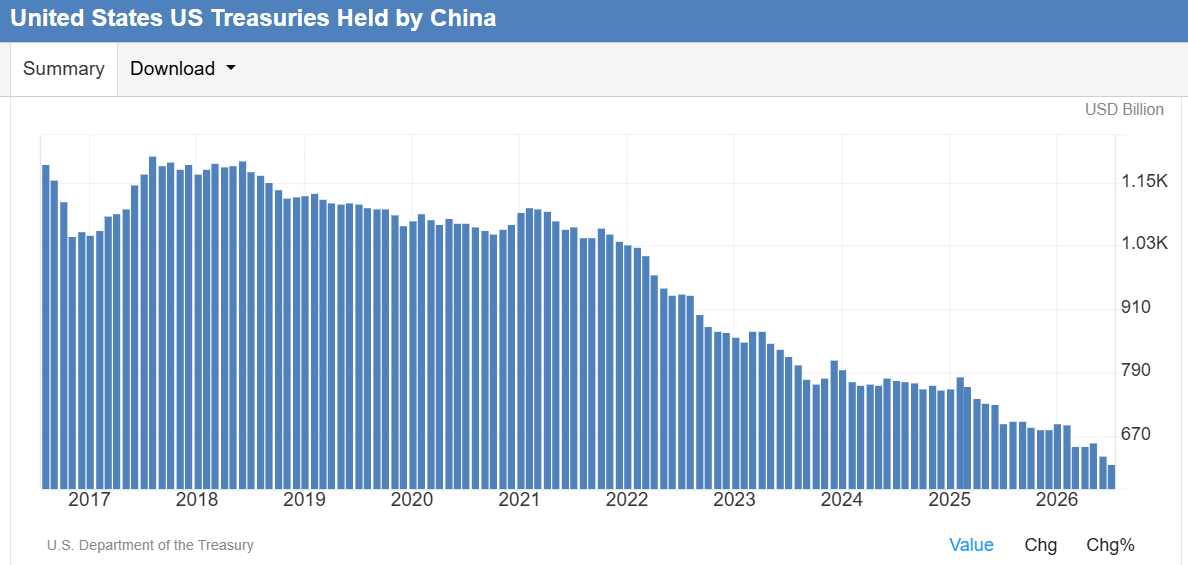
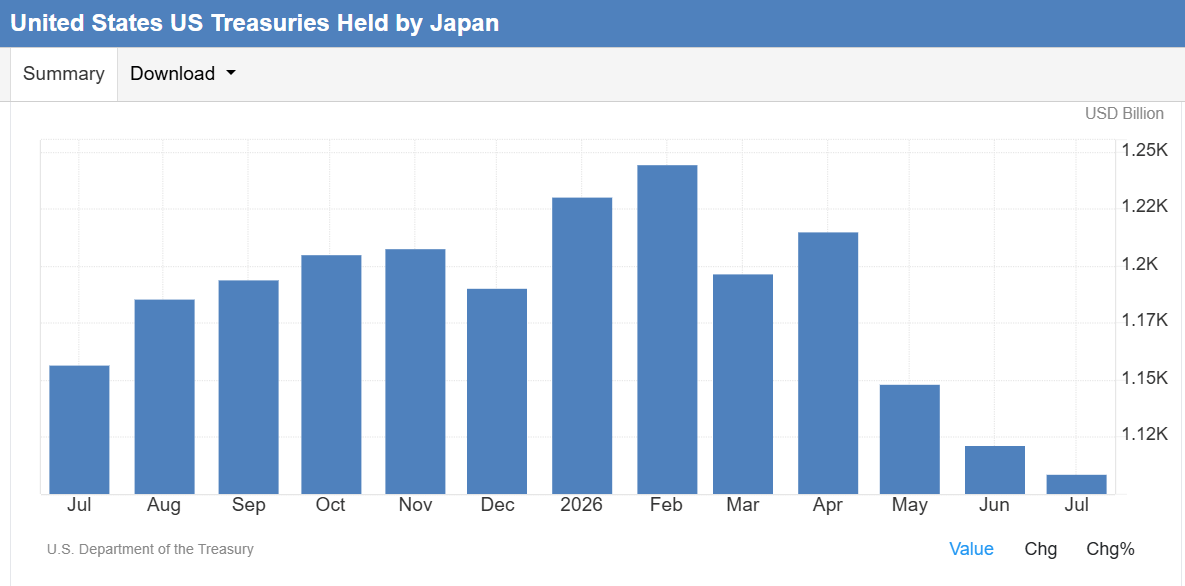
Source: TradingEconomics
Global yields are rising considerably, which reduced the demand for U.S. investments. The German Bund is up to a 3.45% yield.
TradingEconomics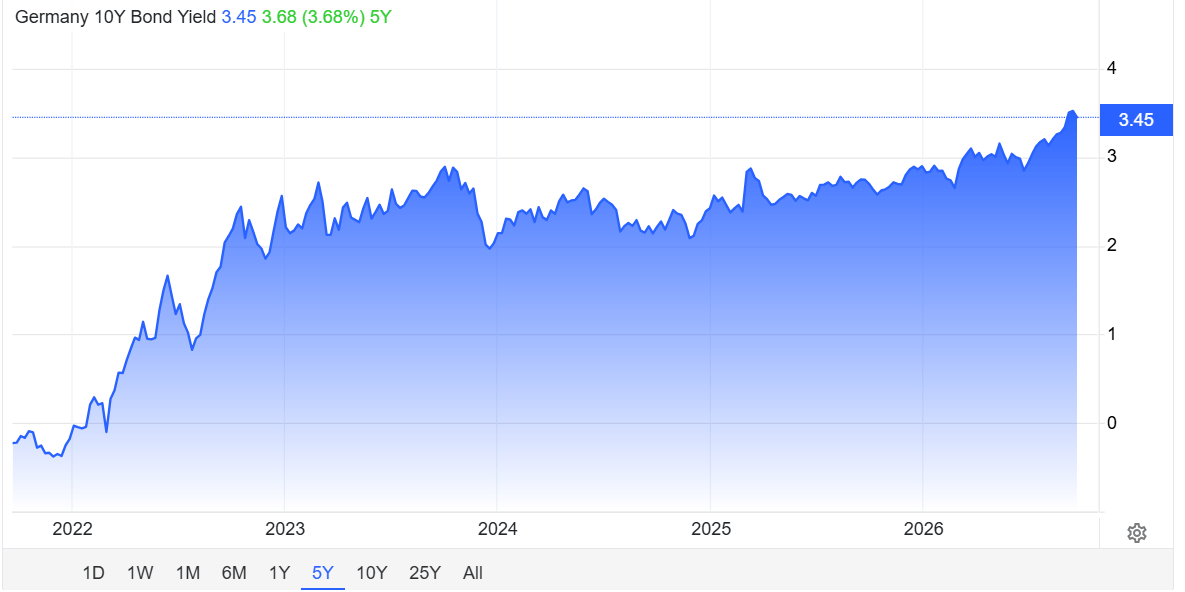
The European Central Bank and the Bank of Japan have both raised interest rates.
Overall foreign investment in U.S. Treasuries has dropped to $9.24T.
TradingEconomics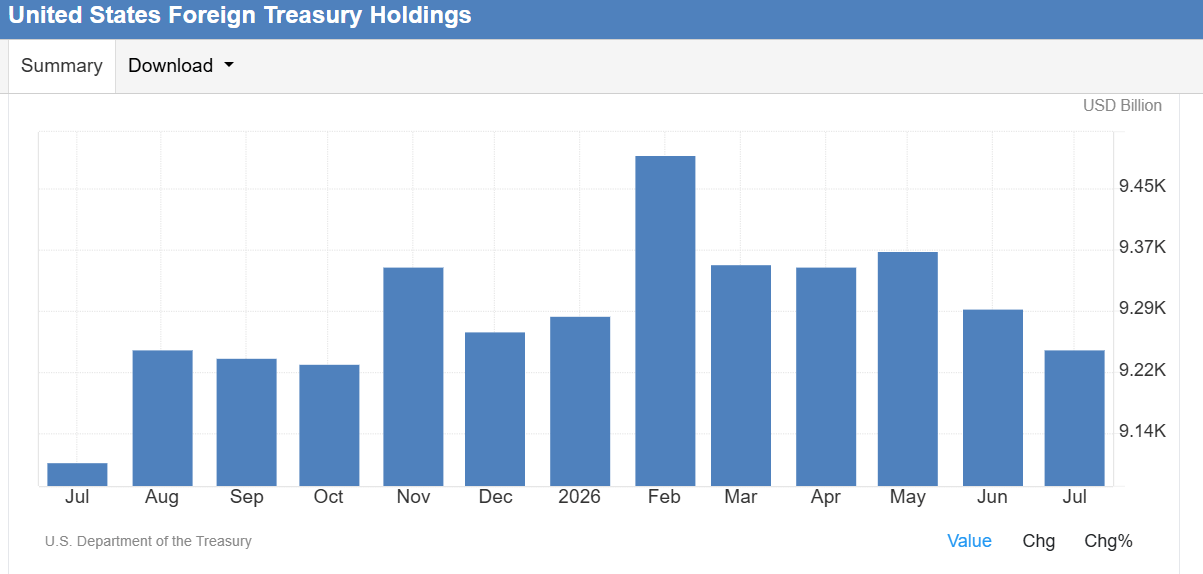
With this figure dropping while overall national debt is rising, the percentage that needs to be funded internally within the U.S. is surging.
At the same time, the U.S. has stopped printing money. The most recent bout of Quantitative Easing, or QE, was in 2020 and ended in 2022.
Federal Reserve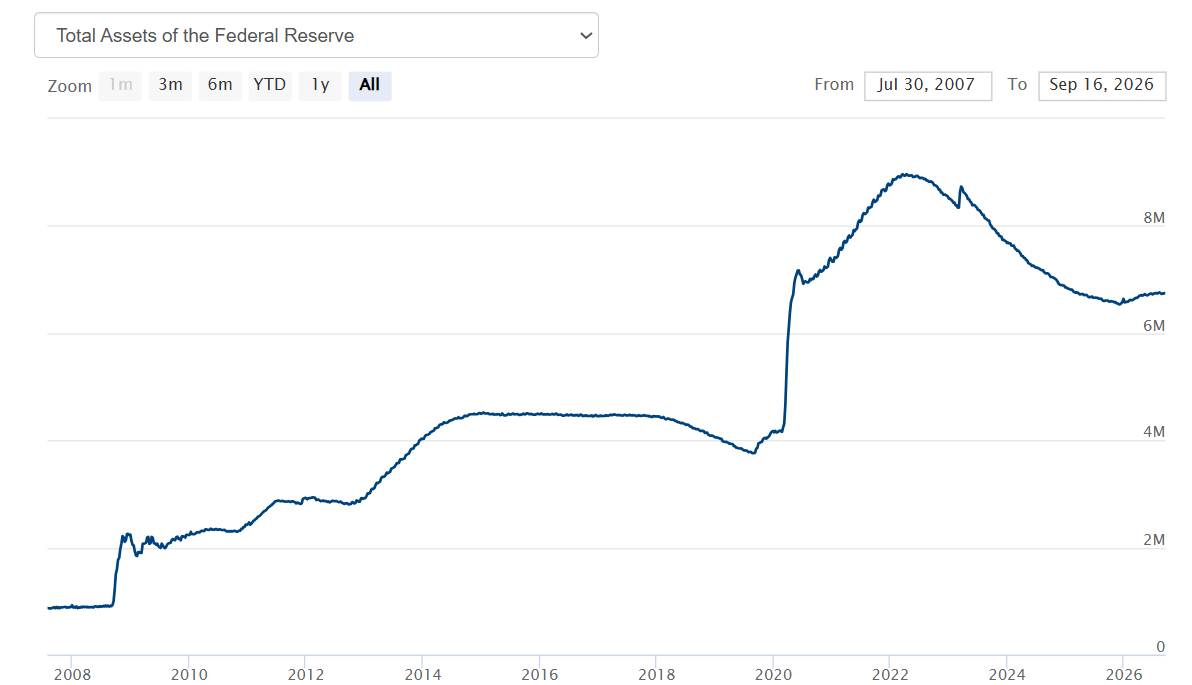
Source: Federal Reserve
Quantitative tightening began in 2022 and continued through December of 2025 after which the Fed has been on a hold pattern.
With no influx of capital from the Fed, the supply of capital to fund the surge in demand for capital has had to come from the private market.
Basic microeconomics tells us what happens.
Equilibrant yield rises to match capital supplied with capital demanded
In economic terms, the capital demand factors above translate to a rightward shift in the demand curve of capital. At any given cost of capital, more money is being demanded.
The lack of QE and foreign investment translates to a leftward shift in the supply of capital. At any given yield, less capital is being supplied.
Plotting these into a standard (simplified) supply and demand graph we can see that the new equilibrant yield is substantially higher than before these factors.
2nd Market Capital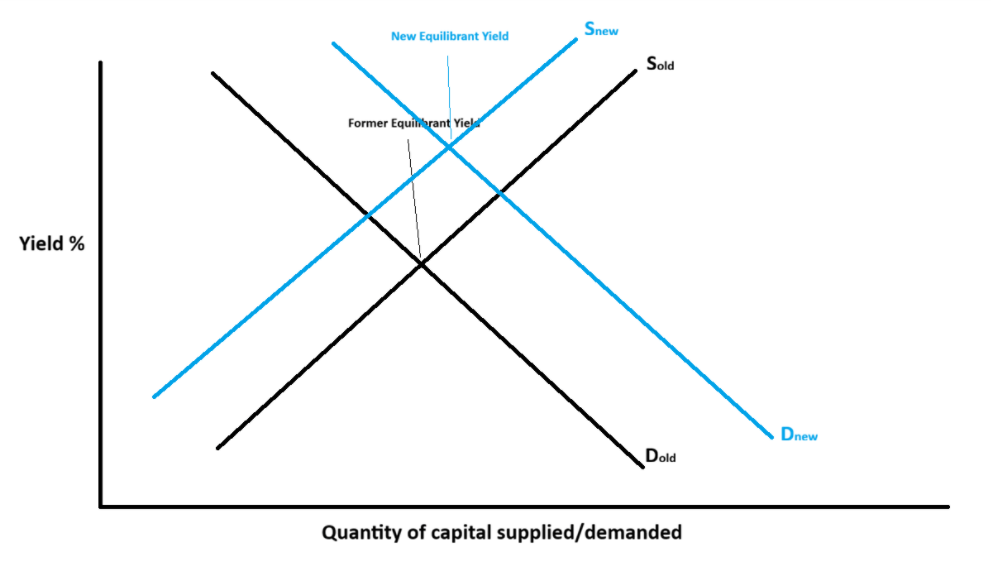
Yield would naturally rise from the free market forces discussed above and the Fed is giving it an extra kick by raising the artificial Fed Funds rate. As a result, yields are materially higher across the entire yield curve.
S&P Global Market Intelligence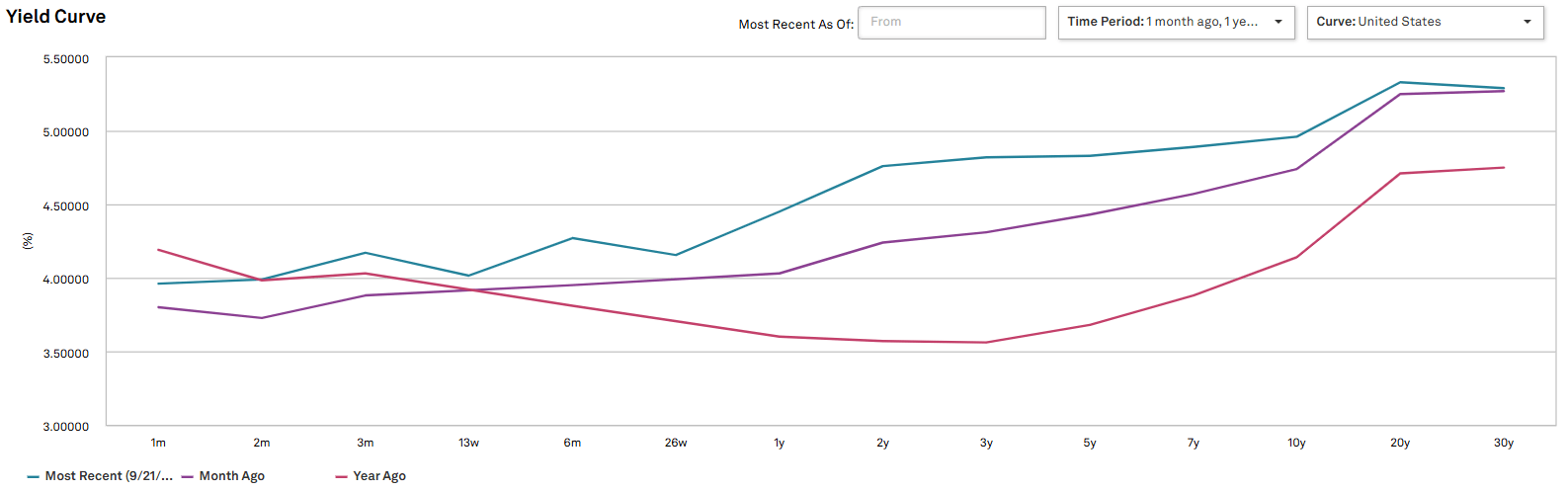
This has created the reverse TINA environment. An investor seeking yield has effectively infinite options to obtain said yield.
- Trillions of dollars of high credit corporate bonds at high yields
- Trillions of dollars of Treasuries yielding 5% or more
I describe this as infinite because it exceeds the amount of capital that would normally be earmarked for these types of investments.
Just as the scarcity of yield plays caused capital to move out on the risk curve during TINA, the abundance of high yield is causing capital to exit risky positions now.
For many investors, there is no reason to take high-risk income when “risk-free” Treasuries and low-risk A rated debt are paying so well.
This has led to a collapse in yield-focused equities. The junky dividend stocks have already collapsed and the downdraft is starting to hit some very high-quality yield plays.
In my opinion, this is where the opportunity lies.
Quality yield stocks thrown out by TAIA (there are infinite alternatives)
We will get to the individual stock opportunities created by the sell-off in dividend stocks, but let’s first examine it at a sector level.
The Fed started getting hawkish in Mid-July and since then REITs, as measured by the Vanguard REIT ETF (VNQ), and Utilities, as measured by the sector spider (XLU), have dropped 7.9% and 12.4%, respectively.
SA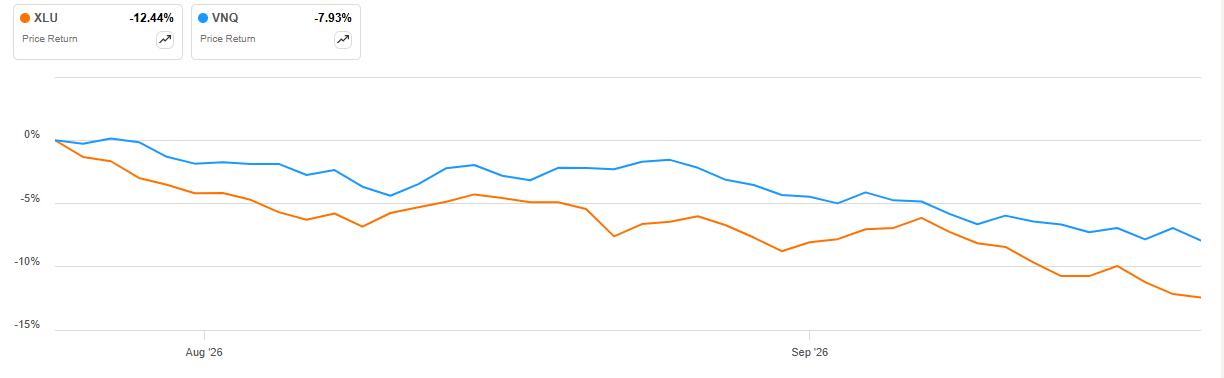
Both of these sectors are usually regarded as dividend focused and are heavily owned by investors seeking income.
Investors compare the yields of the stocks with those of other income alternatives and a significant portion of capital tends to flow where yields are higher.
So as treasuries rose and high yield corporate bonds became prevalent, capital flowed out of traditional income equities like REITs and utilities to fund these issuances.
Capital doesn’t flow as swiftly from growth buckets, so even though the higher risk-free rate should reduce stock prices across the board, it primarily causes a drop in yield stocks.
This is the dislocation. Yield stocks were disproportionately punished due to the type of investors who owned them. We refer to this as constituency bias.
The selloff is not fundamental in nature.
Both REITs and utilities are fundamentally flourishing. Utilities are clear beneficiaries of the AI buildout with massive pipelines for new power generation. Earnings CAGRs across the electric utilities have risen to 6%-10% through 2030.
REITs are benefiting from dramatically reduced supply which will improve demand and rent for existing properties.
Office construction has become negligible (green bars).
CBRE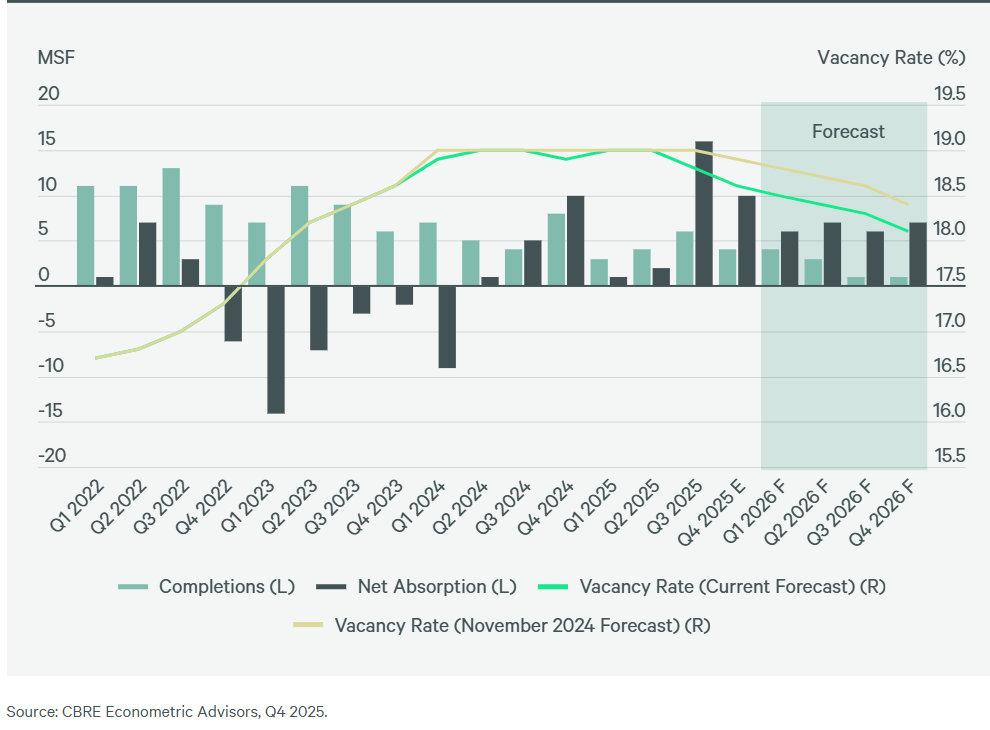
Even in stronger sectors, construction activity is anemic.
CoStar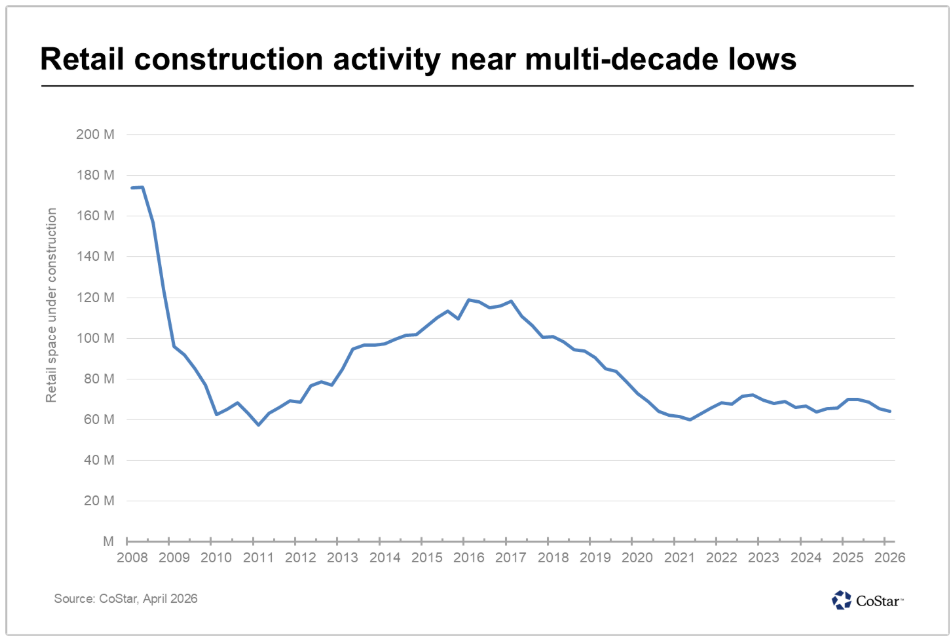
Source: CoStar
Shopping centers have had strong same-store NOI growth for 15 quarters in a row, yet construction is minimal because high rates are making development too expensive.
This accretes to the benefit of existing shopping center REITs.
Senior housing is arguably the hottest property sector with growth rates over 20% year over year. Yet even in senior housing there is virtually no construction with inventory growth sitting between -0.2% and 0.5% for the various subcategories.
NICMAP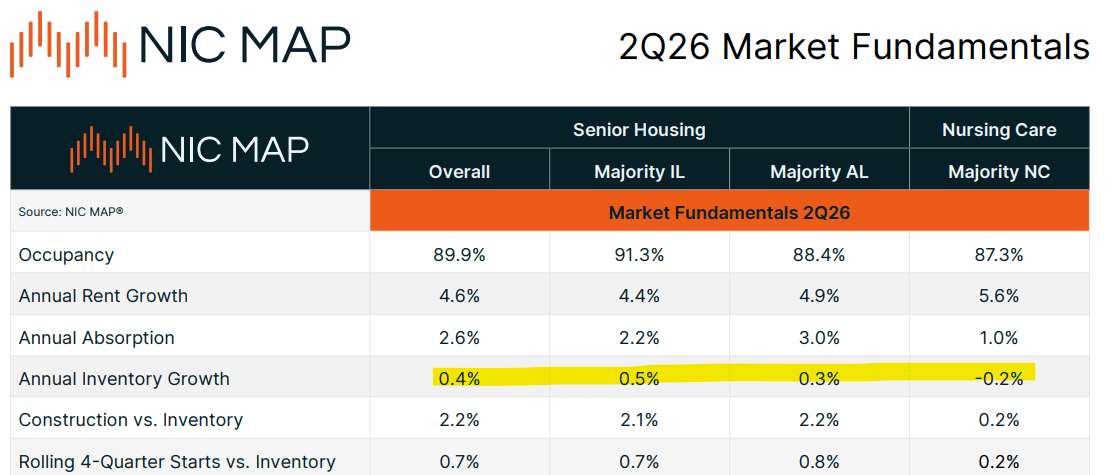
Both REITs and utilities have accelerating earnings growth, yet the sectors are selling off due to the capital flows of reverse TINA.
As the macro environment settles down, I think the capital will flow back in and move these stocks closer to fair value.
Specific opportunities
Some very high-quality companies have become irrationally cheap, so I do not see a reason to wade into junk. For utilities, I particularly like WEC Energy Group (WEC) and American Electric Power (AEP) which have each dropped 11% since the hawkish leanings.
SA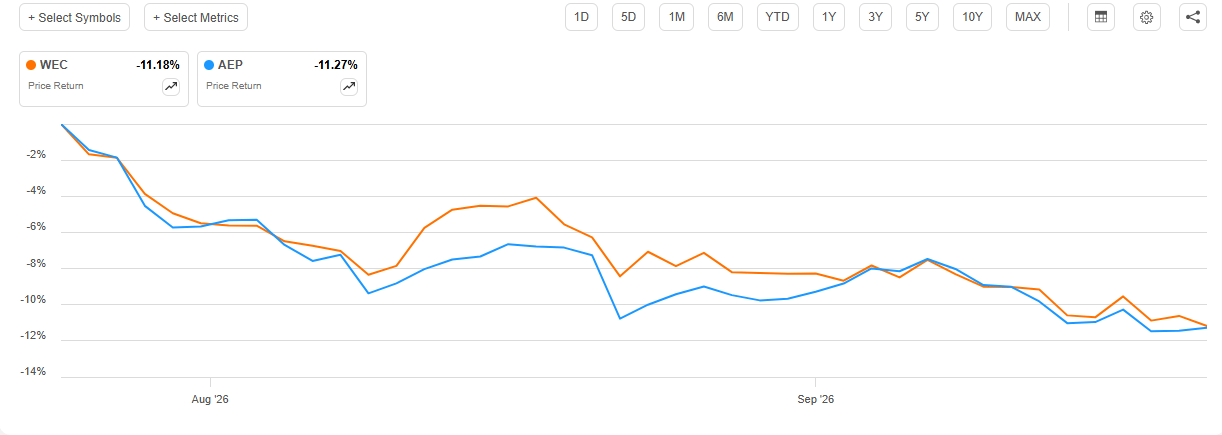
We wrote more extensively about AEP’s impressive load growth and WEC’s project pipeline.
For REITs the epicenter of the selloff has been triple nets. These are the most “bond-like” REITs due to their long-duration contractual cashflows so they were most impacted by the constituency bias. W.P. Carey (WPC), Getty Realty (GTY) and Broadstone Net Lease (BNL) are down 11%, 19.6% and 16.3%, respectively.
SA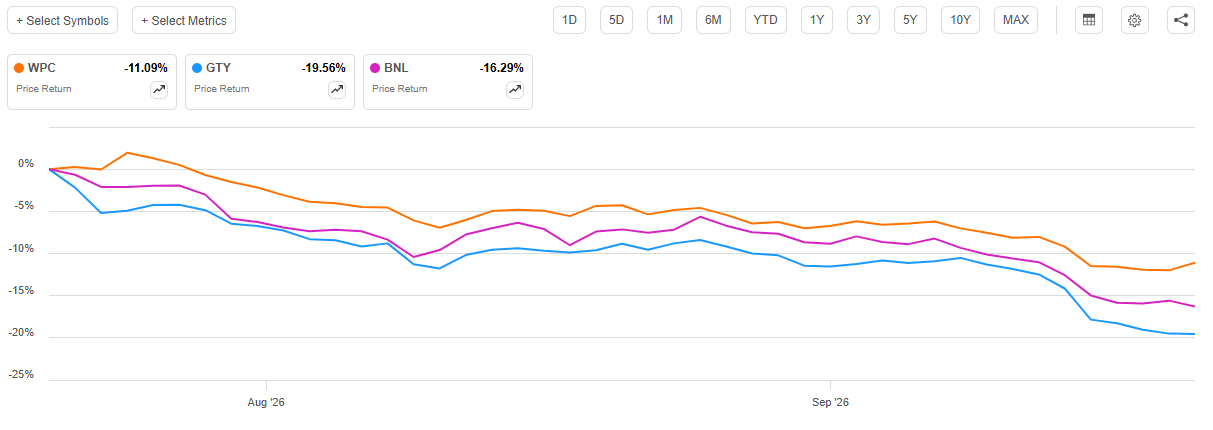
I think it is worth emphasizing that the fundamentals of these companies have not been damaged by the news.
- BNL is engaged in highly profitable data center build-to-suits.
- WPC is using cheap euro-denominated debt to finance high cap rate acquisitions
- Getty is executing large sale-leasebacks in its convenience store niche.
AFFO per share is growing and all 3 companies have healthy balance sheets which reduces the risk from a higher cost of capital.
On 3/27/26 we alerted members of Portfolio Income Solutions that we were selling GTY. Given the massive drop we will be looking to get back in.
How we are playing it
The TAIA environment continues. At present it remains a headwind to share prices of all yield plays. This makes it tricky to time entry points. Limping in now seems reasonable to me with plans to buy more if they keep dropping. These stocks have become severely discounted to fair value and current pricing represents an excellent ratio of growth relative to earnings multiples.