

Close Menu
Aspire Market Guides
  • Home
  • Alternative Investments
  • Cryptocurrency
  • Economics
  • Equity Investments
  • Mutual Funds
  • Real Estate
  • Trading
What's Hot

Working papers economics – Tax reforms and the labor market in an emerging market economy

September 25, 2026

Hot and Cold Stocks of Mutual Funds in August 2026

September 25, 2026

Busenaz Surmeneli strikes gold again at European Boxing Championships

September 25, 2026
Facebook X (Twitter) Instagram
Trending:
  • Working papers economics – Tax reforms and the labor market in an emerging market economy
  • Hot and Cold Stocks of Mutual Funds in August 2026
  • Busenaz Surmeneli strikes gold again at European Boxing Championships
  • Sui Surges 11% on Short Squeeze, Altcoin Rotation, DeFi Buzz | Top Stories
  • Review: When scalping was a lucrative business
  • Aditya Birla Sun Life Aggressive Hybrid Omni FOF
  • Minerals, infrastructure, technology and elections: the advance of the US in Latin America and what lies ahead
  • Simpson Thacher Steers JLL Plan To Launch Nontraded REIT
  • There’s a New Threat to the Stock Market and President Donald Trump’s Economy
  • 3,832 NFTs moved into whitehat custody after Magic Eden vulnerability
Friday, September 25
Facebook X (Twitter) Instagram
Aspire Market Guides
  • Home
  • Alternative Investments
  • Cryptocurrency
  • Economics
  • Equity Investments
  • Mutual Funds
  • Real Estate
  • Trading
Aspire Market Guides
Home»Trading»Review: When scalping was a lucrative business
Trading

Review: When scalping was a lucrative business

By CharlotteSeptember 25, 20263 Mins Read
Share
Facebook Twitter Pinterest Email Copy Link


Review: When scalping was a lucrative business

As a small boy I once joined a group of classmates to peer at a grainy black and white photo brought in by one of the boys whose uncle had fought in the Malayan ‘Emergency’. The subject of our ghoulish fascination was an image of smiling Scottish soldiers displaying the severed heads of alleged communist guerillas. The British had paid Dayak headhunters for every Chinese head that they brought in.

It was hardly a new incentive. Years earlier, during the Greek civil war, the British paid a bounty to right wing thugs for the bearded heads of Greek partisans after an earlier scheme to pay out for pairs of ears backfired when the earless corpses of innocent parties started turning up.

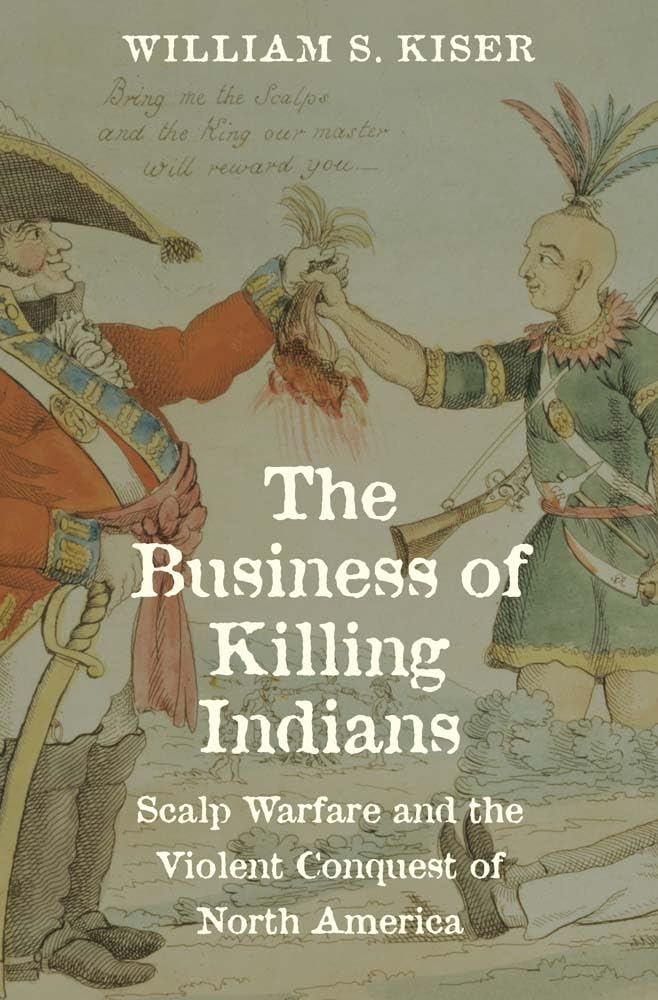
The same thing, we now learn in a fascinating new book by William Kiser entitled The Business of of Killing Indians, happened in North America when the British, French, Mexicans, Canadians and Americans paid bounty hunters for Indian scalps. Some Native American tribes had always indulged in scalping their opponents, but it was European colonists who supercharged, and monetised, the practice.

There could be good money in scalping and in one Canadian province, much to the irritation of the indigenous peoples, the right to take Indian scalps and to be rewarded for them technically remains on the statute books to this day.

In 1849 a Mexican law stipulated the payment of 200 pesos for every male scalp and 150 pesos for female captives and children under the age of 14 years. That year the authorities in Chihuaha paid out just under 18,000 pesos to scalp hunters at a time when a Mexican worker was lucky to be paid 200 pesos a year.

In 1853 the Californian legislature paid a gang of 36 killers $23,000 for killing 73 Modocs, equivalent to $315 for each dead Indian. Miners in the Californian gold fields at the time were paid around $3 a day.

Inevitably, these huge financial incentives led to fraud. Horse tails were dressed to look like human hair, scalps were divided in two and the scalps of mixed race mestizos with black hair similar to that of the Indians were also taken.

The practice flourished from the late 1600’s to the late 1800’s and it was only in the 1860’s after an expose by Irish writer J. Ross Browne in Harper’s Monthly Magazine, in which the gruesome details of numerous massacres in California were revealed, that public opinion began to oppose such methods.

Kiser’s troubling  and well-researched book is continent-wide in its scope. Almost one third of its 335 pages are devoted to notes and references.

In it, Kiser is concerned to establish whether state-sponsored scalping which led to the massacres of thousands of Indians was genocidal in its intent. There seems little doubt that it was. Consider a speech by Colonel John M Chivington who organised the 1864 massacre of over 100 Indians at Sand Creek in Colorado during which the scalps and genitalia of victims were taken. He declared that his policy towards Indians was to  “kill and scalp all, big and little – because nits made lice”.

The Business of Killing Indians by William S Kiser, Yale University Press, 335pp, £30.00


Source link

Related Posts

Trading

Canada’s firm response to US trade pressure could boost its position, Washington draws growing pushback: expert

September 25, 2026
Trading

FundedFast Appoints Author and Trading Analyst Gabriele Nigro

September 25, 2026
Trading

Day Trading Guide for September 25, 2026: Intraday supports, resistances for Nifty50 stocks

September 25, 2026
Trading

Scalpers ask quadruple face value for sold-out Electric Avenue passes

September 24, 2026
Trading

How to close your position

September 24, 2026
Trading

A spotlight on Wrexham’s Trading Standards department

September 24, 2026
Add A Comment
Leave A Reply Cancel Reply

Editors Picks

Working papers economics – Tax reforms and the labor market in an emerging market economy

September 25, 2026

Hot and Cold Stocks of Mutual Funds in August 2026

September 25, 2026

Busenaz Surmeneli strikes gold again at European Boxing Championships

September 25, 2026

Sui Surges 11% on Short Squeeze, Altcoin Rotation, DeFi Buzz | Top Stories

September 25, 2026
SUBSCRIBE TO OUR NEWSLETTER

Get our latest downloads and information first. Complete the form below to subscribe to our weekly newsletter.


I consent to being contacted via telephone and/or email and I consent to my data being stored in accordance with European GDPR regulations and agree to the terms of use and privacy policy.

Featured

Five Big Tech Earnings Could Decide Bitcoin’s Next Move This Week

April 26, 2026

A stronger macroeconomic framework for a stronger Indonesia – Academia

August 9, 2026

10 Best Coal Stocks to Invest In According to Hedge Funds

June 7, 2026
Monthly Featured

Morocco Unveils Amiblu Production Line in $17 Million Boost to Water Infrastructure

July 1, 2026

Dumped, shorted, forgiven: How hedge funds gamed four ASX blue chips – AFR

September 6, 2026

Sub-Saharan Africa’s Best 10Y Growth Meets Middle East Test | The Kenyan Wallstreet

April 19, 2026
Latest Posts

Working papers economics – Tax reforms and the labor market in an emerging market economy

September 25, 2026

Hot and Cold Stocks of Mutual Funds in August 2026

September 25, 2026

Busenaz Surmeneli strikes gold again at European Boxing Championships

September 25, 2026
SUBSCRIBE TO OUR NEWSLETTER

Get our latest downloads and information first. Complete the form below to subscribe to our weekly newsletter.


I consent to being contacted via telephone and/or email and I consent to my data being stored in accordance with European GDPR regulations and agree to the terms of use and privacy policy.

© 2026 Aspire Market Guides.
  • Contact us
  • Privacy Policy
  • Terms and Conditions

Type above and press Enter to search. Press Esc to cancel.

SUBSCRIBE TO OUR NEWSLETTER

Get our latest downloads and information first.

Complete the form below to subscribe to our weekly newsletter.


I consent to being contacted via telephone and/or email and I consent to my data being stored in accordance with European GDPR regulations and agree to the terms of use and privacy policy.