
by Cristobal Chavez Bravo
SANTIAGO, Sept. 30 (Xinhua) — This year’s El Nino phenomenon will exacerbate economic problems in Latin America and the Caribbean, mainly by disrupting rainfall and raising temperatures, a Chilean climatologist has said in a recent interview with Xinhua.
Patricio Gonzalez Colville, a researcher at the Center for Research and Transfer in Irrigation and Agroclimatology at Chile’s University of Talca, said El Nino’s economic impact would be felt mainly through agriculture.
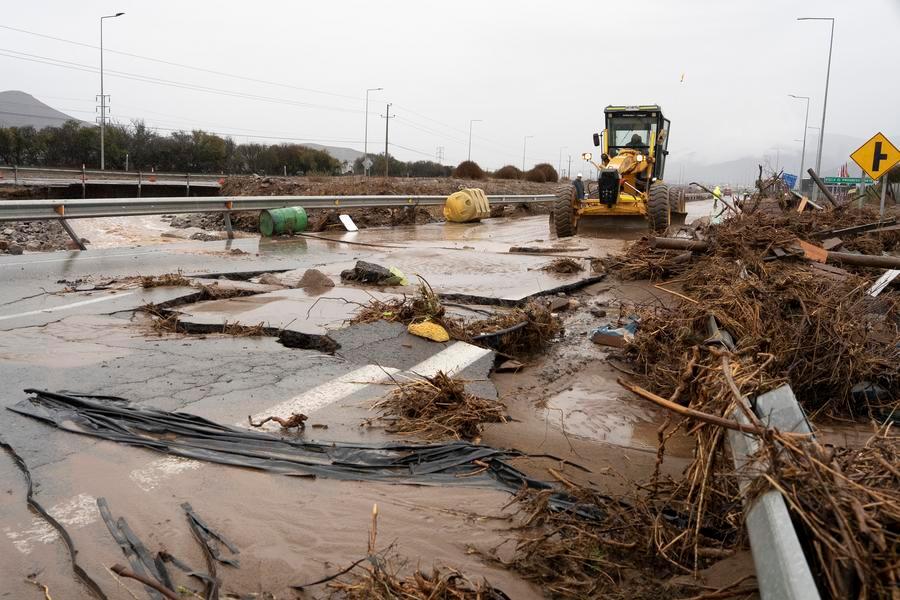
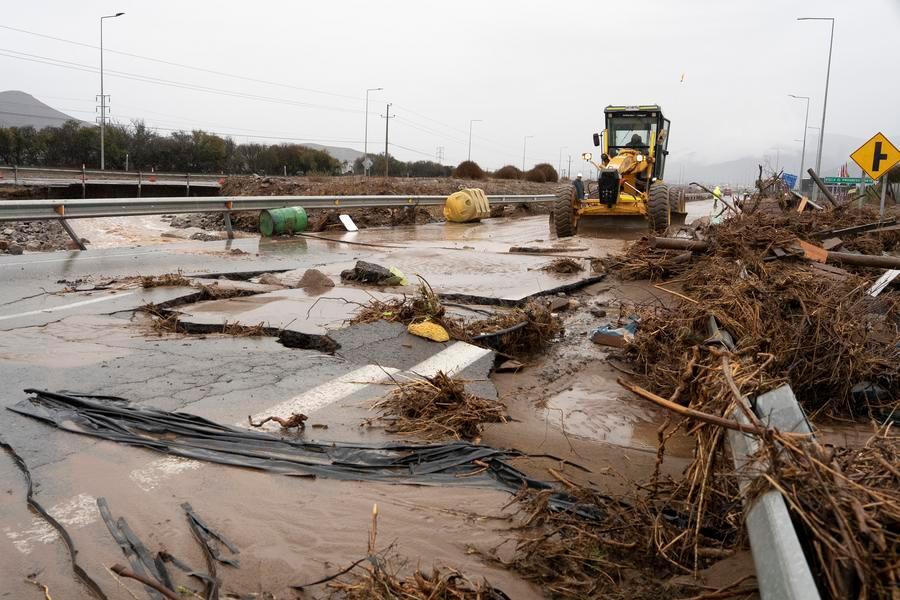
“The El Nino event affects the economy as a whole. Its main impact is to drastically alter both precipitation, causing floods or droughts, and temperatures, leading to extreme heatwaves with highs exceeding 38 degrees Celsius for several days,” Gonzalez said.
Fruit and cereal farming requires moderate weather conditions. “Consequently, the primary impact is felt in agricultural losses, affecting both family farming and access to water,” the expert said.
“Many communities will see their food crops diminish, and markets will raise the prices of basic goods due to scarcity. Poverty levels will rise as these communities are unable to sell surpluses and face limited access to irrigation water,” he said.
He also warned that unemployment could rise as communities dependent on agriculture may be forced to cut jobs amid growing climate uncertainty and vulnerability.
Gonzalez said the current El Nino warming is classified as “strong” in terms of intensity and is expected to evolve into an “extraordinary” event between November 2026 and January 2027.
Central America faces a “tough” climate outlook with the development of the 2026 El Nino, particularly in the so-called “dry corridor,” an extensive strip spanning southern Mexico, Guatemala, El Salvador, Honduras, Nicaragua and part of Costa Rica.
“El Nino causes extreme droughts in this geographic area. It is estimated that 11 million people who rely almost exclusively on family farming, growing crops such as maize and beans, will face limited access to water. Consequently, the presence of an El Nino event of such extraordinary magnitude threatens to exacerbate the food crisis in this region,” he said.
Some 43 million people in Latin America and the Caribbean are undernourished, and the impacts of this event could aggravate the situation in countries such as Colombia, where heatwaves and extreme droughts hurt the country’s agricultural economy, he added.
“The most severe scenario could unfold in Brazil, where droughts and water scarcity in the Amazon, the so-called ‘lungs of the planet,’ could trigger uncontrollable forest fires,” said Gonzalez.
“An analysis of past El Nino events shows that Latin American countries tend to bear the brunt of the impact. Their economies rely heavily on agricultural exports,” he said, adding that this could result in lower economic returns for these countries.
What’s more, climate change “is acting in synergy with El Nino” to raise temperatures, Gonzalez said.
“All signs indicate that the planet has already passed the point of no return regarding this new phase, in which ‘normality’ is no longer a fixed climatic concept,” he concluded.■