
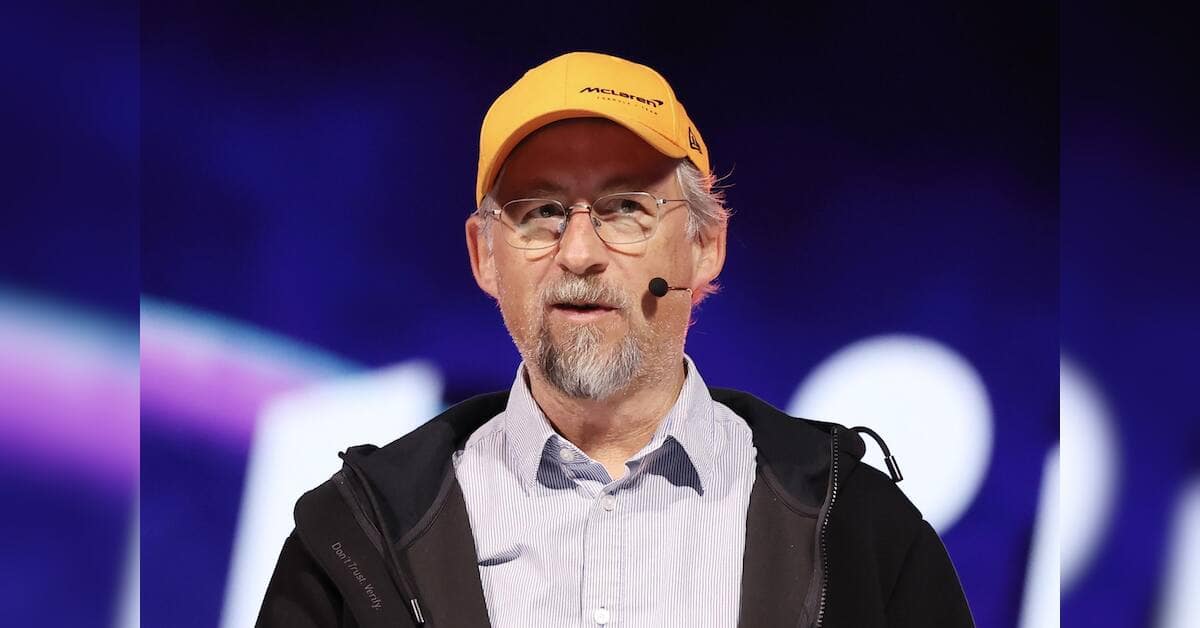
Adam Back, the British cryptographer who has denied being the pseudonymous creator of Bitcoin, Satoshi Nakamoto, is again making headlines as several businesses linked to him face scrutiny. Back is the co-founder of Blockstream, a company that develops technology and infrastructure for Bitcoin.
Several businesses connected to Back have faced setbacks, including a $320 million security breach at Blockstream’s Liquid Network, the collapse of a proposed Bitcoin treasury-company listing and legal disputes involving Blockstream’s former Bitcoin mining business.
Who is Adam Back?
Back is a cryptographer who earned a PhD in computer science from the University of Exeter.
Before Bitcoin, he developed Hashcash, a proof-of-work system designed to make certain types of automated abuse more expensive. Nakamoto, the pseudonymous creator of Bitcoin, later cited Hashcash in the cryptocurrency’s 2008 white paper, which linked Back’s earlier work to the technology behind Bitcoin.
Back co-founded Blockstream in 2014 to develop infrastructure around Bitcoin and digital assets. The company later launched a Bitcoin mining business, which was subsequently spun off as Blockstream focused on Bitcoin infrastructure technology.
What is Blockstream?
Blockstream is a Bitcoin infrastructure company whose projects include Liquid, a Bitcoin-linked sidechain.
Liquid was launched in 2018 and is built on Elements, an open-source blockchain platform developed by Blockstream. The network uses a federation of functionary nodes to operate the sidechain. According to Blockstream’s September 2026 assessment, Liquid has 15 geographically distributed functionary nodes, with at least 11 required to accept a block.
The network is designed to maintain a 1:1 relationship between Bitcoin locked on the Bitcoin network and LBTC issued on Liquid. The September security incident resulted in the creation of about 4,000 unbacked LBTC, which were then used to withdraw about 4,000 BTC from the Liquid reserve.
How did the Liquid hack happen?
On September 6, 2026, an attacker exploited a vulnerability in Elements’ rangeproof verification cache. According to Blockstream’s technical assessment, the vulnerability allowed a transaction to pass validation even though its output was not backed by its inputs. This resulted in the creation of about 4,000 unbacked LBTC.
The attacker then moved the unbacked LBTC through Liquid’s standard peg-out process, resulting in a withdrawal of about 4,000 BTC from the Liquid reserve. Blockstream said the reserve fell from about 4,205 BTC to 197 BTC after the unauthorised withdrawals and smaller peg-outs that took place before the network was halted.
Blockstream coordinated a halt of Liquid’s bridge nodes on September 6 and deployed an emergency patch the following day. The attacker later returned 3,400 BTC, leaving about 602 BTC outstanding as of Blockstream’s September 25 assessment.
The network resumed block production on September 9 after a new software release was deployed, although peg operations remained suspended during the recovery process.
The incident brought renewed attention to Blockstream, where Back is a co-founder. Bloomberg has described him as the public face of the company.
What happened to Blockstream’s mining business?
Bitcoin mining is another part of Blockstream’s business history.
Blockstream launched its mining operation several years after the company was founded. The business was later spun off as Blockstream decided to concentrate on Bitcoin infrastructure technology.
Blockstream President Michael Minkevich told Bloomberg that mining was “capital intense” and “not a good fit” with the rest of the company.
The spun-off mining business partnered with Exacore, a company run by Chris Cook, whom Bloomberg described as a long-time business associate of Back. Exacore has since faced legal disputes involving contractors and clients over payments and contracts.
Back is not an executive at Exacore. Bloomberg reported that he has held a minority interest in Blockstream Mining and had served as a technical adviser to the mining business. Blockstream said that advisory role has ended.
The mining business also raised money through instruments linked to its Bitcoin output. One such instrument, the Blockstream Mining Note, was issued in 2021. A second version, BMN2, followed in 2024.
In October 2025, the target size of the BMN2 programme was increased to $2 billion. SICOS Securities, which managed the issuance, said the increase was based on “strong demand from investors”.
Bloomberg also reported several disputes involving Exacore, including lawsuits over alleged unpaid amounts for mining equipment, electrical work and electricity. Exacore has disputed some of the allegations.
Where does BSTR Holdings fit in?
Back’s name has also been associated with BSTR Holdings, a proposed Bitcoin treasury company that planned to accumulate $4 billion worth of Bitcoin.
The company had planned to go public through a transaction involving a blank-cheque company associated with Cantor Fitzgerald. The original terms of the transaction were scrapped in July 2026, with the companies planning to pursue amended terms.
The transaction was later terminated. In late August, Cantor said BSTR owed the blank-cheque company $15 million, according to Bloomberg.
Why is Back linked to Satoshi Nakamoto?
In April 2026, The New York Times published an investigation arguing that evidence pointed to Back as Satoshi Nakamoto, based on similarities in their writing, online activity and timelines. The investigation drew on thousands of old online posts and emails.
The report did not establish Back’s identity as Nakamoto as a fact. Back denied the claim. In a post on X after the investigation was published, he wrote, “I’m not Satoshi.” He also described the evidence as a combination of coincidence and similar phrases used by people with similar experience and interests.