
Burhan Sansarlioglu and Emir Yildirim
01 October 2026•Update: 01 October 2026
Global markets are trading on a mixed trend even though US macroeconomic data fueled expectations that the Federal Reserve may postpone its rate hikes.
The US economy grew 2.2% year-on-year in the second quarter, above the preliminary estimates of 1.5%.
The core Personal Consumption Expenditures (PCE) index, the Fed’s inflation indicator excluding food and energy, rose 0.2% month-on-month and 3% on an annual basis in August, above the 0.3% monthly rise estimates but below the 3.3% annual growth expectations. The index followed a 0.1% month-on-month and 3% annual increase in July.
The US PCE grew above expectations by 0.9% on a monthly basis but rose below estimates by 0.2% year-on-year.
Private sector employment surpassed market expectations by rising 90,000.
The Fed is expected to make a soft landing in its policy given the strong data, while the downward trend in inflation showed the American economy remains resilient and the bank may not be forced to hike rates any time soon, analysts say.
The Fed’s likelihood to raise rates in October fell from 70% to 38% following the data release, according to money market estimates.
Meanwhile, the impact of surging diesel prices in September has yet to be reflected in the data, causing uncertainties to persist over whether inflationary pressures will ease.
Interest rates will remain at high levels despite the lower-than-expected inflation and better-than-expected growth and ADP private-sector employment figures, dampening risk appetite.
The US 10-Year Treasury bond yield hit its highest since 2007 at 5.31%, while the 30-year yield topped 5.65%.
Despite easing rate hike expectations in October, the Fed is still estimated to continue with these hikes at subsequent meetings, driving up Treasury bond yields.
The US dollar rose to 101.7 on Thursday, reaching its highest level since June 24, supported by the rise in yields.
Gold rose 0.7% to $4,184 per ounce and December-delivery Brent crude fell 1.4% to $96.6 a barrel.
Meanwhile, US President Donald Trump said former Fed chair Jerome Powell should be made to resign from the Board of Governors due to cost overruns in the bank’s building renovation project.
Trump also said South Korea plans to invest up to $200 billion in major US energy projects.
He is also considering a ban on diesel exports but he later acknowledged this would affect gas prices.
At the same time, Fed board member Lisa Cook said inflation remained above target for over five years, pledging to bring inflation back to the target level while preserving the labor market’s strength.
The Fed finalized changes to its annual stress test of large bank finances to increase transparency and public accountability, while reducing volatility in capital requirements linked to these tests.
Stock markets
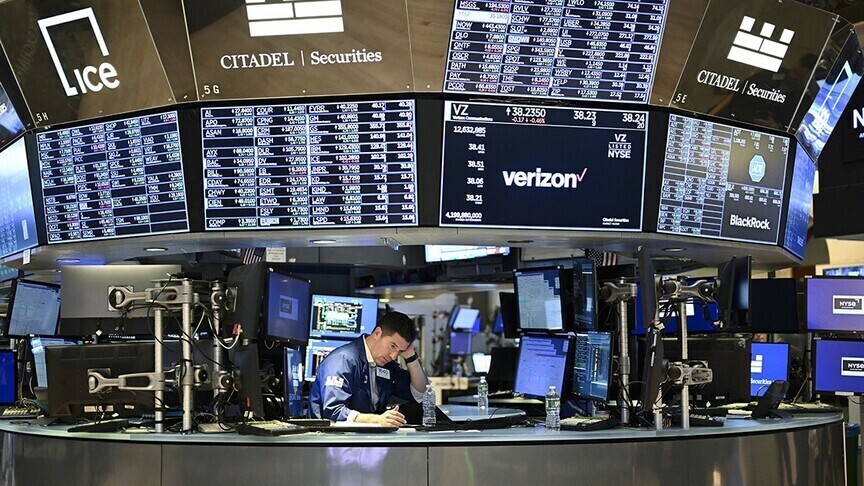
The New York Stock Exchange closed Wednesday on a mixed trend due to the selling pressure in the bond market despite inflation coming in below estimates.
US chipmaker Micron Technology’s shares rose 0.6% in after-hours trading due to its better-than-expected earnings.
The average interest rate on 30-year mortgages rose 7.3% last week in the US, reaching the highest level since November 2023.
The Dow Jones Industrial Average fell 0.86% and the S&P 500 dropped 0.25%, while the Nasdaq gained 0.24% on Wednesday. American indexes started Thursday on a positive trend.
Meanwhile, European stock markets traded lower on Wednesday amid rising energy costs fueling inflation concerns and pressuring the bond market.
Germany’s annual inflation rose above expectations to 3.3% in September due to escalating Middle East conflict driving up energy costs.
The European Central Bank (ECB) is more likely to continue its tight monetary policy given this data.
The UK economy grew 0.5% quarter-on-quarter and 1.4% on an annual basis in the second quarter, exceeding expectations.
The Bank of England (BoE) is expected to hike rates with an 85% possibility, money market estimates show.
The UK’s FTSE 100 fell 0.29%, Germany’s DAX 40 declined 0.79%, France’s CAC 40 dropped 0.89%, and Italy’s FTSE MIB 30 was down 0.84% on Wednesday. European indexes opened Thursday on a negative trend.
Near Thursday’s close, Asian equity markets traded higher as Fed rate hike expectations eased and Micron’s better-than-expected earnings positively impacted chipmaker shares in Japan and South Korea.
Japan’s manufacturing Purchasing Managers’ Index (PMI) reached 54.1 in September, within estimates.
South Korea’s exports exceeded expectations by rising 83.5% on an annual basis, driven by record levels of semiconductor shipments as global artificial intelligence (AI) investment continues to boost chip demand.
Japan’s Nikkei 225 rose 2.9% and South Korea’s Kospi climbed 1.9% near Thursday’s close, while trading is suspended in Chinese and Hong Kong markets due to a holiday.