
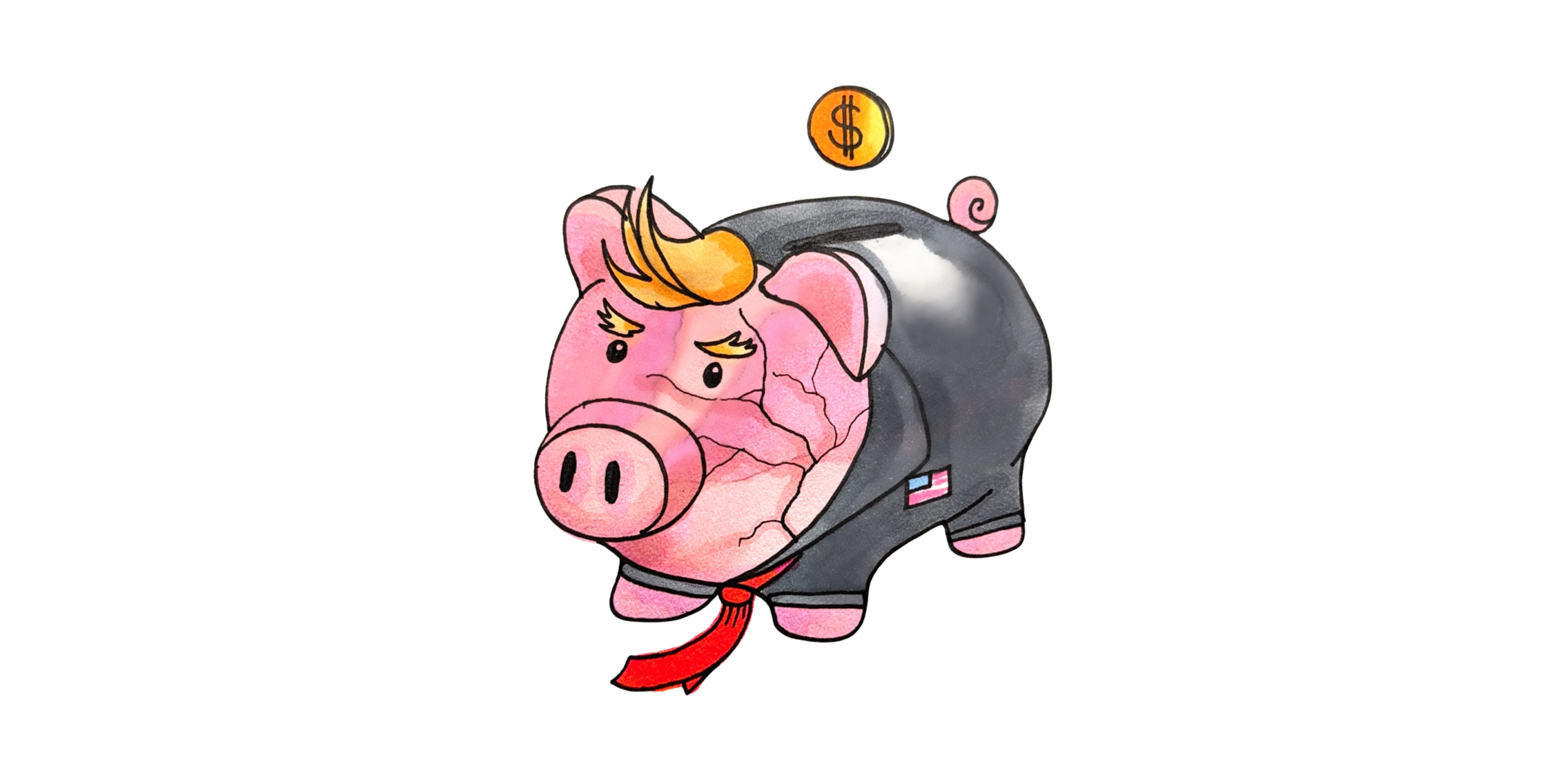
Now more than ever, it’s easy to fall into traps of misinformation, especially when it comes to the U.S. economy.
For decades, the economy has been one of the most powerful political talking points in campaign speeches, news debates and everyday conversations. It’s often reduced to a simple claim: one president built a strong economy, another destroyed it.
But the economy doesn’t work that way. And as students preparing to enter the workforce, we can’t afford to accept that oversimplification.
At Lehigh, about 21% of students are pursuing business degrees. That means a significant portion of campus is preparing to work in fields where understanding markets, data and long-term trends is essential. Yet political narratives about the economy continue to dominate public discourse without enough scrutiny.
One of the most persistent claims in recent years is that President Donald Trump created a booming economy during his first term and is doing so again. That claim, while politically effective, isn’t entirely accurate.
Economic indicators during Trump’s presidency were mixed. According to analysis from The Economist, data on GDP growth, inflation, unemployment and stock market performance points to steady but moderate progress rather than a dramatic transformation. While the stock market rose, overall economic growth remained relatively modest, and inflation continued to strain household budgets.
More importantly, Trump inherited an economy that was already improving.
Following the Great Recession, the U.S. experienced a prolonged recovery during former President Barack Obama’s administration. Unemployment steadily declined, job growth remained consistent and household incomes began to rise. By the time Trump took office in 2017, the country was already in the middle of one of the longest economic expansions in modern history.
Economic trends don’t reset when a new president enters office. Growth, investment and job creation develop over time and are shaped by policies from previous administrations, as well as global conditions beyond any president’s control. Ignoring that context leads to misleading conclusions.
This isn’t to say Trump’s policies had no effect. The 2017 tax cuts likely provided a short-term boost, particularly for corporations and higher-income households. However, many economists argue that the broader trajectory of steady job growth largely followed patterns already in motion.
Even during periods of apparent strength, the benefits of economic growth weren’t evenly distributed.
Wealth inequality widened during Trump’s presidency. Rising stock prices and asset values benefited wealthier Americans, while many middle and lower-income households faced increasing costs for essentials such as housing and groceries. For those families, a strong stock market didn’t translate into financial security.
That distinction matters. A rising market isn’t the same as a broadly strong economy, yet political messaging often treats them as interchangeable.
Today, similar patterns persist. Economic signals remain mixed, with slow growth, continued inflation and rising uncertainty. While some indicators show resilience, others — including increasing costs and signs of job instability — point to ongoing challenges.
Sweeping claims about a “booming” economy oversimplify a far more complex reality.
As students preparing to lead companies, manage investments and shape policy, we have a responsibility to look beyond political messaging and engage with the data. Accepting simplified narratives doesn’t just weaken public understanding — it risks shaping decisions based on incomplete information.
Political claims about the economy may dominate each election cycle, but the data tells a quieter, more nuanced story — one worth paying close attention to.