

This page highlights the forex pairs making the biggest price moves in the strongest trends. You may find this useful for identifying swing trades based on strongly trending forex pairs.
Best Swing Trading Currency Pairs – Updated Weekly
The following chart illustrates the performance of currency baskets or indices relative to one another over the past 2.5 months. Combine strengthening and weakening currencies to see which pairs are likely in the strongest trends or emerging trends. How the indices are calculated and how to use this chart are discussed below.
The following chart was updated on April 18, 2026.

Currency index data courtesy of Mataf.
Best Forex Pairs for Swing Trading This Week:
AUD/JPY – Uptrend. Receive daily interest for being long.
AUD/NZD – Uptrend. Receive daily interest on longs.
AUD/CAD – Attempting upside breakout of range. Receive small daily interest on longs.
Carry trades are in play on several JPY pairs.
Forex developments over the last couple of weeks:
How the major currencies have performed over the last two weeks.
AUD strong.
NZD, GBP, CHF, EUR up.
CAD down.
JPY, USD weak.

Want to learn how to swing trade currencies, including strategies, and how to adapt to changing market conditions? Check out the Forex Swing Trading Course.
Interest Rate Differentials
Interest rate differentials can help spot carry trades. It is also useful for spotting whether a trade will pay or cost daily interest.

How to read: The percentage in brackets is that country/zone’s interest rate. Going from left to right, see the interest rate differential between the currency in the first column versus the currencies to the right.
Why Trade Forex Pairs Composed of a Strong and Weak Currency?
Forex swing traders are constantly faced with having to choose one pair over another. Maybe you find yourself contemplating a long trade in the AUD/USD and NZD/USD. Both have similar setups, but is one a better option at a given time?
Or maybe you’re faced with a short EUR/USD or GBP/USD trade. Which one’s more favorable?
[When day trading, I only trade the EURUSD on the 1-minute chart.]
Or maybe you just want to see which currency pair is strongest or weakest to seek out some trading opportunities.
We’re constantly faced with tradeoffs. If you’re bullish on the USD, you could buy USD against any currency, and maybe that will work out. But ideally, buy USD against a weak currency.
This goes for any currency. If you want to buy euros, buy EUR against a weak currency. If you want to sell GBP, sell it against a strong currency.
Pair weak with strong in order to maximize the efficiency of a trade.
If you buy USD because it’s strong and the AUD is also strong, it doesn’t make sense to sell AUD/USD (sell AUD and buy USD). The pair may not move much since both currencies are strong. If JPY is weak, it makes more sense to buy USD/JPY; this way, you take advantage of the USD strength and JPY weakness, which will likely result in a much larger and more predictable price move.
Where to Find Strength and Weakness Data
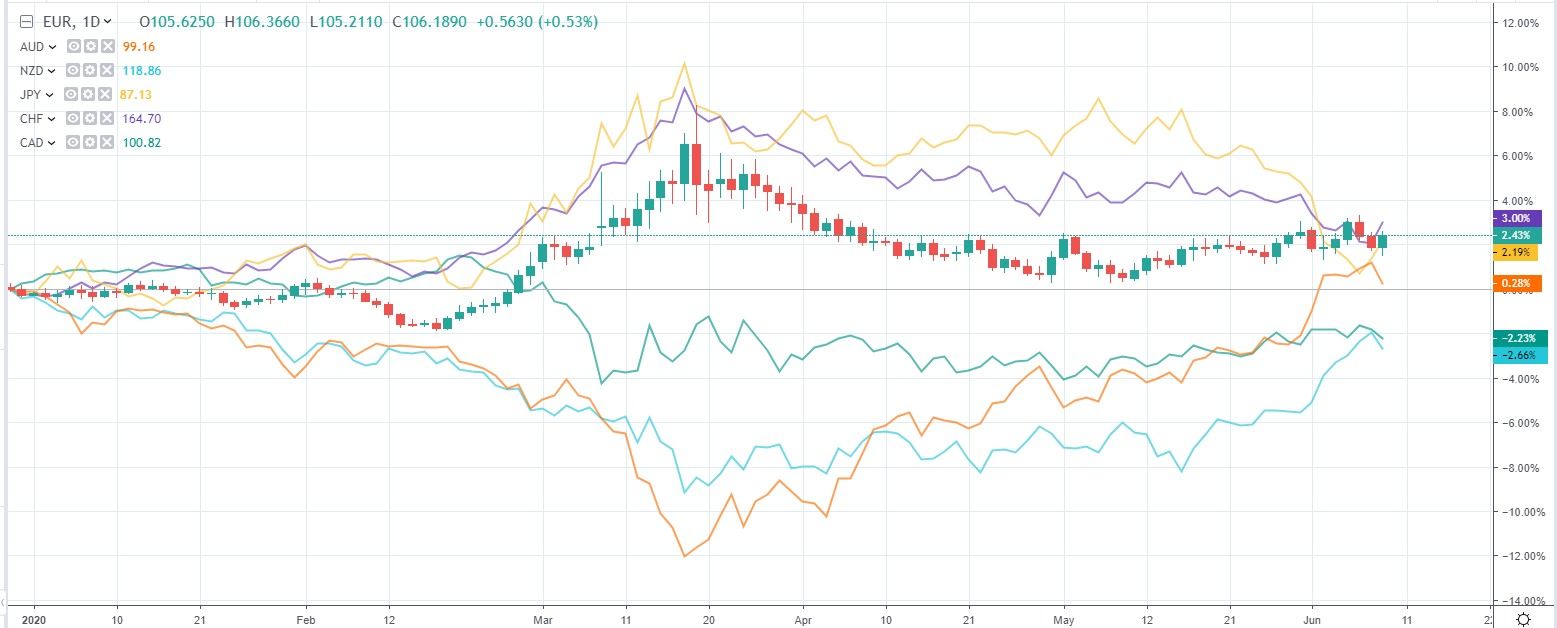
For a quick glance at which currencies are strong or weak, I like to check the currency indexes available on Mataf.net. Check the site for live data. The chart above is a recent snapshot.
Charts are provided as examples only. Please see Mataf.net for current information. The chart below is an example from 2020.
If you’re a short-term trader or swing trader, check one week of data. If your trades last several days to several weeks, a month or two of data may be most useful.
The idea is to check the data regularly, and then attempt to be long the strongest currencies against (short) the weakest.
Look for trading opportunities where one currency index is rising while another is falling. This will create a currency pair to watch. Alternatively, it will help you narrow down which pairs you want to trade with the Price Structure swing trading method.
On the chart above, in mid-March, we could see that the AUD had been moving up, while the CHF and JPY were moving down. That indicates there may be some good trades in AUDCHF and AUDJPY while this is happening. And there was: AUDCHF rose strongly in a rising trend channel.
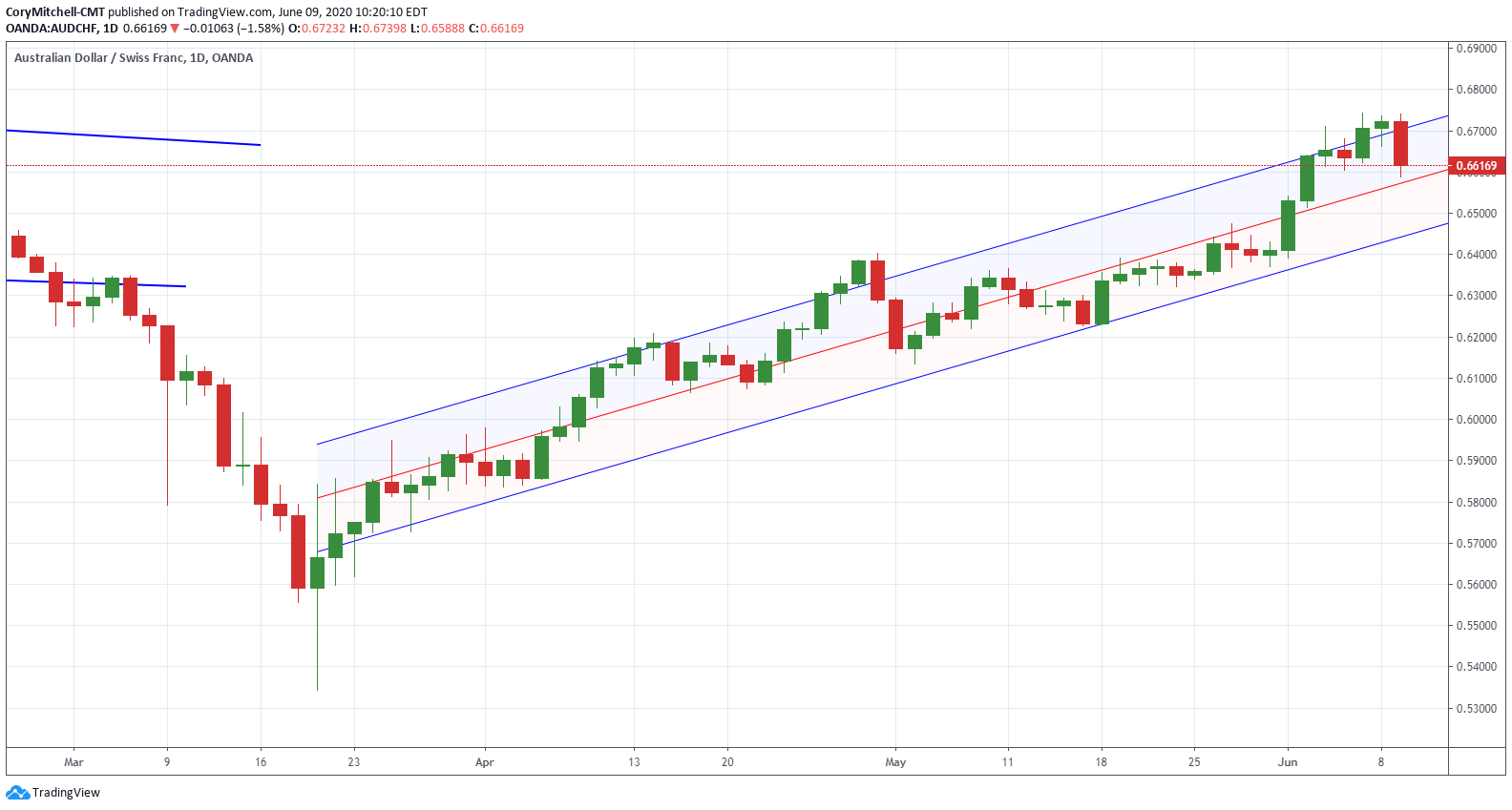
TradingView – June 2020
Mataf provides currency index data for EUR, USD, GBP, CHF, JPY, CAD, AUD, and NZD. The index is an average of the currency’s movements against other currencies. Note that most currency indexes on TradingView are not based on movements against a basket of currencies; some are only compared to the USD or a tiny basket of currencies. I like the indices on Mataf because each currency is compared to all the other currencies listed above.
A comparison chart like this is not static. It’s constantly changing as currencies rise and fall. Our job as traders is to attempt to be long the stronger ones and short the weaker ones. We don’t need to do this. It is just an option if it appeals to you.
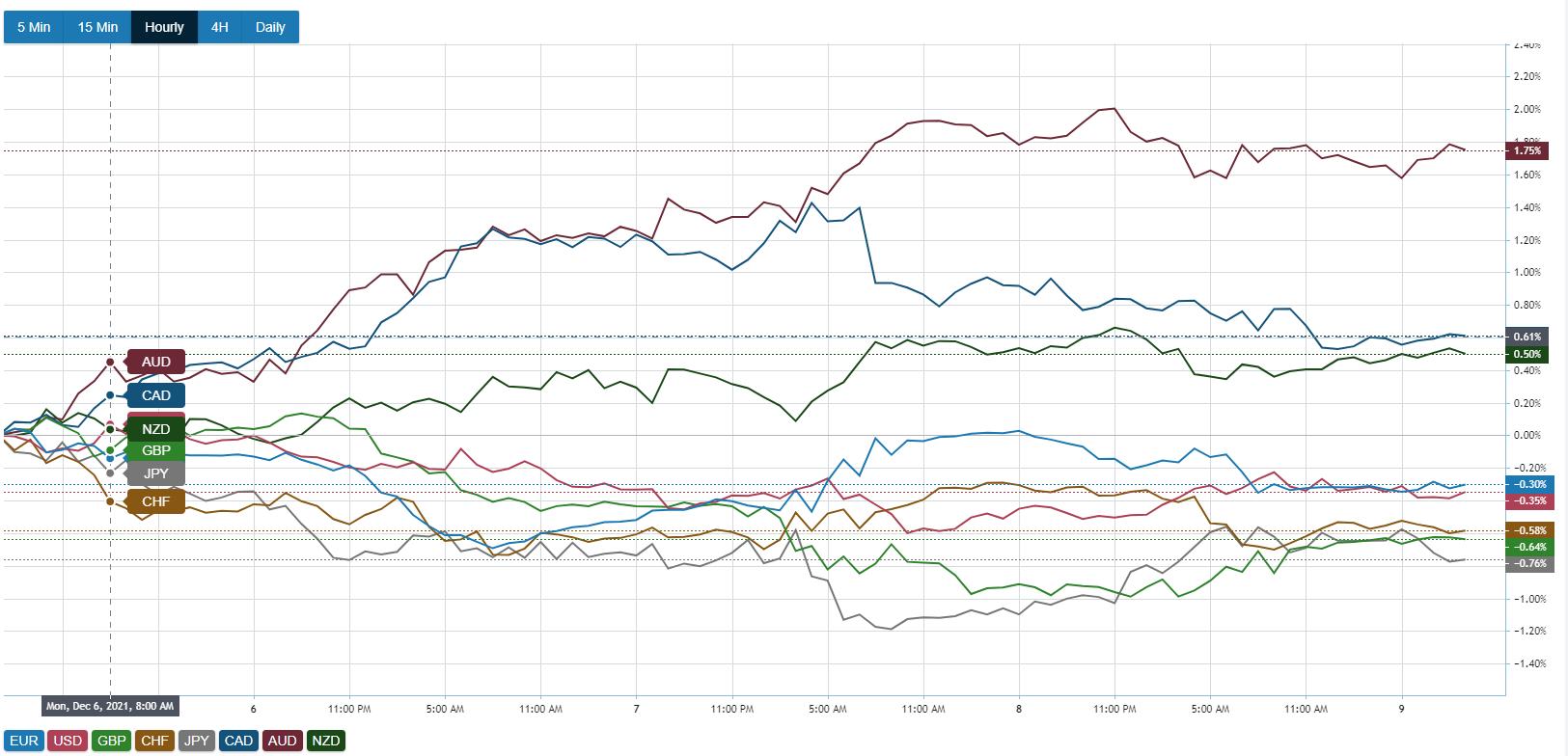
The following chart shows a few days of price action. But notice how the chart shows that AUD and CAD started rising as CHF and JPY dropped. That alerts us to some trade possibilities, such as buying AUD/CHF or CAD/JPY.
And we can see how this played out in the AUDJPY. Nice strong uptrend, until we start to see AUD fall off on the right side of the chart.

More recently, on the currency index chart above, we can see that the CAD has been falling over the last couple of days, and the GBP has been stronger.
Nice uptrend in GBP/CAD, with a recent consolidation.
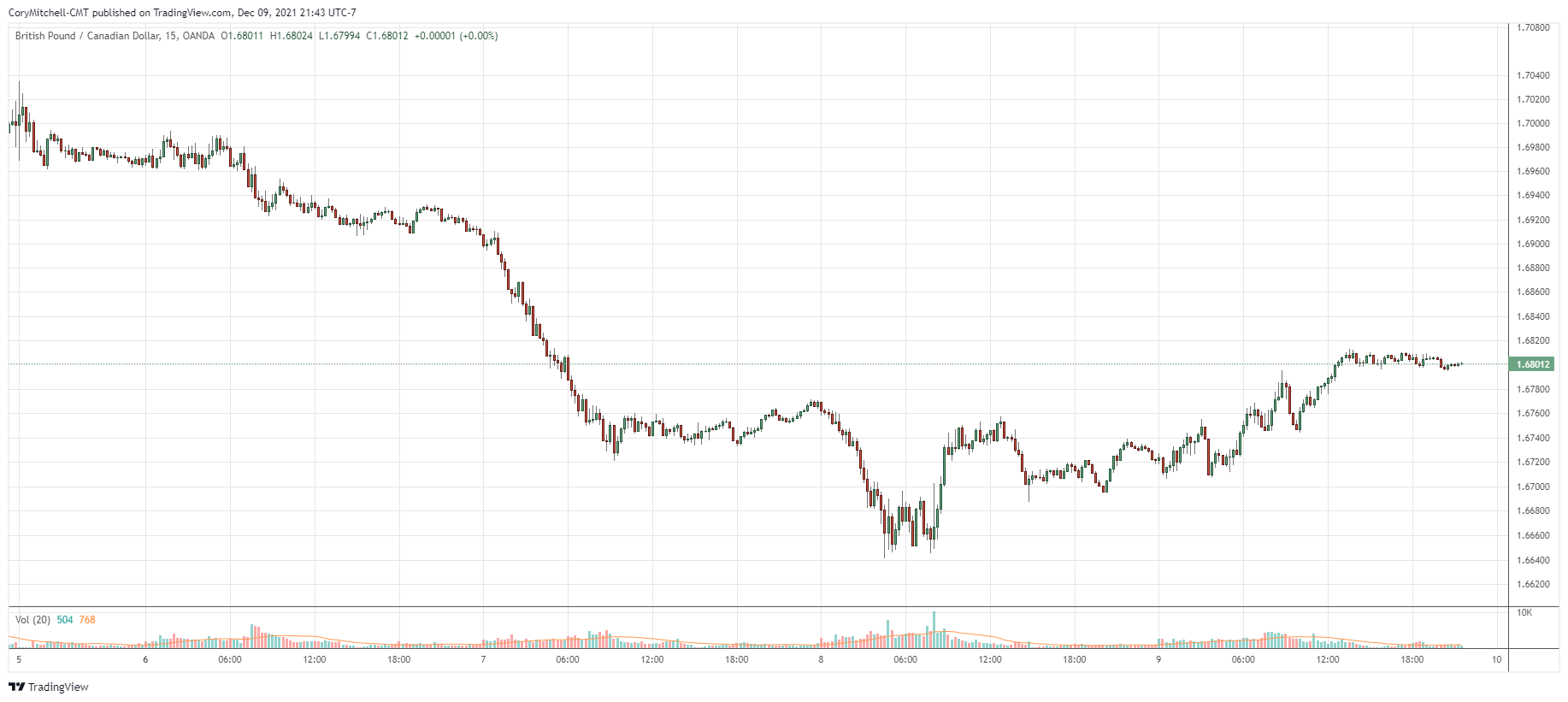
This may seem “coincidental,” like they are just happening together. And they are! But the point is that the currency index chart can help you zero in on where to look for trades and identify which pairs are trending.
Focus on the currencies making the most significant moves, and leave the rest. If something is flat, it’s better to leave it alone.
See Which Pairs are Most Affected
Indexes are a basket of currencies, so while they generally do a good job of telling us which currencies are strong and weak, and therefore, what pairs to trade, they may sometimes miss something. For example, the CAD index may be strong while the JPY index is weak.
Indexes are based on averages against multiple currencies. It is possible that the JPY could be strong against CAD but weak against everything else; similarly, CAD could be weak against JPY but strong against everything else. So the indexes still show CAD up, and JPY down, but CAD/JPY could actually be moving down instead of up. This is the opposite of what we would expect based on the indices.
Several websites have currency strength tools that show how specific pairs have performed over various time frames.
This provides a quick way to see which currency pairs are up or down the most over the selected time frame.
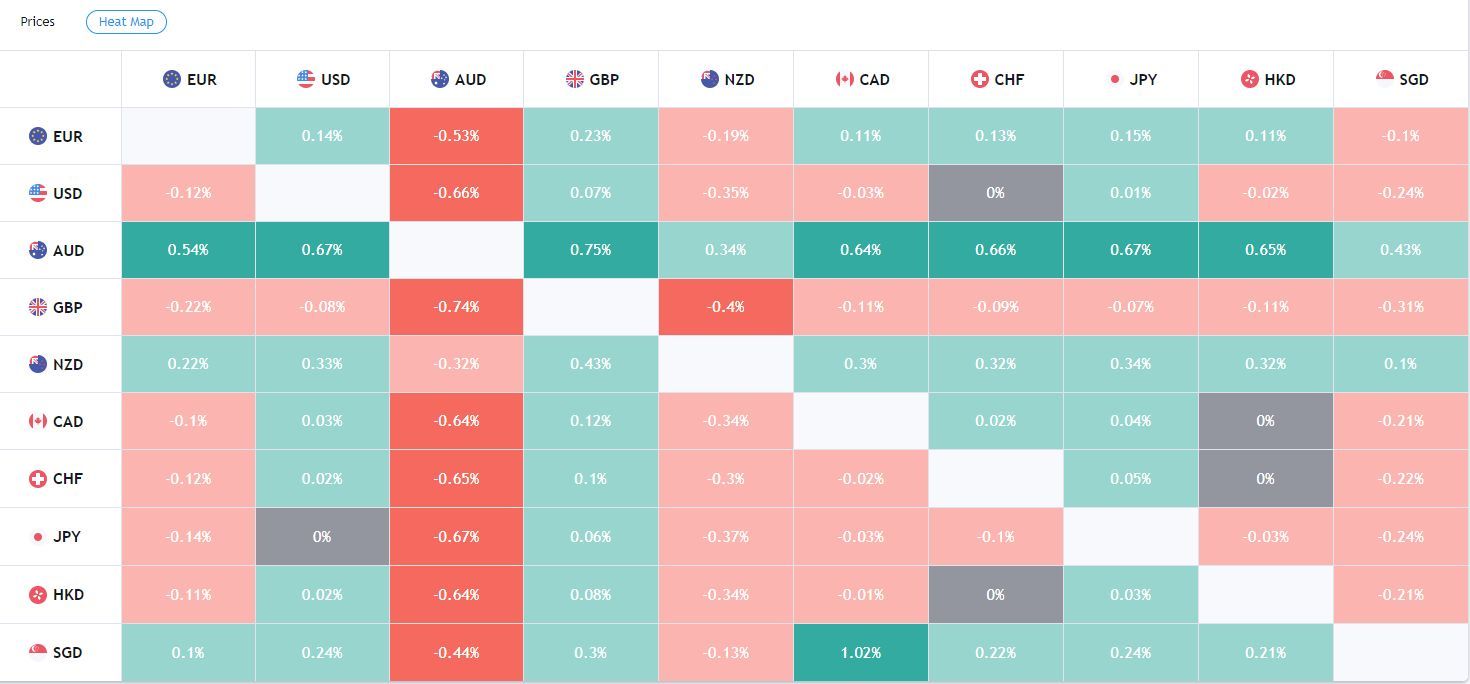
TradingView provides an intraday heatmap (Markets>Currencies>Heat Map. This is good for day traders looking to see what is on the move. However, it only shows intraday data, limiting its usefulness for longer-term traders.
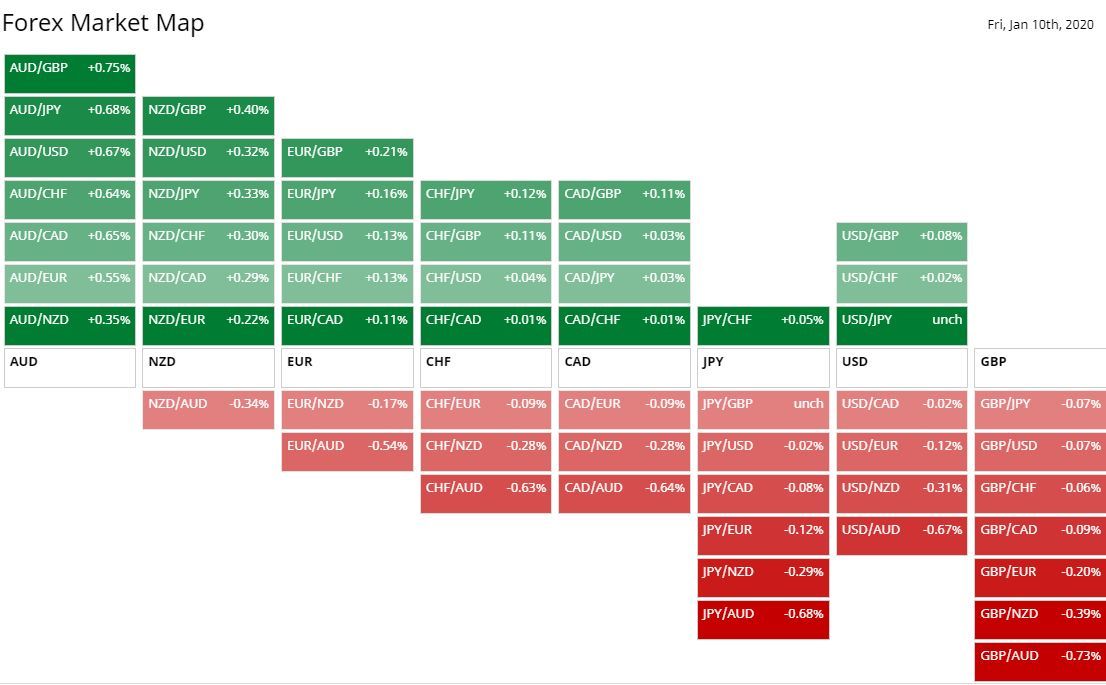
I like the organization of BarChart’s intraday forex heat map.
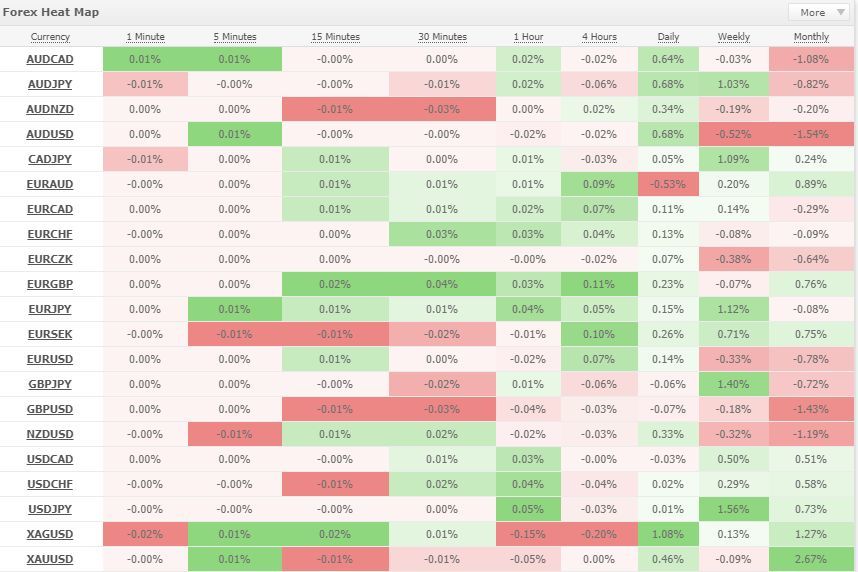
MyFXBook provides a heatmap with customizable time frames. It covers the most commonly traded pairs.
Final Word
Look to the indexes and heatmaps to zero in on pairs likely to move with vigor. The currency indexes are a great reference and starting point. The heatmaps may help zero in on specific pairs.
For pairs with strong trends and big price moves, consider using Renko charts to capture big profits.
Going through this process is definitely not a requirement. There are many ways to trade. But it is an option to include in your trading plan if it helps.
Want to learn how to trade like this? Check out the EURUSD Day Trading Course. It covers strategies for crushing the EURUSD in 2 hours or less, as well as mental game work and exercises to get into the profit-making zone and stay there.
By Cory Mitchell, CMT.
Disclaimer: Nothing in this article is personal investment advice, or advice to buy or sell anything. Trading is risky and can result in substantial losses, even more than the deposited amount if using leverage.