
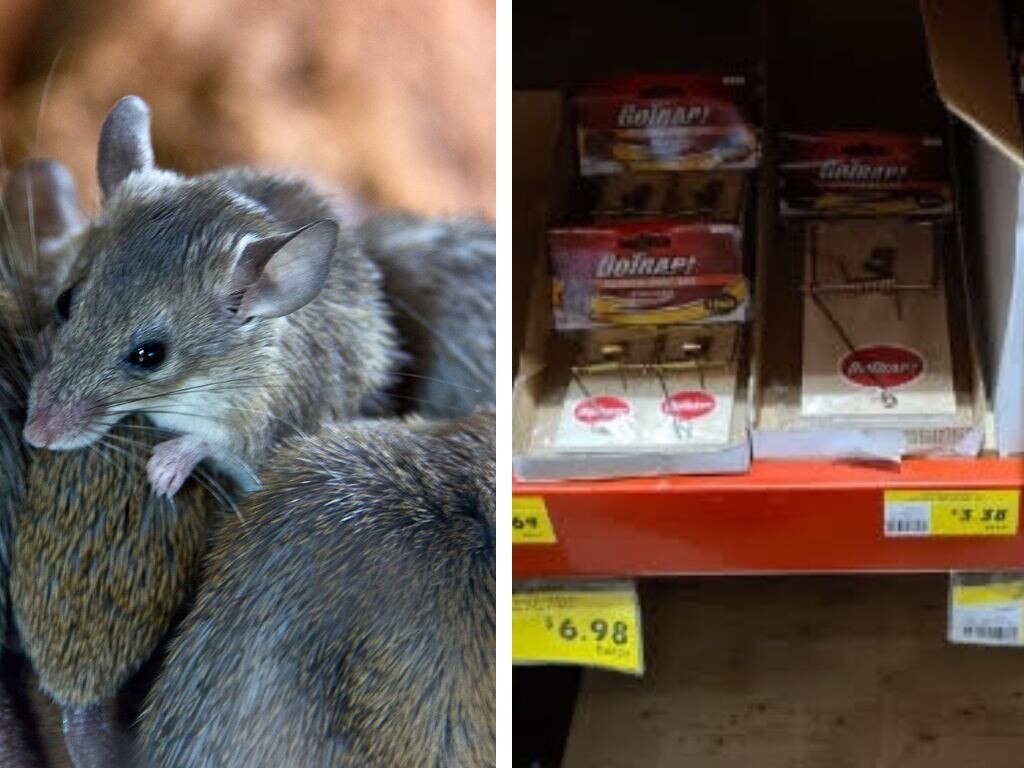

Mice numbers are surging in parts of the country. Photo of a plague at a farm near SA’s Kadina in 1993. Picture: Oliver Townsend.
Mouse bait allocated to South Australia has instead been sent to Western Australia, causing concern there may not be enough product locally to control surging rodent numbers.
Wilhelm Rural managing director Brenton Wilhelm confirmed 100 tonne of mouse bait has been sent to the Esperance region in the past fortnight, potentially straining supplies for SA farmers.
Mr Wilhelm, SA’s only importer of the ingredients required to manufacture mouse bait, said he currently had enough product to treat 500,000ha of farmland but expected that could be exhausted by the end of next week.
Another shipment of ingredients is not due into SA until the end of May, Mr Wilhelm said, which could be too late for grain farmers who have been advised to bait at the start of seeding, which in some parts of the state is about to get underway.
Some regional businesses have experienced a rush from customers seeking mouse traps and other mice control measures for their homes.
“Am I worried (that SA could run out of mouse bait)? Yes, I’m worried,’’ Mr Wilhelm said.
“I’m concerned about the amount we have sent to Western Australia – I would have loved to have kept it here in South Australia.
“But it’s a case of the squeaky wheel gets the oil. Six to eight weeks ago, we didn’t look like we were going to have an issue (with mice in SA).
“Now we just have to (make) do with what (bait) we have got. There’s nothing I can do about it.’’
CSIRO mouse expert and research officer Steve Henry said mice numbers in WA were “well and truly above’’ the 800 rodent per hectare measurement that typically defined a mouse plague.
MORE NEWS
Developers eye coastal site to ease housing pressure
‘Worst emerging pests’ now invading Adelaide streets
Earn more from unit block than working
On the Yorke Peninsula and Adelaide Plains regions, monitoring showed there were currently up to 400 mice per hectare, which was still “quite a lot’’ and could cause serious damage to crops if not controlled, Mr Henry said.
SA regional businesses have experienced a rush from customers seeking mouse traps and other mice control measures for their homes, while there was also concern mice populations were increasing in parts of NSW and southern Queensland.
With the potential for female mice to produce between six and 10 babies every 19-21 days, numbers could quickly escalate, Mr Henry said.
Mouse holes on a property in SA’s Wudinna during a mouse plague in 2002.
He said SA’s unseasonably warm weather would not help, with breeding only slowing when temperatures cooled.
Mr Henry urged farmers to actively monitor local mice populations and bait before numbers got out of control, preferably at the time that crops were sown.
But he conceded the availability of bait, as well as farmers’ ability to afford it following recent drought and skyrocketing fuel and fertiliser prices, could hamper control efforts.
Grain Producers SA chief executive officer Brad Perry agreed early monitoring and the timely application of bait was critical to minimising damage to emerging crops.
“Grain producers should be out in paddocks now checking for signs of activity, particularly active burrows,’’ Mr Perry said.
“Even two or three active burrows per 1000sqm is considered a warning sign before sowing.’’