
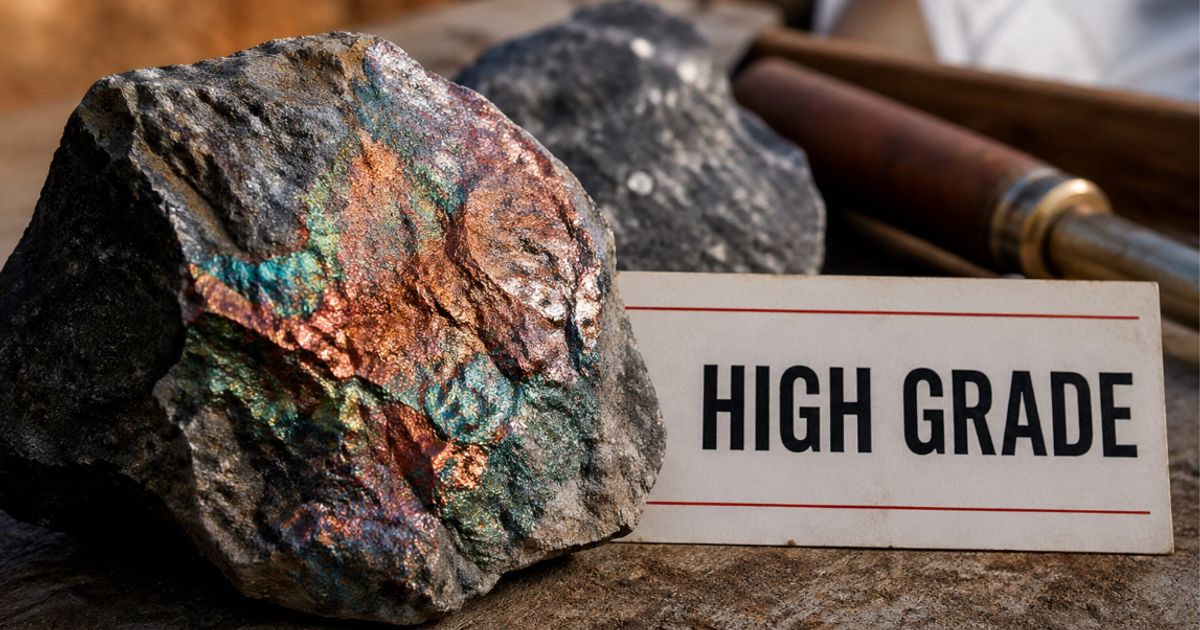
Phosco Ltd (ASX:PHO) has returned high-grade copper, antimony, silver and zinc assays from selective rock-chip sampling at the King’s Eye prospect within its 100%-owned Simitu Project in northern Tunisia.
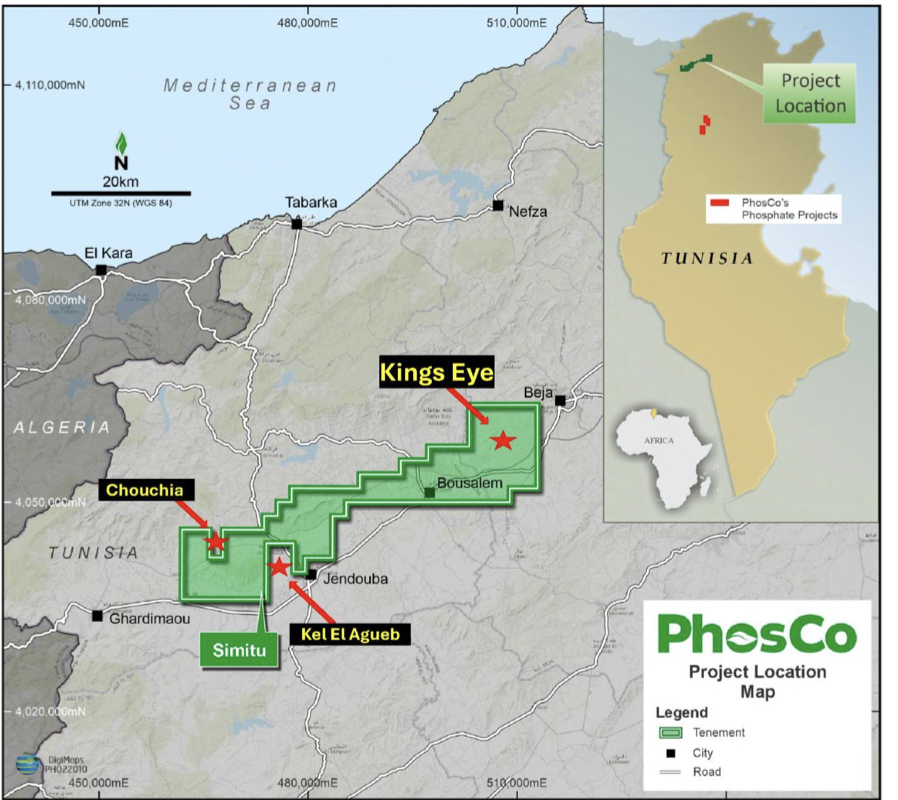
Simitu Project Showing Location King’s Eye and other prospects.
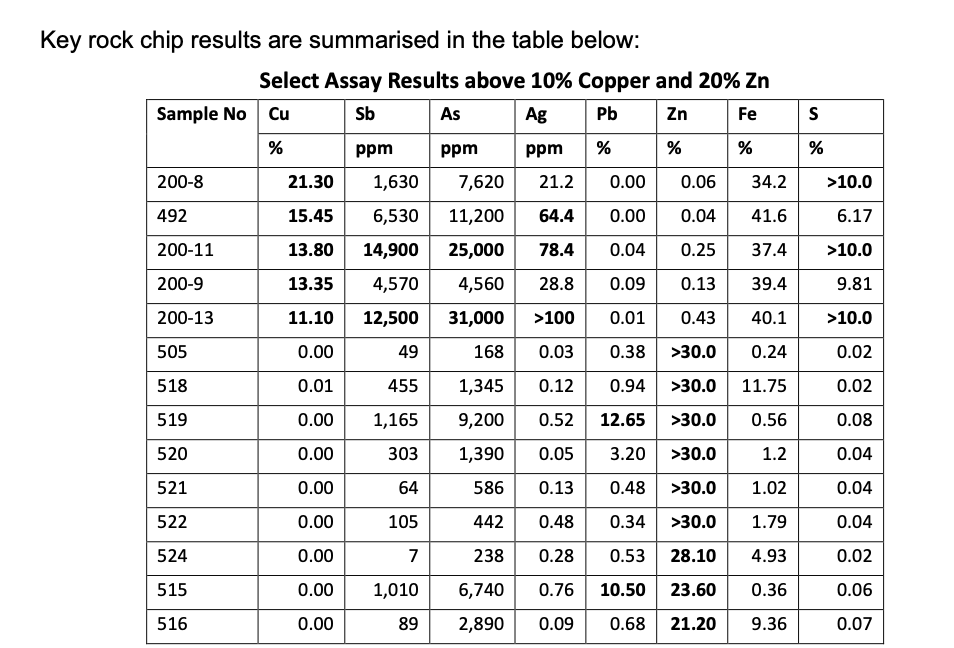
Samples from outcrop, historical workings and mine spoils returned up to 21.3% copper and more than 100 grams per ton (g/t) silver, with 21 samples grading above 1% copper and 5 samples exceeding 10% copper.
The copper-sulphide mineralisation also returned strong associated antimony and silver results, including 5 samples above 0.5% antimony and peak assays of 1.49% and 1.25% antimony.
Silver was above 31 g/t in 8 samples, including 6 samples above 62 g/t and one result exceeding the 100 g/t upper detection limit.
A separate zinc oxide mineralisation style returned 19 samples above 1% zinc, including 6 samples exceeding the 30% upper detection limit, while lead reached a peak of 12.65%.
“These are highly promising results in a fertile tectonic setting with a geophysical target at depth. Given the potential upside, we are planning immediate follow up,” PhosCo managing director, Taz Aldaoud said.
“And while PhosCo remains firmly focused on its key Gasaat Phosphate Project, King’s Eye and the broader Simitu Project represent a compelling opportunity to advance a second project prospective for highly sought-after metals in this underexplored region, leveraging PhosCo’s first mover advantage in Tunisia.”
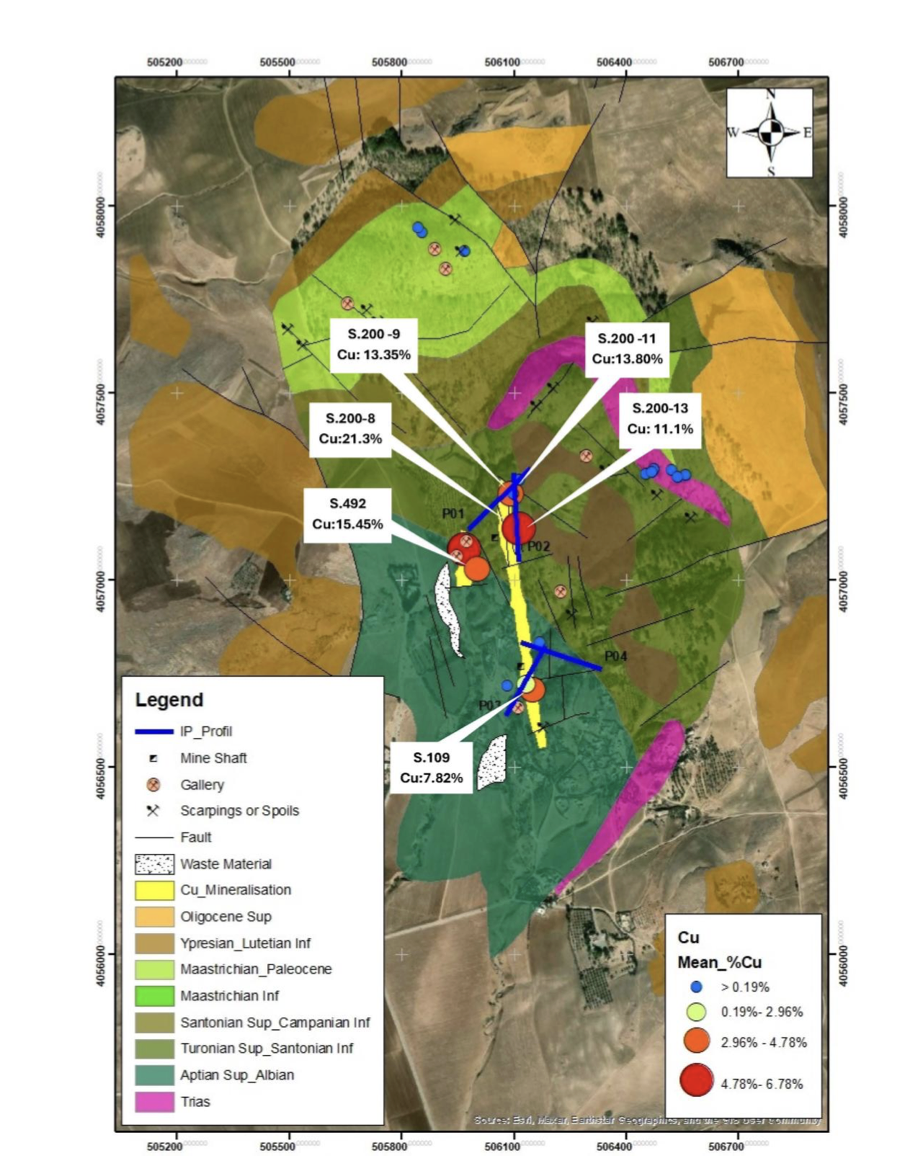
King’s Eye Historic Workings Surface Trace of Mineralised Veins in Yellow.
What it means for Simitu
The results point to two distinct mineralising systems at King’s Eye: a copper-antimony-arsenic-silver sulphide system and a zinc-lead oxide system.
The company said ground geophysics had also mapped historical underground workings and identified a strong induced polarisation response at depth, interpreted as possible sulphide mineralisation below 100 metres.
This gives PhosCo a potential drill target below historical workings that were only tested to around 40 vertical metres.
What’s next
Immediate follow-up work is being planned, with interpretation of exploration data already underway.
Next steps will include detailed logging, geochemical analysis, mineralogical studies and further use of geophysical profiles to refine drill targets and better understand the system’s architecture.