
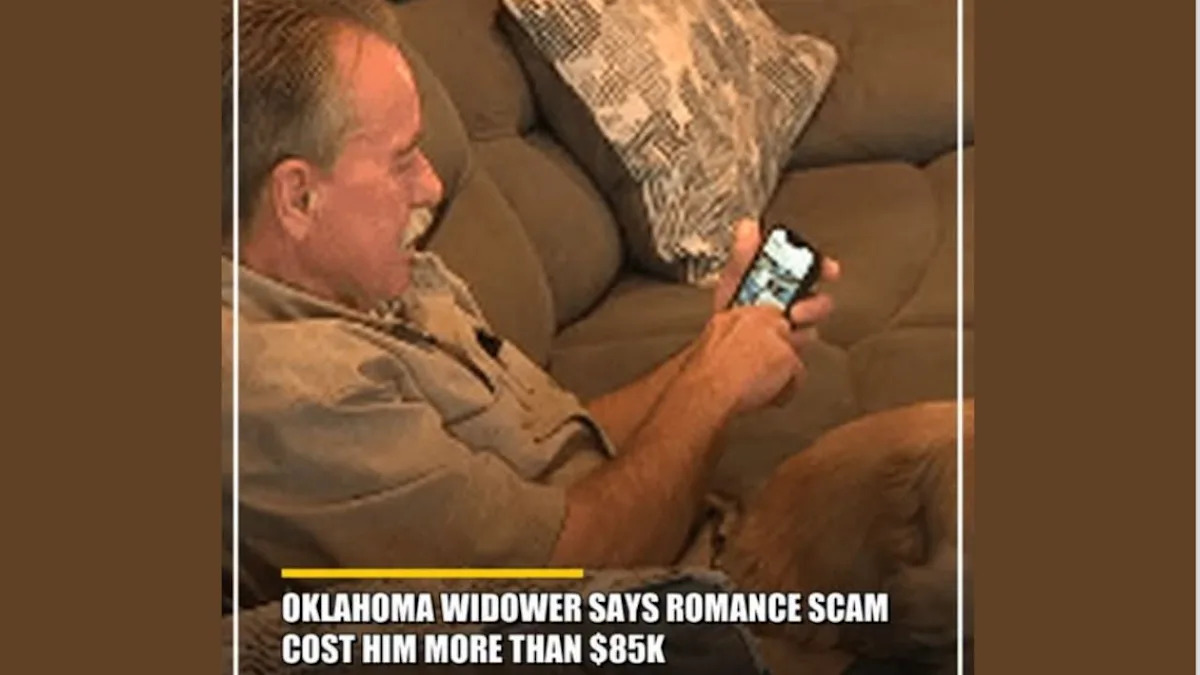
An Oklahoma widower says he lost more than $85,000 after a Facebook relationship turned into a romance scam built around a fake gold inheritance.
Randal Riley, 69, had lost his wife of 51 years only months earlier when he met a woman on Facebook, according to KFOR.
Riley said the conversation started casually, with the two talking as friends before the relationship became romantic.
A couple of weeks later, the story changed. The woman told Riley her father had left her 50 blocks of gold in England, but she needed help paying to get the gold released.
The Request Grew Into An $85,500 Payment
Riley said he asked how much money she needed. The answer was $85,500.
He told KFOR he did not have that kind of money. According to the report, the woman convinced him to refinance his home, take out a second mortgage, and mail a check for the full amount.
The payment was not presented as a simple favor. Riley was told the money was needed to release the gold, and the promised inheritance would be shared after the fee was paid.
Then Came A Second Demand
After the $85,500 check was sent, Riley said the woman came back asking for more money. This time, the request was for another $40,000.
To convince him, she sent documents that appeared to show a will and a certificate saying he would share ownership of the gold. The documents gave the story a formal appearance, but the new demand followed the same pattern: a valuable asset, a payment needed to unlock it, and another obstacle after the first payment was gone.
Riley told KFOR he later realized he had been scammed. He shared his story publicly because he did not want someone else to go through the same loss.
Romance Scams Often Start With Trust
The FBI describes romance scams as confidence frauds in which criminals create fake online identities, build relationships, and then exploit those relationships for money.
Scammers may claim they need help with travel, medical bills, customs fees, investments, family emergencies, business expenses, or access to an inheritance. In Riley’s case, the story involved gold in England and a fee that had to be paid before the supposed inheritance could be released.
The Federal Trade Commission gives a blunt rule for online relationships: never send money or gifts to someone you have not met in person.
A Gold Inheritance Is A Red Flag
A promise of gold, diamonds, cash, an overseas inheritance, or a frozen bank account is a common setup in advance-fee scams. The victim is told a large payout exists, but a smaller payment is needed first for taxes, shipping, customs, legal paperwork, or release fees.
Families can watch for sudden requests to refinance property, take out loans, drain savings, buy gift cards, send wires, mail checks, or hide a new online relationship. A second request for money after the first payment is another warning sign that the promised payoff is not real.
Anyone who realizes they sent money in a romance scam should contact the bank or lender immediately, report the fraud to law enforcement, and file a report with the FTC at ReportFraud.ftc.gov or the FBI’s Internet Crime Complaint Center at IC3.gov.