
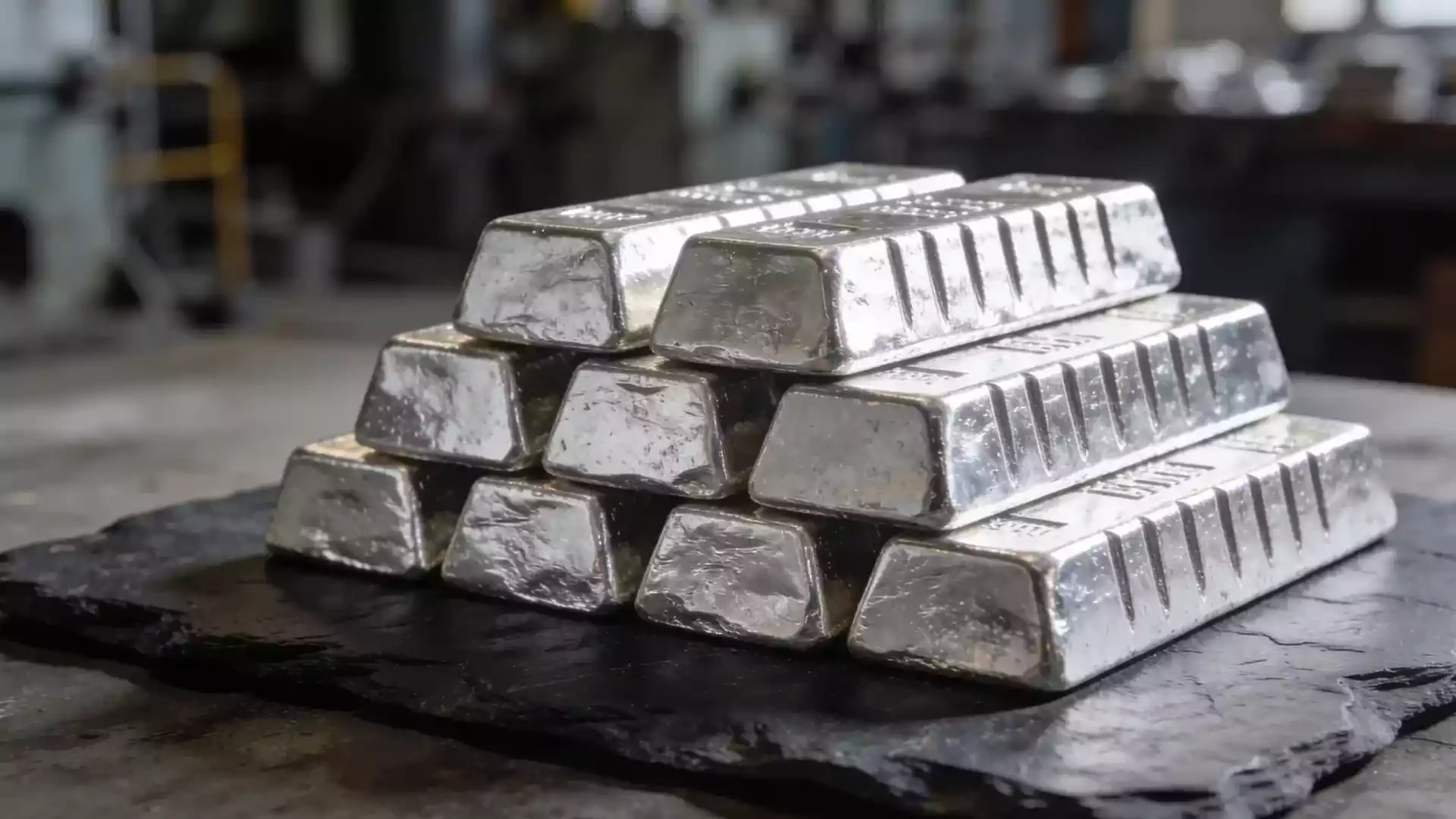
Silver’s front-month contract settled at $60.71 an ounce on the COMEX Friday, capping a bruising stretch in which the metal shed 6.2% over seven days and slipped beneath its 50-day moving average of $65.51. The weekly loss came despite a pair of macroeconomic releases that, on paper at least, should have worked in bullion’s favour.
A Payroll Miss That Failed to Stick
September’s nonfarm payrolls report landed with a thud. The US economy added just 29,000 jobs outside agriculture, a fraction of the 90,000 economists surveyed by Reuters had pencilled in, while the unemployment rate climbed to 4.2%. Futures desks promptly trimmed their bets on another Federal Reserve rate move in October, and the dollar softened in the immediate aftermath — a combination that briefly lifted precious metals.
The relief proved short-lived. Yields on US Treasuries stayed stubbornly elevated, and that is the lever that ultimately governs sentiment toward non-yielding assets. JKCM had flagged as much earlier in the week, pointing to higher real US rates and the resulting carrying costs as the principal drag on silver pricing. As long as government paper offers an attractive risk-free return, allocators have little incentive to park capital in a metal that pays nothing to hold.
The week’s inflation data added a second layer of ambiguity. On Wednesday, the Bureau of Economic Analysis reported a 0.3% rise in the PCE price index for August, with the core measure up 0.2%. Both readings undershot consensus, feeding a brief flicker of optimism that the central bank might ease off the brake. New York Fed President John Williams reinforced that mood, remarking that policymakers felt no need to rush further rate adjustments.
Should investors sell immediately? Or is it worth buying Silber Preis?
Geopolitics muddied the picture further. According to media reports, President Donald Trump on 28 September rejected an Iranian proposal to reopen the Strait of Hormuz — a rebuff that kept energy-cost worries alive and, by extension, the inflation debate simmering.
Refiners Run Months Behind While Metal Sits in Vaults
Away from the macro scrum, the physical market tells a story of its own. Josh Phair, chief executive of minting firm Scottsdale Mint, noted in late September that smelter processing is running three to four months behind schedule. Finished, refined metal, however, is plentiful across the United States — so the bottleneck lies in fabrication capacity rather than any outright shortage of deliverable product.
Exchange inventories back that reading. As of 1 October, COMEX warehouses in the US held 337.58 million ounces of silver in total. Of that stockpile, 101.10 million ounces were registered as immediately deliverable, with the remaining 236.48 million ounces sitting in unregistered storage.
The Street’s Longer View Stays Bullish
None of the near-term noise has shaken the more constructive forecasts. Dominic Schnider, a strategist at Swiss banking giant UBS, argued on 21 September that silver moves in close lockstep with gold — and, true to form, amplifies gold’s swings in both directions. Should the rate cycle turn, that leverage would translate into substantial recovery potential.
UBS’s roadmap puts silver at $70 an ounce by December 2026, with further stops at $75 by March and June 2027, and $80 by September of that year.
Until then, the market looks set to trade off the data flow. The September US consumer price index, due 14 October, stands as the next major test of the Fed’s intended path. In the interim, the push and pull between bond yields and currency moves will keep calling the tune.
Ad
Silber Preis Stock: New Analysis – 4 October
Fresh Silber Preis information released. What’s the impact for investors? Our latest independent report examines recent figures and market trends.
Disclaimer…