
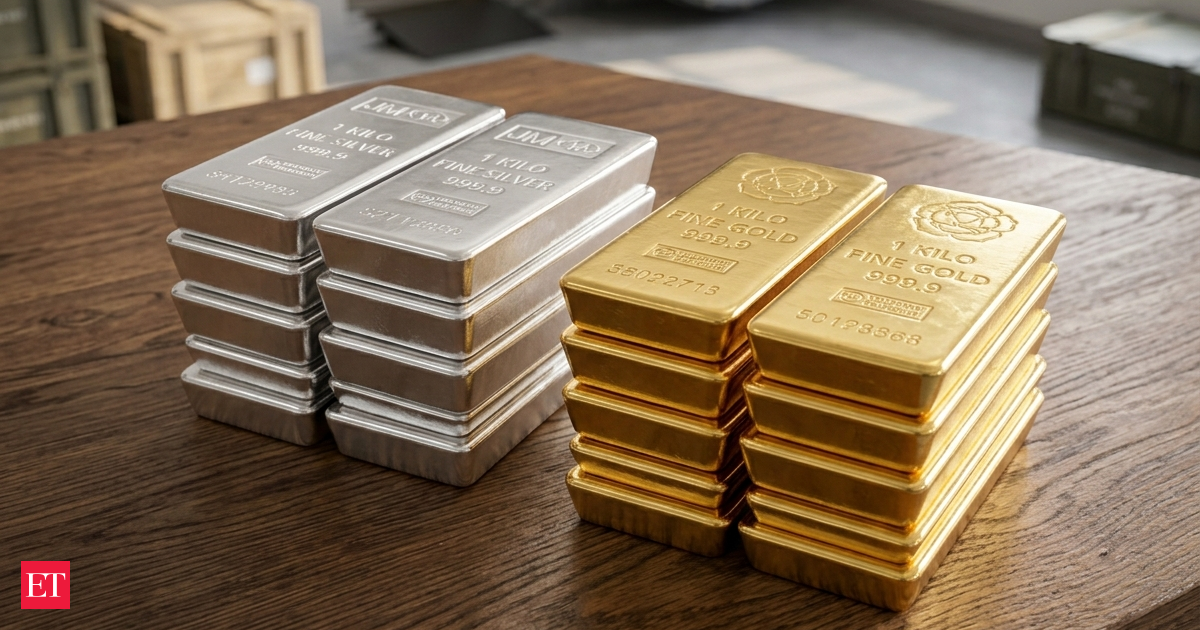
Why are gold and silver prices up today, and will precious metals continue to rise or fall again?
Gold prices rose on Friday and moved toward a weekly gain as investors reacted to geopolitical signals and economic expectations. Markets focused on the possibility of a peace agreement between the United States and Iran despite renewed military activity.
Spot gold rose 0.85% to $4,709.06 per ounce by 0739 GMT. Bullion has gained about 2% this week. US gold futures for June delivery increased 0.1% to $4,716.50. Other precious metals also rose. Spot silver increased 1.5% to $79.68 per ounce. Platinum gained 1.2% to $2,045.38. Palladium rose 1.4% to $1,500.91.
Geopolitical signals move gold markets
Markets reacted to developments between the United States and Iran. The two countries exchanged fire on Thursday. This was the most serious test of their month-long ceasefire. Iran later said the situation had returned to normal. The United States also said it did not want to escalate tensions.
Statements from the Trump administration suggested the ceasefire remained in effect. Investors viewed these comments as supportive for gold prices. Analysts said optimism about a possible deal helped maintain demand for precious metals. Market participants often move toward gold during periods of geopolitical tension. Gold is widely seen as a safe store of value during uncertainty. When the risk of conflict rises, investors often increase exposure to gold and other precious metals.

Why are gold and silver prices up today?
Gold prices have fallen more than 10% since the war began in late February. The earlier decline came as oil prices moved higher. Rising oil prices can increase inflation pressure. This can lead to expectations of higher interest rates.
Higher interest rates usually weigh on gold because gold does not pay interest. When rates rise, investors may shift toward interest-bearing assets. However, easing inflation concerns and renewed ceasefire optimism helped support prices this week. Analysts said markets are now focused on the next developments in US-Iran relations. Short-term price movements may depend on new headlines about negotiations.
Will precious metals continue to rise or fall again?
Markets are now waiting for the monthly US employment report. The nonfarm payrolls data is expected to show that jobs increased by 62,000 last month. This follows a rise of 178,000 in March. The report may influence expectations for Federal Reserve interest rate policy.
If employment growth slows, markets may expect fewer interest rate increases. This could support gold prices. If job growth remains strong, interest rate expectations may rise. That could limit gains in precious metals. Analysts said price movement may remain uneven in the short term. Investors may react quickly to economic data and geopolitical headlines. The next 24 hours may bring volatility before the end of the week.
Analysts insights and market outlook
Analysts noted that gold remains sensitive to both geopolitics and monetary policy. Comments from the US administration helped support the market. Optimism about a possible agreement between the United States and Iran provided confidence to investors.
However, analysts also warned about uneven price action. Markets may respond quickly to any changes in negotiations. New developments could shift prices in either direction. The upcoming US employment report is another major focus. This data may help investors assess how the Federal Reserve will move on interest rates this year. Monetary policy expectations often influence gold and silver prices.
What should investors do now?
Investors are monitoring geopolitical developments and economic indicators. Gold has gained this week, but analysts expect short-term fluctuations. Markets are waiting for clarity on interest rate policy and global tensions.
Some investors may continue to view gold as a store of value during uncertainty. Others may wait for economic data before making decisions. Analysts said careful monitoring of news and data will remain important for investors in precious metals.
FAQs
Q1. Why are gold and silver prices rising amid geopolitical tension?
Gold and silver often rise when geopolitical tension increases. Investors move funds to safe assets during uncertainty. Ceasefire updates and economic data expectations supported precious metal demand this week.
Q2. Will interest rate decisions affect gold prices in the coming months?
Interest rates strongly influence gold. Higher rates can limit gold demand. Lower rate expectations may support gold and silver. Upcoming US jobs data may shape future price direction.