
Stripe processed $1.4 trillion in total payment volume in 2024, a figure roughly 2.6 times the size of Ireland’s entire 2024 GDP and, by current run-rate estimates for 2025, now closer to three-and-a-half times the output of the country its founders left behind. The company that handles all of it was started by two brothers from Limerick who built the first version of the API in a Palo Alto apartment shared with a third roommate, before either of them turned 25.
Patrick Collison was 22. John was 20. By the time they incorporated what was then called /dev/payments in 2010, they had already convinced Peter Thiel, Elon Musk, Sequoia Capital and Y Combinator’s Paul Graham to write the seed cheques that would become the most quoted founding round in fintech history.
The seven lines of code pitch
The original Stripe demo, which the brothers showed to investors in 2010, was a webpage that accepted a credit card with seven lines of code. PayPal at the time required a multi-day merchant onboarding process. Authorize.net required a gateway, a processor, and a separate merchant account. The Collisons compressed that stack into a single API call.
Patrick had sold his first company, Auctomatic, to a Canadian buyer for $5 million when he was 19. He had also won the BT Young Scientist of the Year award in Ireland at 16, for a Lisp dialect he wrote called Croma. John, who followed two years behind, scored the highest Leaving Certificate result in Ireland the year he sat the exam — 600 out of 600 points — and went to Harvard before dropping out to work on Stripe full-time.
The apartment was on Waverley Street in Palo Alto. The story, as Patrick has retold it in interviews over the years, is that he and John would code through the night, sleep until noon, and then take meetings. Greg Brockman, later the CTO and now the president of OpenAI, was the fourth engineering hire.
The Thiel and Musk cheques
Sequoia led the seed round. Peter Thiel, Elon Musk and Andreessen Horowitz all participated. The valuation was reportedly around $20 million. Musk’s involvement carried a particular symmetry — he had co-founded X.com, which became PayPal, which the Collison brothers were now setting out to replace at the developer layer.
Thiel’s interest was characteristically blunt. He had previously argued that the global payments stack was a regulatory moat rather than a technical one, and that whoever could turn it into an API would own enormous economic surface area. The Collisons agreed with him. They priced their service at 2.9% plus 30 cents per transaction — the exact PayPal rate — and competed entirely on developer ergonomics.

From apartment to $91.5 billion
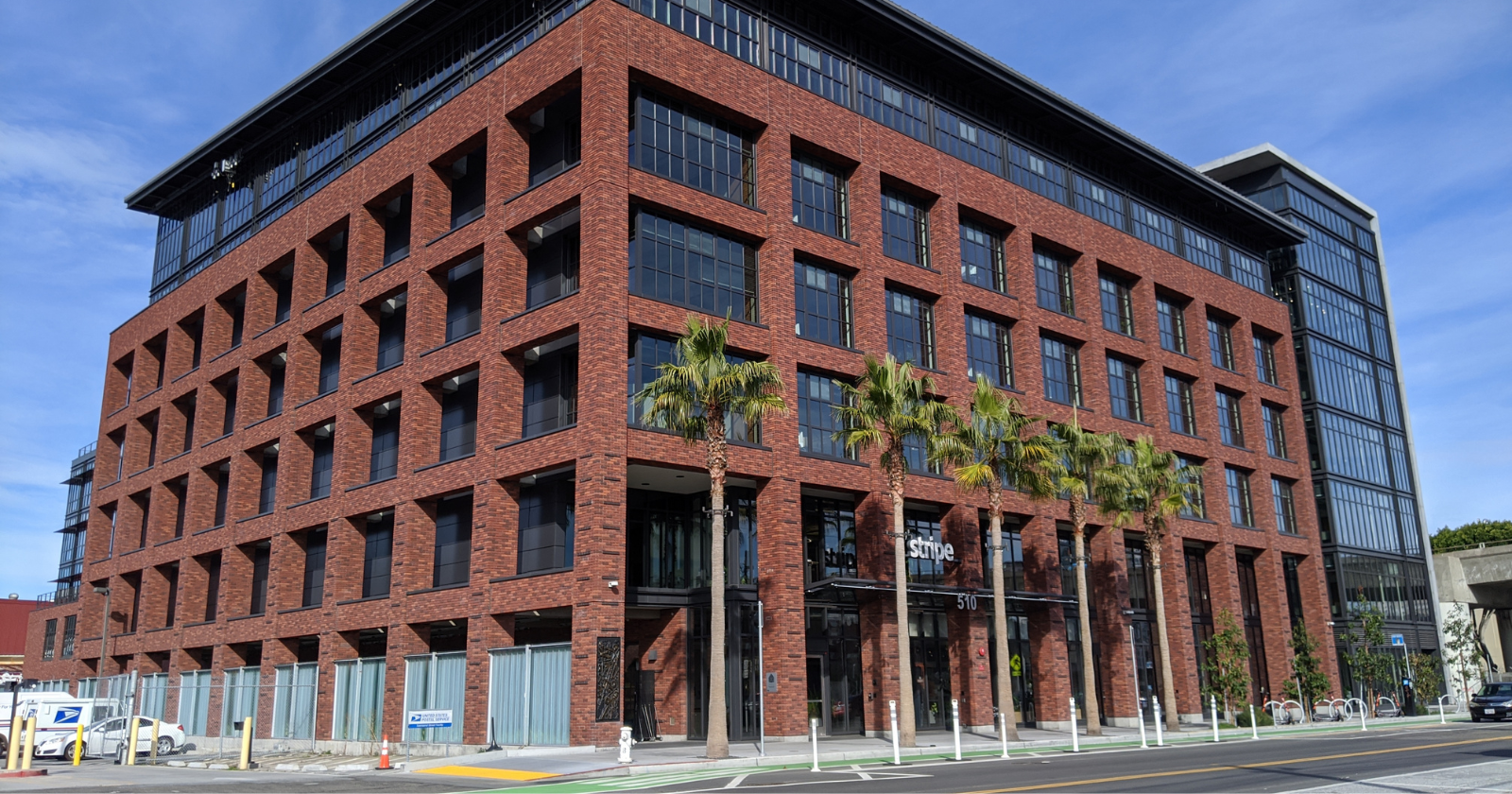
Stripe is now headquartered in South San Francisco and Dublin, with roughly 8,000 employees across both. Its most recent tender offer, completed in February 2025, valued the company at $91.5 billion — back near its 2021 peak after a steep mark-down during the 2023 venture downturn. Silicon Canals covered the earlier round when the company’s valuation dropped to €47 billion, the low point in that cycle.
The annual payment volume figure is the one worth pausing on. Ireland’s GDP in 2024 was approximately $560 billion. Stripe processed $1.4 trillion in the same period. The company’s payment volume is also larger than the GDP of Switzerland, Sweden, or Belgium. It is roughly equivalent to the GDP of Spain.
Put differently: every Irish person produced about $108,000 of economic output last year. Every Stripe employee processed about $175 million of payment volume.
The AI agent pivot
Where Stripe goes next is being decided right now, and the bet is unmistakable. In May 2026, AWS launched an AI agent stablecoin payments platform — a payments infrastructure built specifically for autonomous AI agents to buy APIs, data feeds, and paywalled content in real time using stablecoins. The platform was built in partnership with Coinbase and Stripe.
The announcement explained that AI agents need financial capabilities to function as economic actors. Stripe’s positioning is that the next trillion dollars of payment volume will not flow from human shoppers clicking checkout buttons but from software making purchases on behalf of users.
Stripe’s acquisition of Bridge for $1.1 billion in October 2024 — the largest stablecoin company purchase to date — fits the same pattern. The company that built its first product to make accepting a credit card seven lines of code is now trying to make accepting a stablecoin payment from an autonomous agent equally trivial.

The Limerick anchor
Stripe’s Dublin office, opened in 2013, now houses roughly 1,000 employees and serves as the company’s EU headquarters. The brothers grew up in Dromineer, County Tipperary, before the family moved nearer to Limerick. Their parents ran a small hotel and conference centre. Both Collisons have remained Irish citizens and have spoken publicly about Ireland’s role in the company’s identity.
In 2021, the brothers committed to spending at least $1 billion of personal capital on Frontier, an advance market commitment for carbon removal — joining Alphabet, Meta, Shopify and McKinsey. The structure was designed to function like a vaccine advance purchase agreement, guaranteeing demand for a technology that did not yet exist at scale.
What the founding story actually proves
The Collison story is recited regularly in pitch decks and founder podcasts as evidence that the venture system rewards merit. The data tells a more complicated story. Venture funding to startups with Black founders remains extremely limited, and the funding gap for women founders isn’t closing — a pattern that has persisted for over a decade.
What surprised many founders who became investors after building their startups was how much venture capital is driven by pattern recognition. Investors back founders whose backgrounds, schools, and stories match prior successes. The Collisons matched several of those patterns — Patrick’s prior exit, the Y Combinator stamp, the Harvard and MIT credentials, the Musk-Thiel social proof — before they had built anything beyond a demo.
That is not a criticism of the brothers. It is an observation about how the rest of the system operates. The dynamic functions as a circular problem: investors back founders with proven track records, and proven track records have historically belonged to a narrow demographic, so the criteria that look meritocratic on paper reproduce the same outcomes year after year.
What three-times-Ireland actually looks like
$1.4 trillion in annual payment volume is hard to picture. It works out to roughly $44,500 every second. It is more than Visa processed in its entire first decade as a public company. It is larger than the combined GDP of all 27 countries in Africa’s CFA franc zone. It is approximately what would be required to buy every publicly listed company in Ireland, twice.
The Collisons own roughly 10% of Stripe between them, which makes each of them worth approximately $4.5 billion on paper at the most recent valuation. Patrick stepped back from day-to-day product leadership in 2023 to focus on long-term strategy and external research initiatives. John runs the business side. Neither has indicated any intention to take the company public, though pressure from later-stage investors holding shares from the 2021 round has been building for over two years.
Whether Stripe IPOs in 2026 or 2027 is a question the financial press has been asking since 2022. The more interesting question is whether the company that started as seven lines of code in a Palo Alto apartment can still be described as a payments company at all, once a meaningful share of its volume is being moved by software agents transacting with other software agents, denominated in stablecoins, settled on rails the original API was never designed to touch.
The Waverley Street apartment is still there. So is the hotel in Tipperary. The company between them now moves more money in a year than the country the founders were born in produces in three.