
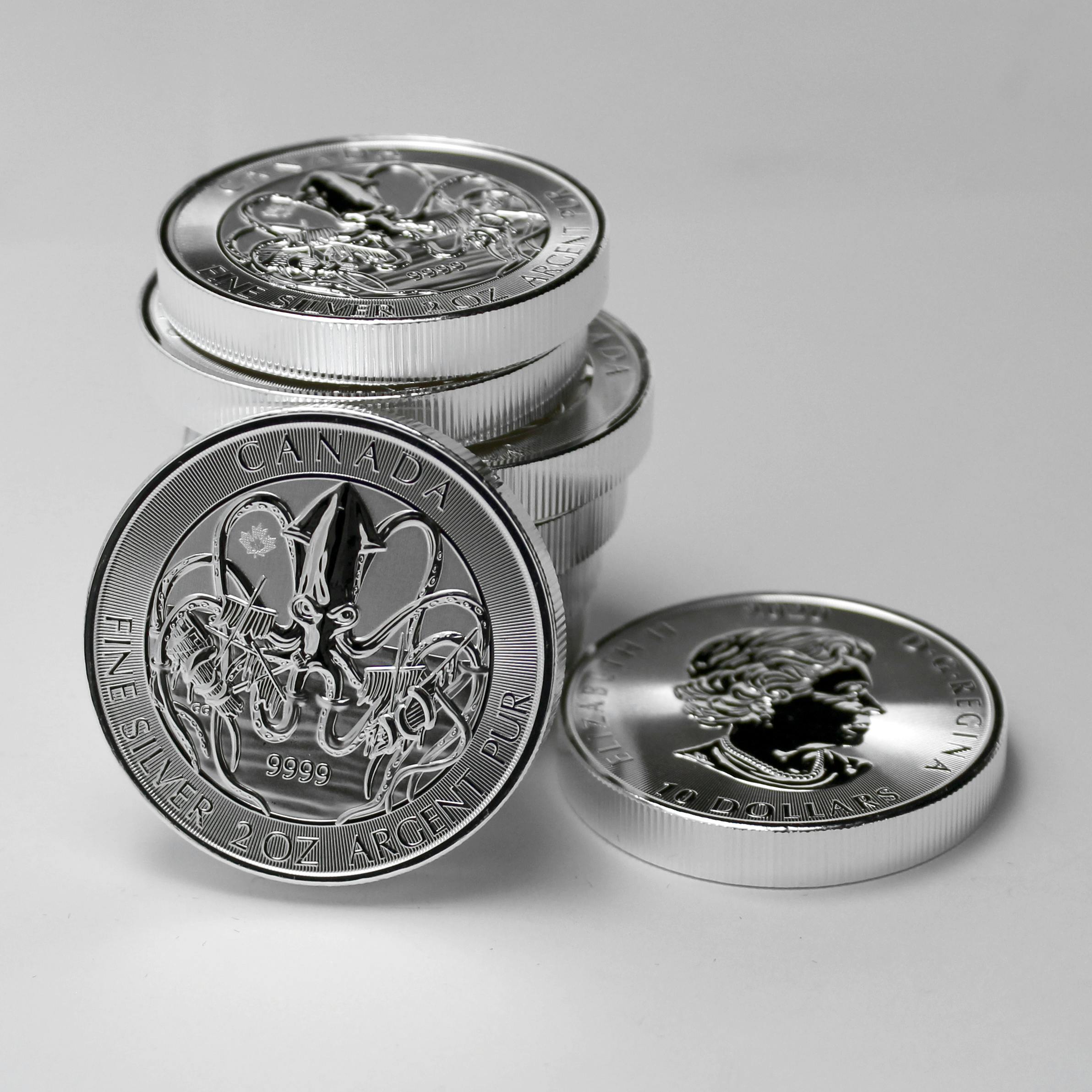
Look closely at old silver coins long enough and you’ll start noticing the little details.
Tiny letters near the date.
A small “D.”
Maybe an “S.”
Sometimes a “W.”
Those are mint marks. They tell you where the coin was made.
That’s really all they were designed to do in the beginning.
Governments didn’t create mint marks for collectors. They weren’t thinking about auctions, grading companies, or people chasing rare coins generations later. Mint marks existed because governments needed a way to track production between different mint facilities.
It was practical. Bureaucratic, even.
But over time those small markings became important for other reasons too. Dealers pay attention to them. Collectors study them obsessively. Bullion buyers use them to identify products and verify what they own.
And in today’s precious metals market, where trust matters more than ever, mint marks still carry weight.
Why Mint Marks Matter More Today
More people own physical silver today than they did a decade ago.
That didn’t happen by accident.
Inflation changed the way people think about savings. Banking instability shook confidence in the financial system. Rising debt levels made a lot of Americans uneasy about where the dollar is headed long term.
So people started buying tangible assets again.
Silver. Gold. Hard assets they can actually hold.
As new buyers enter the market, they start asking the same questions experienced metals owners already ask automatically.
Where did this coin come from?
Who minted it?
Will another buyer recognize it later?
Can I sell it easily?
Why does this coin cost more than that one if both contain the same amount of silver?
Mint marks help answer some of those questions.
A Silver Eagle from a major U.S. mint carries instant recognition. So does a Maple Leaf from the Royal Canadian Mint. Buyers trust familiar sovereign products because they know exactly what they are looking at.
That familiarity matters even more when markets get shaky.
During periods of financial stress, people usually stop chasing obscure products. They move toward recognizable bullion with transparent pricing and strong resale markets.
That’s part of why mint marks still matter.
Not because every mint-marked coin is rare. Most aren’t.
But because origin still matters in physical precious metals markets.
The Original Purpose of Mint Marks
Mint marks existed long before modern bullion investing.
Governments needed them because coin production was spread across multiple facilities. Once nations began operating branch mints in different regions, officials needed a reliable way to identify where coins were struck.
Without mint marks, tracking production problems would have been difficult.
If coins came out underweight or improperly struck, governments needed accountability. Mint marks provided it.
They also helped with distribution.
Different mint branches supplied different regions of the country. Tracking output between facilities mattered for commerce, taxation, and monetary circulation.
Mint marks also added another identifying feature to official coinage. Even centuries ago, counterfeit currency was a problem. Any detail that helped distinguish genuine government coinage from unofficial copies had value.
No one at the time was thinking about modern coin collectors.
They were solving operational problems.
But over the years those tiny letters gradually became part of the historical record too.
Today historians can study mint marks to trace production trends, economic expansion, wartime shortages, and changes in national mint systems over time.
What started as a manufacturing detail eventually became part of bullion markets and numismatics alike.
Common U.S. Mint Marks and What They Mean
Several mint marks appear regularly on U.S. silver coins.
Depending on the coin series, the placement changes.
Morgan dollars typically place the mint mark beneath the wreath on the reverse side.
Mercury dimes position it near the lower reverse area.
Modern proof Silver Eagles may include mint marks tied to special editions.
Some older Philadelphia coins carried no mint mark at all.
That part confuses newer buyers sometimes. They assume a missing mint mark means something is wrong with the coin.
Usually it doesn’t.
Philadelphia simply omitted mint marks on many circulation coins for long stretches of U.S. history.
How Mint Marks Affect Bullion Buyers
For most silver investors, the metal itself remains the priority.
One ounce of silver is still one ounce of silver regardless of which mint produced the coin.
That’s important to remember because newer buyers sometimes get pulled too far into collector thinking before they fully understand bullion markets.
Still, mint marks can affect a few practical things.
Liquidity is one of them.
Recognizable sovereign bullion tends to move more easily in secondary markets because dealers already know the products and trust the issuing mints behind them.
That includes:
American Silver Eagles
Canadian Maple Leafs
British Britannias
Austrian Philharmonics
Mint marks reinforce that recognition.
They also occasionally affect premiums.
Certain mint facilities produced lower mintages during particular years. Some proof editions came from specific locations. Certain historic combinations became collectible over time because fewer examples survived.
That’s where bullion investing starts blending into numismatics.
But cautious buyers should keep perspective.
A coin carrying a large premium because of collector demand behaves very differently from ordinary bullion. Its price may move more according to collector sentiment than silver itself.
That’s not automatically bad. It’s just a different market.
The Difference Between Bullion and Numismatic Thinking
A lot of confusion in precious metals markets comes from people mixing up bullion ownership with coin collecting.
Bullion buyers usually care about:
Silver content
Liquidity
Recognizable products
Reasonable premiums
Long-term purchasing power
Collectors focus more on rarity, condition, historical significance, and scarcity.
Mint marks matter much more in that world because specific mint-and-date combinations can become genuinely rare.
Two Morgan dollars containing the same amount of silver can trade at vastly different prices because one mint produced far fewer coins than another.
Some people enjoy that side of the market.
Others don’t want anything to do with it.
Neither approach is wrong, but buyers should understand the difference before spending large premiums on collectible products they may not fully understand.
During uncertain economic periods, most bullion-focused investors still gravitate toward simple, recognizable silver products first.
There’s a reason for that.
Liquidity tends to matter more than collectibility when markets become unstable.
Common Misconceptions About Mint Marks
“Every mint mark makes a coin valuable.”
No.
Most mint marks are common and add little value by themselves.
Collector value depends on scarcity, condition, demand, and survival rates.
“Coins without mint marks are fake.”
Also false.
Many Philadelphia coins intentionally carried no mint mark at all.
“Rare mint marks guarantee profits.”
They don’t.
Collector markets move in cycles. Some coins appreciate dramatically. Others stagnate for decades.
Scarcity alone guarantees nothing.
“Mint marks only matter to collectors.”
Not entirely.
Even ordinary bullion buyers benefit from understanding product origin and market recognition.
A Simple Decision Framework for Silver Buyers
Most investors don’t need to become rare-coin experts.
If your goal is long-term wealth preservation, focus primarily on:
Recognizable bullion
Trusted dealers
Fair premiums
Liquidity
Silver content
That covers most of what matters.
If you enjoy collecting, then mint marks become more important because they help identify scarcer combinations and historically important issues.
Inherited coins deserve extra attention too. Certain date-and-mint combinations can carry meaningful premiums beyond the metal value.
If counterfeits are the concern, mint marks should only be part of the verification process alongside weight, dimensions, appearance, and dealer reputation.
Why Simplicity Often Wins
A lot of newer silver buyers overcomplicate things.
They feel pressure to memorize every rare mint variation and every collectible series before they even understand the basics of bullion ownership.
That usually creates confusion more than anything else.
For most people trying to protect purchasing power over time, simple works fine.
Recognizable bullion products tend to provide:
Easier resale
Lower premiums
More transparent pricing
Stronger market recognition
Less speculation
Mint marks still matter. They just matter in context.
They are one small piece of understanding the products you own.
Final Thoughts
Governments originally used mint marks for practical reasons.
They needed accountability between mint facilities. They needed production tracking. They needed a way to identify where coins were struck.
Over time, those small markings became useful to collectors, dealers, historians, and investors too.
Today mint marks still help buyers understand where coins originated and why certain products carry stronger recognition or higher premiums than others.
But they should remain in perspective.
Most long-term silver buyers do not need rare varieties or heavily marked-up collectibles to build meaningful precious metals holdings.
In many cases, the more reliable path is still the simpler one.
Buy recognizable silver.
Avoid excessive premiums.
Work with reputable dealers.
Stay patient.
That strategy has held up a lot better over time than chasing stories built around tiny letters stamped onto coins.