
Across the country, communities are pushing back against rising electricity bills, massive utility spending plans and waves of new data center development that consume energy, land and water while offering few visible local gains. As utilities pursue one of the largest energy investment cycles in generations, state lawmakers are increasingly caught between rising demand and households asking a simple question: What’s in it for us?
So far, the dominant answer has largely been promises of future reliability, fuzzy plans around economic growth, and systemwide benefits while households continue absorbing rising electricity costs. That gap is becoming harder to sustain.
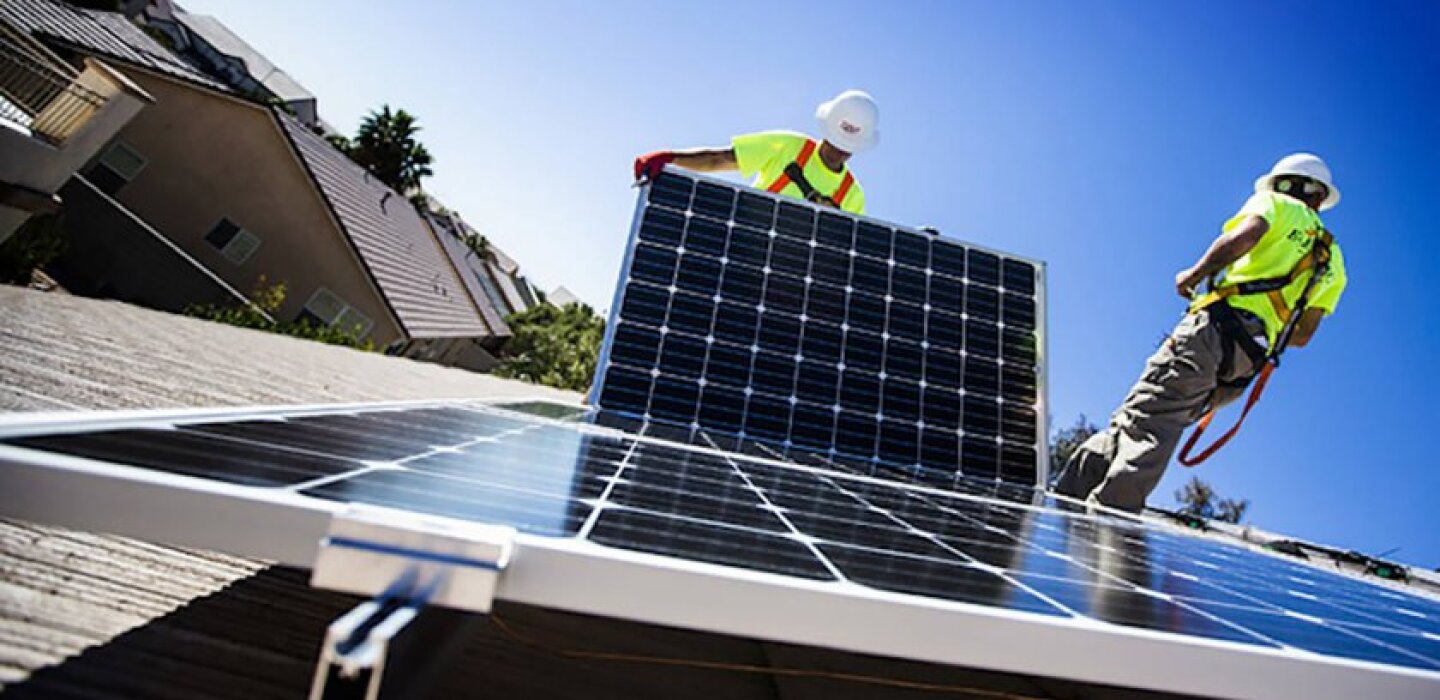
There is a clear opportunity to answer it differently. Alongside necessary investments in new clean generation and grid expansion, states can choose to treat households as core energy infrastructure by adopting policies that make heat pumps, rooftop solar, home batteries and smart electric appliances vastly more affordable. Done at scale, these technologies can lower bills, reduce strain on the grid and help households become part of the solution to rising electricity demand while avoiding more expensive infrastructure costs.
Right now, however, nearly 9 in 10 single-family homes face barriers to adopting these technologies, even though they are among the fastest and most cost-effective ways to reduce peak demand and improve reliability. The challenge is not the technology itself but the policies that continue to stand in the way of broader adoption.
A new analysis from our organization finds that a coordinated “Homegrown Energy” policy package could make whole-home electrification plus rooftop solar and battery storage affordable for roughly 96 percent of households, up from about 9 percent today. The modeled impact is significant: roughly $26,000 in lifetime savings per household and $1.5 trillion nationwide. Alongside these savings comes cleaner indoor air, greater resilience during outages and extreme heat, and more control over household energy costs. Most importantly, they give American families something largely missing from today’s energy debate: a direct stake in the next wave of energy investment.
The technology is already here. Heat pumps, batteries, rooftop solar and smart appliances can lower costs while helping stabilize the grid, but public policy and utility regulation still largely treat households as passive ratepayers. Homes themselves can now help power and support the grid, and when policy recognizes that value and invests in it, households get an even better deal.
That matters especially as opposition to large-scale infrastructure and data center buildout intensifies. Communities increasingly want to know whether the benefits of these projects will flow back to households or simply expand utility capital spending and corporate power consumption.
One of the report’s central recommendations is that large new energy users, including data centers, should invest directly into distributed energy resources and household affordability solutions in the communities where they operate.
States are already beginning to move in this direction. Minnesota has enacted fees on large data centers to support energy affordability and grid modernization programs, while similar proposals are advancing in Illinois, Washington state and Wisconsin. A separate agreement in Minnesota between Google and Xcel Energy will direct $50 million toward distributed batteries to reduce grid constraints and defer infrastructure upgrades. These are important steps, but the opportunity is far larger.
Our report outlines a broader package of complementary policies: reducing permitting and other “soft costs,” enabling utilities to finance home upgrades and recover the cost through energy savings, scaling virtual power plants, modernizing electric rate design, and redirecting infrastructure investment toward distributed resources.
These policies reinforce one another. Lower costs drive adoption, adoption creates grid value, and that value expands affordability further over time.
There is an important political lesson here as well. The Inflation Reduction Act demonstrated that ambitious climate and industrial policy can mobilize enormous investment. But it also showed that even strong policy can struggle politically if households do not feel direct benefits quickly enough.
State policymakers heading into the next election cycle will face growing pressure to show that the next phase of energy investment delivers visible gains for households, not just larger utility capital plans and future promises of eventual systemwide savings.
The states that succeed will not simply build more infrastructure. They will build public trust by ensuring households directly share in the benefits of the next energy economy. That starts by treating households not as passive ratepayers, but as core infrastructure capable of lowering costs, strengthening reliability and helping power the future.
Ari Matusiak is the founder and CEO of Rewiring America, a national policy organization focused on electrification and energy affordability.
Governing‘s opinion columns reflect the views of their authors and not necessarily those of Governing‘s editors or management.