
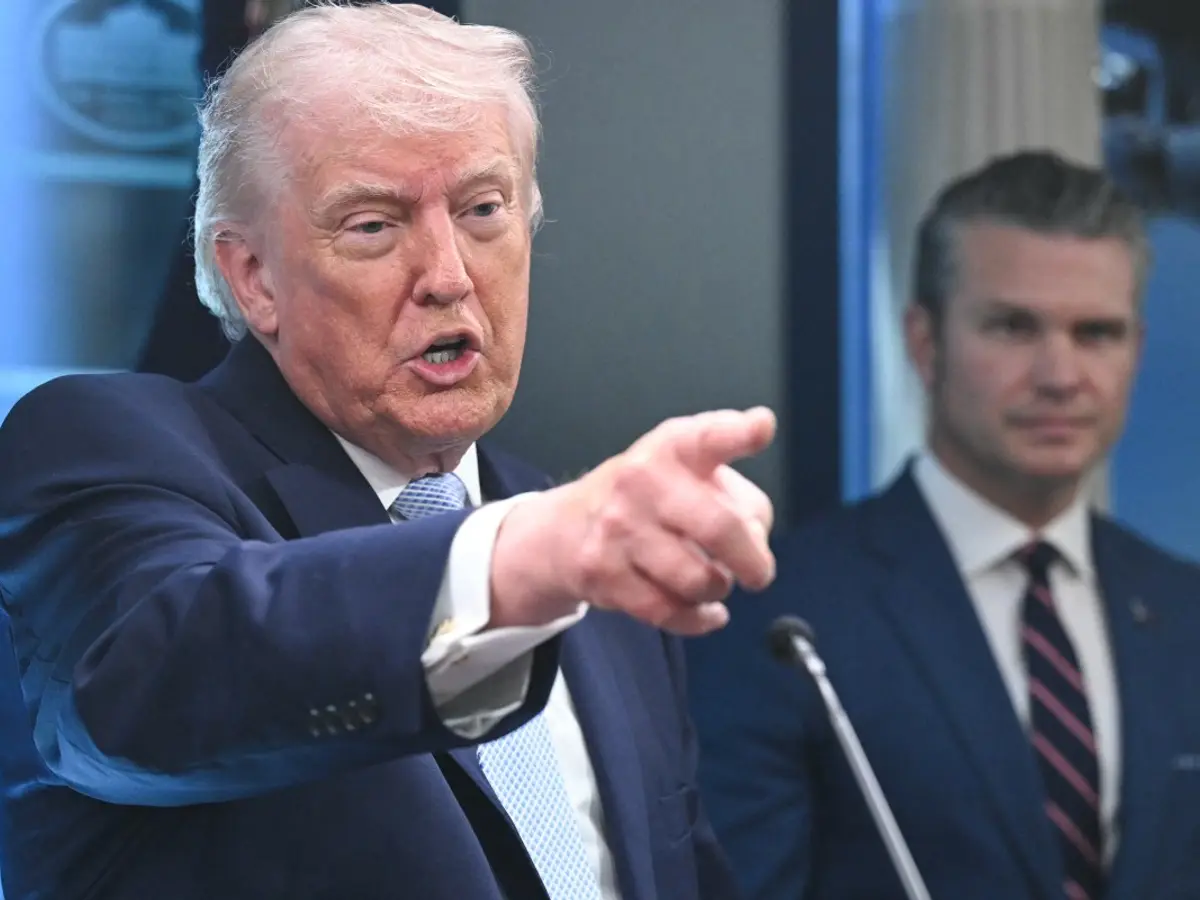
As US President Donald Trump’s deadline to reopen Strait of Hormuz and deal looms, a new report has suggested that he may choose to not carry out strike to destroy Iran’s infrastructure, including power plants. The report added that he is the only one who will make the decision about the strike. The report also claimed quoting that defence official that they were “skeptical” about the strikes. Mediators from Pakistan, Egypt, and Turkey are working to avert that scenario by pushing for a negotiated agreement or, at the very least, securing additional time for diplomacy, the report added.
“If the president sees a deal is coming together, he’ll probably hold off. But only he and he alone makes that decision,” a senior administration official told Axios. A defence official, however, said they were “skeptical” that there would be any extension this time.
Trump’s threat

Trump said that Tuesday would be “power plant day and bridge day all wrapped in one” in Iran, and warning that there would be “nothing like it.” He issued an expletive-filled ultimatum to Iranians via Truth Social post and appeared to set Tuesday as the final deadline, warning that Iranians will be “living in hell.” Open the Fuckin’ strait, you crazy bastards, or you’ll be living in hell — just watch! Praise be to Allah,” Trump wrote in a Truth Social post. However, he also expressed that he believes there is a “good chance” of reaching a deal with Iran on Monday. He warned, “If they don’t make a deal and fast, I’m considering blowing everything up and taking over the oil.”
In late March, Donald Trump announced that peace talks between the United States and Iran were underway and revealed a 15-point proposal aimed at restricting Iran’s nuclear and regional activities. The plan includes a one-month ceasefire, complete dismantling of nuclear capabilities, a ban on nuclear weapons development, and an end to uranium enrichment. It also calls for transferring nuclear material to the International Atomic Energy Agency, shutting down key facilities such as Natanz Nuclear Facility, Isfahan Nuclear Technology Center, and Fordow Fuel Enrichment Plant, along with allowing unrestricted inspections.
However, Tehran rejected the proposal, describing it as overly ambitious and impractical, and instead introduced its own 10-point plan to end the conflict. Iran’s proposal emphasizes a permanent end to hostilities, safe passage through the Strait of Hormuz, and recognition of its right to uranium enrichment under the Nuclear Non-Proliferation Treaty. It also calls for lifting US and international sanctions and ending Israeli strikes on Hezbollah in Lebanon. In exchange, Iran would remove its effective blockade of the Strait of Hormuz, charging around $2 million per vessel—a fee to be shared with Oman—with the funds directed toward rebuilding infrastructure damaged in US and Israeli attacks.
Disclaimer: WION takes utmost care to accurately and responsibly report ongoing conflicts in West Asia involving Israel, Iran, the US, Gulf nations, and non-state actors like Hezbollah, Hamas, Houthis, Islamic State, and others. Claims and counterclaims, disinformation and misinformation are being made online and offline. Given this context, WION cannot independently verify the authenticity of all statements, social media posts, photos, and videos.