
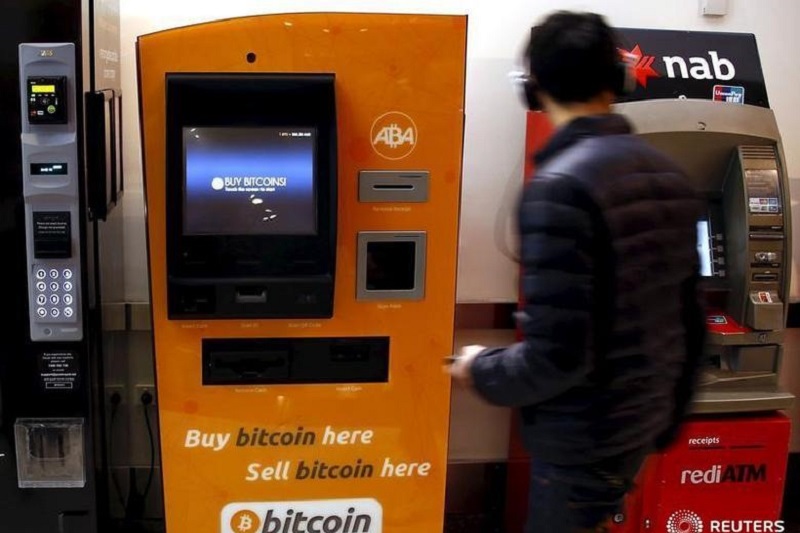
Investing.com — The collapse of is intensifying concerns that the traditional crypto ATM business model may no longer be viable in the United States under mounting regulatory scrutiny. Roshan Dharia, chief executive of Echo Base and a seasoned restructuring advisor, told Investing.com the company’s bankruptcy could be an early warning sign for operators struggling with shrinking transaction spreads, escalating compliance costs, and growing exposure to fraud-related enforcement.
“Bitcoin Depot’s bankruptcy is likely a preview of what the broader crypto ATM industry will face in the United States over the next several years,” Dharia initially told Investing.com on the day of the announcement, before expanding on those views in a follow-up interview. “The traditional model depended on high transaction spreads and limited regulatory scrutiny to offset unusually high compliance, cash logistics, fraud remediation, and retail revenue sharing costs.”
Weigh what this means for crypto more broadly by upgrading to InvestingPro – get 50% off today
The Atlanta-based operator, which ran more than 9,000 kiosk locations globally as of mid-2025, initiated a voluntary Chapter 11 process on May 18 in the U.S. Bankruptcy Court for the Southern District of Texas. CEO Alex Holmes acknowledged in the filing announcement that the company’s current business model had become “unsustainable” under a regulatory environment that has grown progressively more hostile to BTM operators.
Preliminary first-quarter results, released ahead of the bankruptcy announcement, illustrated just how rapidly the economics had deteriorated. Revenue fell to $83.4 million, down 49% year-over-year, while gross margin collapsed to 5.4% from 14.9% in the prior quarter.
Dharia explained in an interview with Investing.com that the industry’s economics have deteriorated from both directions as regulators cap fees while compliance and fraud-prevention obligations become more expensive. “Regulators are now directly compressing that revenue layer through fee caps, spread scrutiny and consumer protection enforcement,” he said, noting that once effective revenue per transaction falls into the low-to-mid-teens percentage range, the standalone kiosk model struggles to survive without “dense scale and highly automated compliance.”
States are also increasingly expecting operators to intervene in suspicious transactions before funds are transferred, significantly raising the operational complexity of running a kiosk network. Dharia said that this shift increasingly requires infrastructure commonly associated with traditional financial institutions, including transaction analytics, wallet screening systems, and dedicated fraud response teams. “Some operators have pieces of that stack today, but most were not built to absorb large scale reimbursement liability or real time fraud interdiction obligations,” he noted.
“That equation is breaking down as states increasingly impose consumer protection standards that compress fees, expand operator liability for scam-related activity, and raise expectations around transaction monitoring and reimbursement,” Dharia said in his initial Monday statement. “The result is that many crypto ATM operators may no longer be able to generate sufficient margin to support a nationwide network at scale.”
Any surviving version of the business is likely to rely less on proprietary kiosk fleets and more on integration with existing retail and fintech platforms, Dharia said. The winning structure, he argued, would resemble a “regulated cash-acceptance layer embedded into existing retail and fintech infrastructure.” For example, one could use a mobile app to initiate a transaction and complete it with a cash deposit at a major retail checkout counter instead of a dedicated kiosk.
Under that structure, operators would generate revenue primarily from compliance services, transaction monitoring, and liquidity management rather than physical machine deployment. That would create a lower-margin business, Dharia acknowledged, but a structurally more durable one. He argued that the model would still support cash-reliant users seeking access to digital assets, which he described as an important part of Bitcoin’s original role.
Dharia said the implications for Bitcoin itself are mixed. He described the crypto ATM industry’s potential collapse as simultaneously a “healthy correction” and a “real loss,” noting that the ATMs helped expand access to cryptocurrencies for consumers who relied heavily on cash transactions or lacked conventional banking relationships.
“At the same time, the industry evolved around extremely high fees and increasingly visible scam-related losses, which made regulatory intervention inevitable,” Dharia said. “Long term, Bitcoin probably benefits more from lower spread, identity verified and fraud monitored access infrastructure than from lightly supervised high fee kiosks, even if that transition reduces anonymity and compresses industry margins.”
Bitcoin itself was down roughly 4.7% on the week, though traders attributed most of that move to rising bond yields rather than the Bitcoin Depot news specifically.