
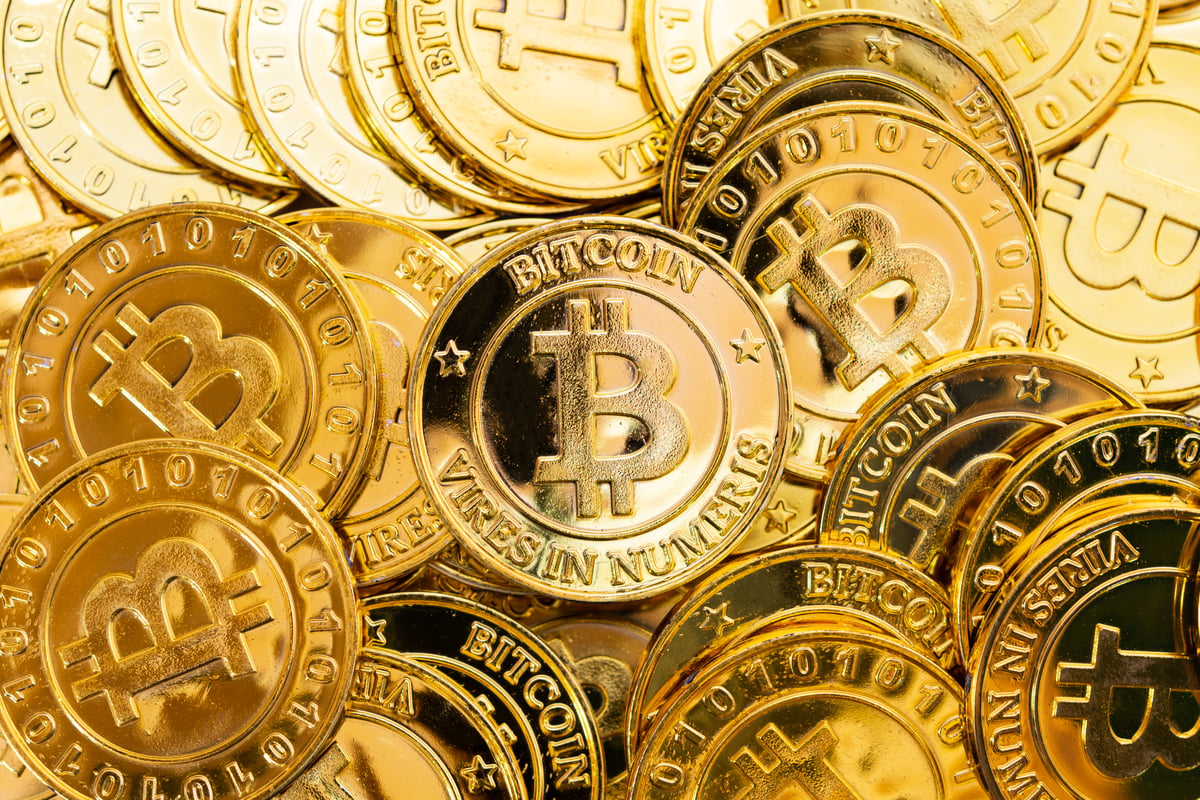
According to a JPMorgan Chase analyst note published on May 8, many investors are choosing Bitcoin (BTC 2.12%) over gold to hedge against inflation. Bitcoin exchange-traded funds (ETFs) have attracted inflows for three straight months in a row, while SPDR Gold Shares (GLD +0.00%) and other gold ETFs still haven’t recovered from the outflows tied to the Iran conflict.
The logic is that because Bitcoin’s supply is hard-capped at 21 million coins, its halvings progressively tighten new issuance to enforce scarcity. But the asset’s recent performance tells a different story, and rumors of the “Bitcoin is digital gold” thesis being true are a bit overblown. Let’s look at the numbers.
Image source: Getty Images.
The scoreboard doesn’t flatter Bitcoin
U.S. consumer prices rose 3.8% year over year in April, driven by rising energy costs caused by the war with Iran. That’s the kind of environment where an inflation-proof investment earns its keep, and, at least so far, Bitcoin has not earned it.
The coin is down 24% from a year ago. Gold, in contrast, has surged about 47% over that same stretch, and, for reference, the market-tracking SPDR S&P 500 ETF Trust returned about 28%. Looking back five years doesn’t help Bitcoin to look any better, as it still underperformed both gold and the index fund ETF.

Today’s Change
(-2.12%) $-1657.35
Current Price
$76364.00
Key Data Points
Market Cap
$1.5T
Day’s Range
$76406.00 – $78419.00
52wk Range
$60255.56 – $126079.89
Volume
37B
The core problem is the asset’s volatility, which is dramatically higher than gold’s despite being on the low side for a cryptocurrency. Bitcoin swung from a low near $62,000 to above $126,000 and back to close to $80,000, all within a single year. An asset that can shed a quarter of its value during the very inflationary period it’s supposed to defend against is not filling the role its advocates describe, even if technically it’s true that the asset itself experienced zero expansion of its supply.
Hedging inflation is a team sport
Bitcoin’s theoretical utility as an inflation hedge hasn’t been disproven, but it certainly hasn’t been proven, either. Gold has functioned as a store of value for millennia. Bitcoin has about 17 years of price history, much of it defined by booms and crashes that dwarf anything gold has produced in the modern era.

Today’s Change
(0.00%) $0.01
Current Price
$417.30
Key Data Points
Day’s Range
$417.27 – $420.93
52wk Range
$296.48 – $509.70
Volume
2.3M
The best approach is thus to spread the job across several investments in your portfolio rather than just Bitcoin or just gold. A well-balanced crypto portfolio that includes gold exposure and also index fund holdings lets each component play to its strength. Bitcoin offers upside tied to scarcity over the long term, gold provides stability during turbulent periods, and index funds capture broad economic growth while also tending to track inflation.
If you’re tempted to go all-in on Bitcoin as your inflation answer, consider that elevated energy prices, a changing of the guard at the Federal Reserve, and geopolitical uncertainty all remain in play, and all of those might cause unforeseen consequences. Holding Bitcoin for the long term is reasonable. Betting it will protect your purchasing power over any given 12-month window is, so far, a bet the evidence doesn’t support.