
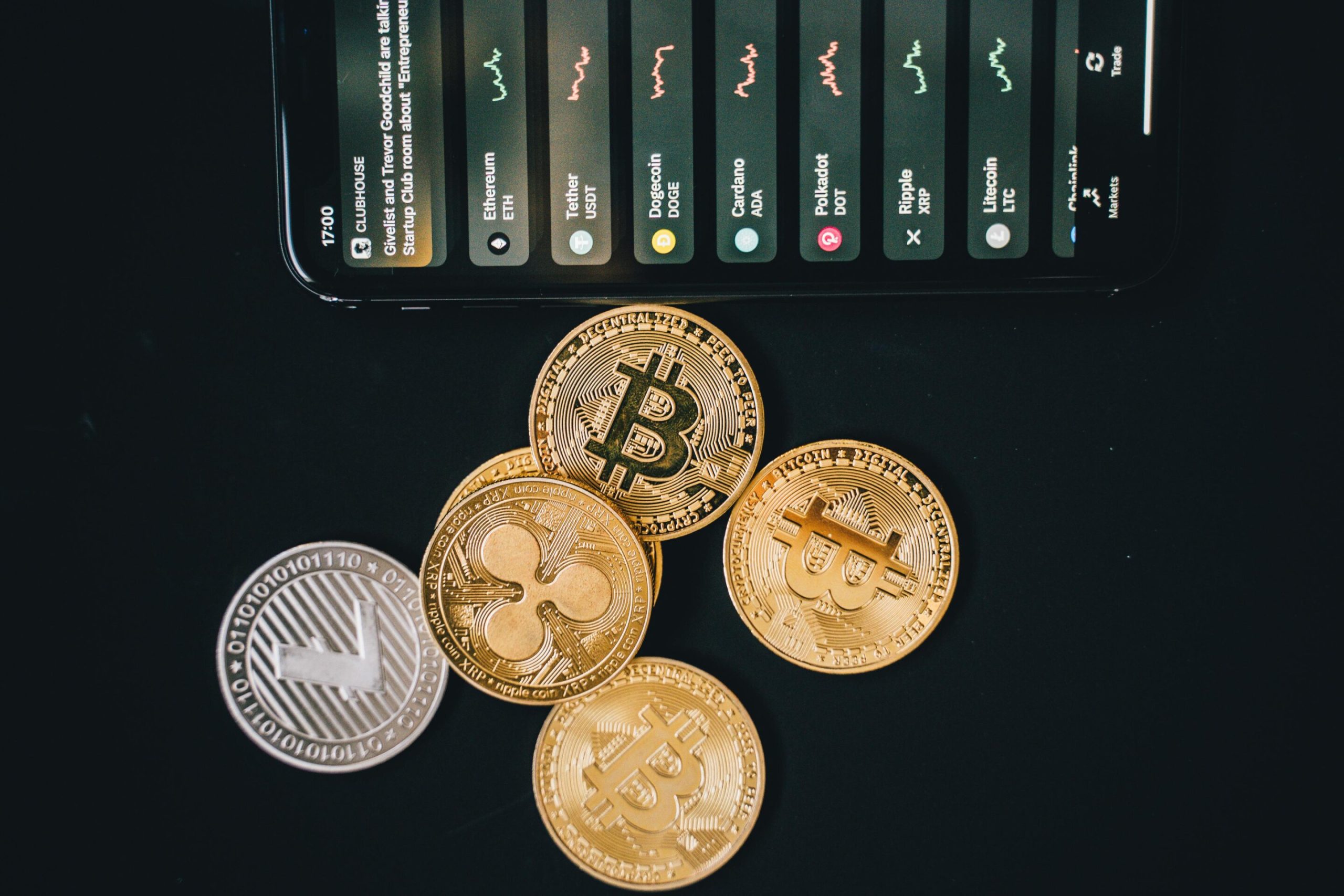

For years, Washington has been debating who gets to regulate cryptocurrency. The Securities and Exchange Commission (SEC) says many tokens are securities, like stocks, and should fall under its authority. The Commodity Futures Trading Commission (CFTC) says many are commodities, like gold, and belong in its jurisdiction. The crypto industry, caught in the middle, calls the whole thing a mess. Now, a new study, “The Differential Diffusion of Exchange and Utility Value Blockchain Tokens,” published in Information Systems Research, offers something rare in this debate: hard data that could help draw the line.
The research was conducted by a team of professors, including researchers from the University of Georgia and Georgia State University’s J. Mack Robinson College of Business, set out to answer a deceptively simple question: do different types of blockchain tokens spread through society in different ways? The answer, backed by an analysis of more than 200 million transactions, turns out to be a clear and consequential “Yes.”
Two types of tokens, two very different worlds
Blockchain tokens are financial transactions that act as a digital ledger to record in two ways. Financial tokens, like bitcoin or other digital currencies and investment instruments, function primarily as stores of wealth. People buy them hoping they’ll increase in value, much like stocks or precious metals. Utility tokens are different. These are more like digital access passes that give holders the right to use a specific product or service, such as renting out spare computing power or accessing a decentralized storage network.
The distinction sounds clean on paper, but in practice it has been murky enough to fuel years of regulatory confusion and courtroom battles.
“The crypto industry has been frustrated by the lack of clarity on how regulatory judgments were being made between financial tokens and utility tokens, and that’s where our research comes in,” said Likoebe Maruping, professor of computer information systems at Georgia State’s Robinson College of Business. “So we looked at the essence of what the token is and how people behave with them, do those things align or are they fundamentally different? If we could discover that, it could provide more clarity on whether the tokens fall under the purview of the SEC or CFTC.”
What the data shows
To conduct the study, researchers downloaded the computer code underlying nearly 25,000 tokens built on the Ethereum blockchain and used a machine learning algorithm to classify each one as financial or utility. They then tracked a full year of transaction history of over 200 million transfers and applied sophisticated statistical modeling to understand what drives each type of token’s growth.
The results were striking. Financial tokens and utility tokens spread through entirely opposite mechanisms. Financial tokens grow faster when users hold them as part of a diverse investment portfolio, a signal of market liquidity that attracts more buyers. But when a small number of large-balance investors dominate holdings of a financial token, growth actually slows, which is consistent with concerns about market manipulation that make other investors wary.
Utility tokens follow completely different rules. They spread faster when influential, high-balance users adopt them first, because those users serve as credible endorsers of the underlying product or service. But utility tokens actually slow down when users spread their attention across too many similar tokens, signaling a lack of commitment to any one platform.
Perhaps most intriguing for policymakers: when utility tokens get listed on trading exchanges, like Coinbase, they attract a new wave of financially motivated users and spread faster, meaning a token designed as an access product can start behaving like a financial instrument once it enters a trading environment.
“We thought there might be a speculative aspect to this where utility tokens could look a bit like securities, but the clarity between the pattern of the two tokens in terms of the differences in how consumers were adopting them was stark. The patterns were completely opposite,” said Maruping.
Why it matters for Congress
The findings land at a pivotal moment for crypto regulations. The CLARITY Act passed the House of Representatives in July 2025 with a bipartisan vote of 294 to 134, but the Senate Banking Committee unexpectedly postponed a critical markup session in January 2026, creating uncertainty about next steps. Crypto proponents want to see a bill passed before the 2026 midterm elections, fearing loss of momentum if key allies are unseated in November.
At the heart of the Senate’s stalling is the same fundamental problem the research addresses: how do you define what a crypto token actually is? The CLARITY Act defines a digital commodity as a digital asset whose value is “intrinsically linked” to the use of the blockchain, essentially trying to separate utility-driven tokens from investment-driven ones. But critics have argued that definition alone, based on a token’s stated purpose, is too easy for issuers to game.
The new research suggests a more robust approach: look at how tokens behave when used, not just how their creators describe them. Tokens whose users treat them like portfolio investments, trading them across exchanges for financial gain, are behaving like securities regardless of what the fine print says. Tokens whose spread is driven by committed users adopting an underlying product or service are behaving more like commodities or consumer goods.
The study also reinforces one of the CLARITY Act’s more innovative provisions—the concept of a “mature” blockchain. The Act defines a digital asset as a security by default until it is determined to be part of a mature blockchain system and therefore a commodity. The research supports the logic of that evolution: a token’s effective regulatory category may legitimately shift over time as its user base and behavioral patterns change.
A tool for regulators, not just a theory
For ordinary Americans, the stakes are real. Clearer regulation means better consumer protections, more predictable tax treatment, and a healthier environment for legitimate innovation, without the reckless speculation that has burned retail investors in past crypto booms and busts.
This research offers something the crypto regulation debate has been sorely missing: an empirical foundation for a distinction that lawmakers have been arguing about for years largely on theoretical grounds. As the Senate resumes its work on the CLARITY Act, the message from the data is straightforward—the difference between a financial token and a utility token is not just a legal label. It shows up in the transactions.
Publication details
Yegin Genc et al, The Differential Diffusion of Exchange and Utility Value Blockchain Tokens, Information Systems Research (2026). DOI: 10.1287/isre.2022.0711
Citation:
Study of 200 million crypto transfers finds two token types spread differently (2026, March 26)
retrieved 10 April 2026
from https://techxplore.com/news/2026-03-million-crypto-token-differently.html
This document is subject to copyright. Apart from any fair dealing for the purpose of private study or research, no
part may be reproduced without the written permission. The content is provided for information purposes only.