
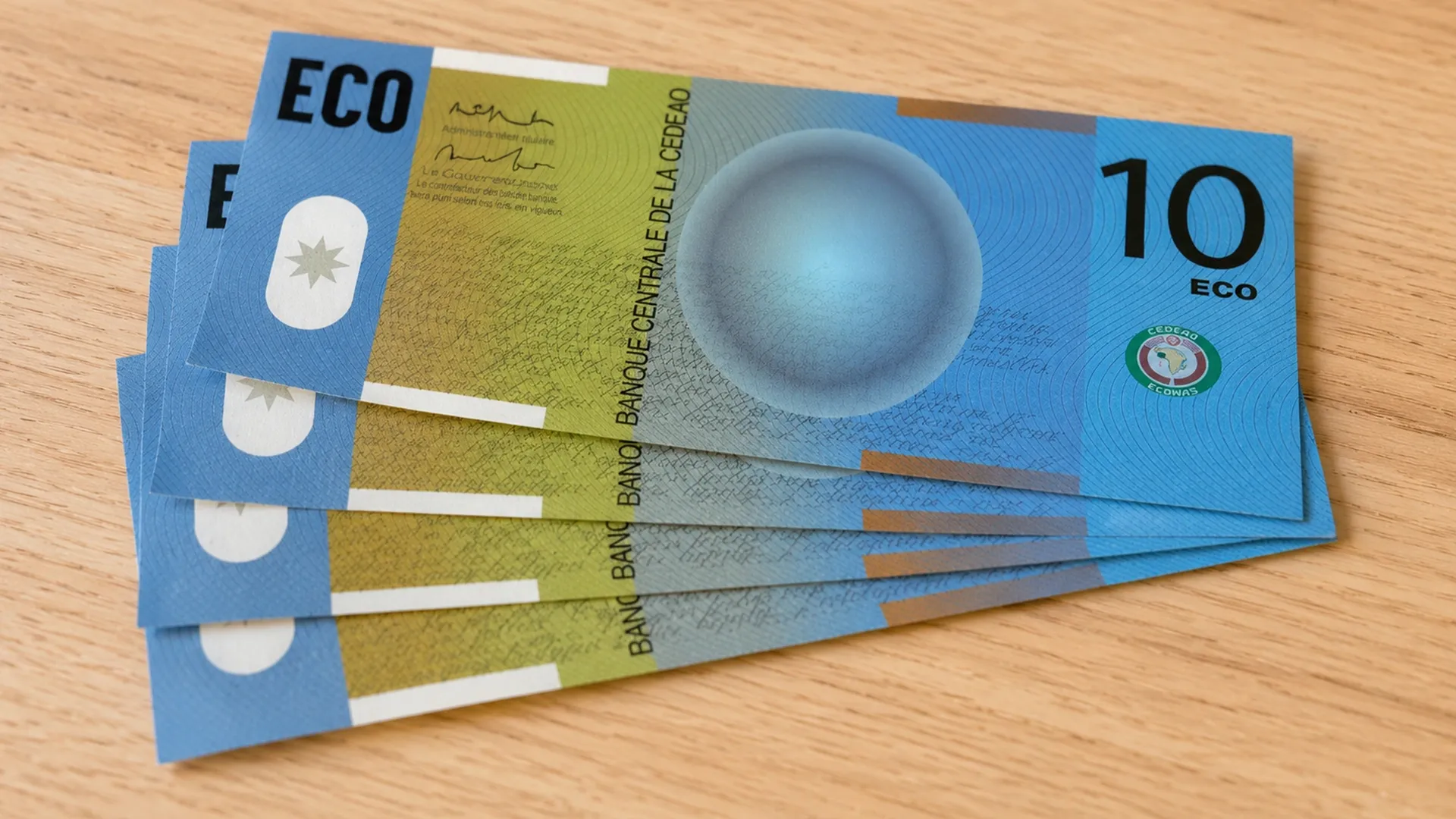
Meeting on 19 July 2026 in Lungi, Sierra Leone, for its 69th ordinary session, the Authority of Heads of State and Government of the Economic Community of West African States (ECOWAS) formally confirmed the launch of the single currency ECO in 2027, endorsing a gradual implementation path based on prior compliance with macroeconomic convergence criteria. At this session, the Authority of Heads of State endorsed the maintenance of the 2027 deadline for the introduction of the ECO, deciding that only countries meeting the convergence criteria will join the first group adopting the common currency.
The regional organisation also tasked the ECOWAS Commission, led by President Dr Omar Alieu Touray, with accelerating technical and institutional preparations, including finalising the exchange-rate regime, the monetary policy framework and the design of the future West African federal central bank.
A phased roll-out centred on macroeconomic discipline
Heads of state confirmed that the ECO’s entry into force will take place in stages, with an initial phase limited to countries that already meet convergence criteria on inflation, budget deficits and public debt, before a progressive extension to the other ECOWAS members. Summit decisions stress the need to strengthen fiscal discipline and coordination of national economic policies to secure the credibility of the future common currency and avoid internal imbalances from the outset.
The ECO project, initially envisaged for the 2010s, has experienced several postponements linked to economic shocks, diverging trajectories between oil and non-oil economies and the difficulty for a sufficient number of states to simultaneously meet the convergence criteria.
A further step in the gradual exit from the CFA franc
Within the WAEMU (UEMOA) area, the transition to the ECO is part of the broader reform of the CFA franc, already under way with the elimination of the French Treasury operations account and the withdrawal of French representatives from the decision-making bodies of the Banque centrale des États de l’Afrique de l’Ouest (BCEAO). Confirmation of the 2027 deadline by the Authority of Heads of State comes as technical discussions focus on the articulation between the current WAEMU exchange-rate regime, pegged to the euro, and the future ECO framework at the broader ECOWAS level.
Regional leaders also reiterated that the ECO must become one of the pillars of ECOWAS’ economic integration agenda, alongside the common external tariff and the African Continental Free Trade Area (AfCFTA), with the aim of lowering transaction costs and boosting intra-regional trade.
Technical preparations assigned to the ECOWAS Commission
The Authority mandated the ECOWAS Commission to step up preparatory work, including harmonisation of statistical frameworks, roll-out of regional payment and settlement systems and drafting of the founding texts of the future regional central bank. Heads of state also reiterated their request that finance ministers and central bank governors report regularly on progress towards convergence criteria and on the reforms required to adopt the common currency.
The Summit conclusions finally underline the need for targeted communication with businesses and citizens to prepare the transition and strengthen acceptance of the ECO in a region currently characterised by multiple exchange-rate regimes and national currencies.
The upcoming meeting of finance ministers and central bank governors
The Lungi decision now shifts the focus to the joint meetings of ECOWAS finance ministers and central bank governors, tasked with operationalising the roadmap endorsed by the Authority of Heads of State and proposing, by 2027, the final technical choices on the exchange-rate regime, monetary governance and the detailed timetable for switching to the ECO.