
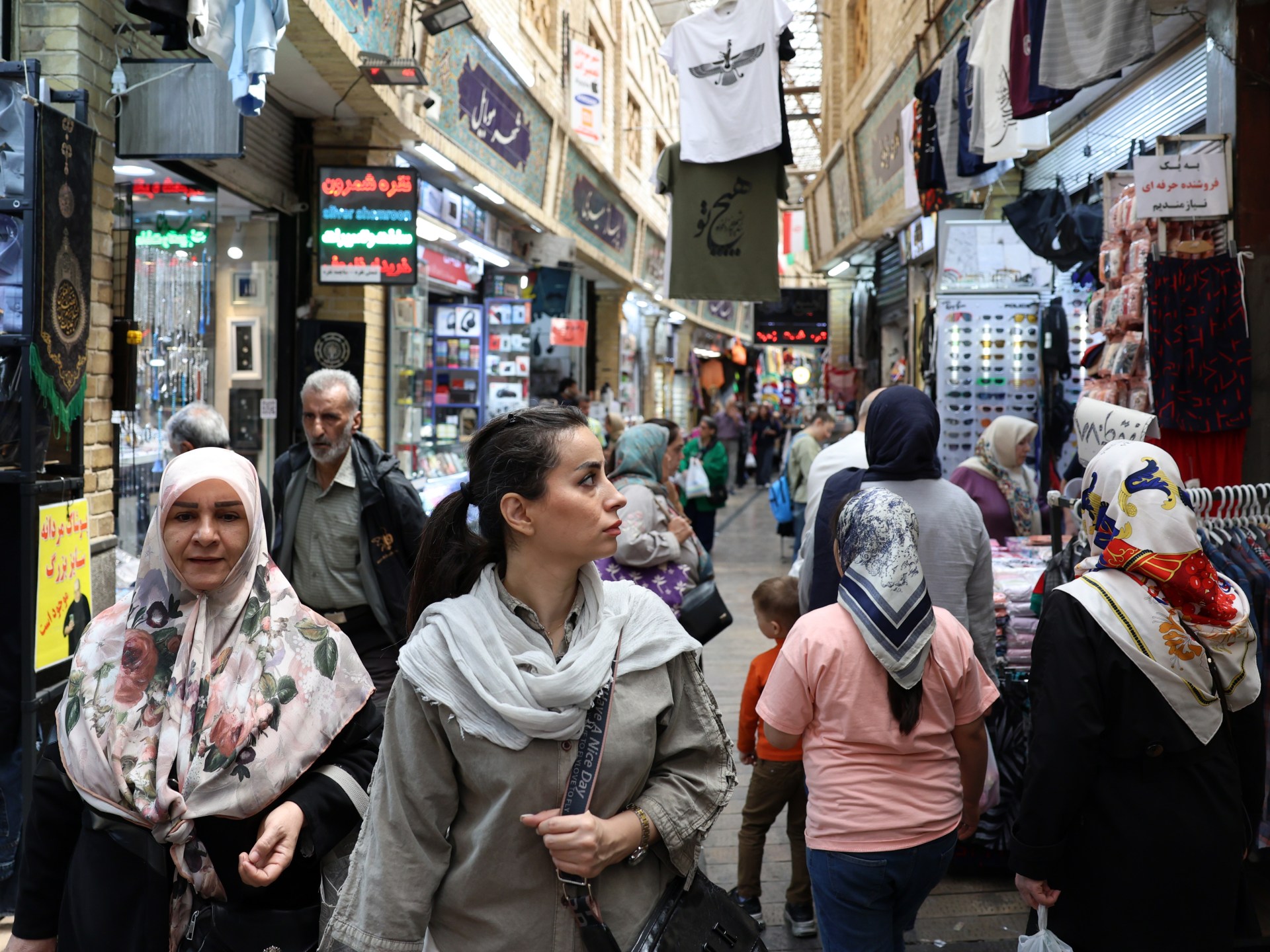
Tehran, Iran – Across Iran’s capital, life has returned to a kind of normal.
Markets, cafes and shops are opening their doors, and some highways are buzzing with traffic once again as a fragile ceasefire with the United States largely holds after weeks of devastating US-Israeli attacks.
Yet customers are cautious.
“Standing in a shop, most things are still available, but a lot of times now, it’s a question of whether you want something or need it,” said a young resident of western Tehran who asked not to be named.
“Many people are resorting to buying just the basics now.”
As worries about the future rise and purchasing habits change, the government is moving to ensure the availability of food and medicines in an effort to ease the mounting pressure the war is placing on the Iranian people.
On Sunday, the cabinet added a clause to implementation guidelines for the annual budget to restart a preferential exchange rate for imports of essentials like wheat, medicines, medical equipment and baby formula.
This means the government plans to give up to $3.5bn from its share of oil and gas proceeds to a network of trustees to import essential goods. These imports will be bought at an official exchange rate of 285,000 rials per US dollar – much lower than the open-market rate of 1.55 million rials per dollar, and also below the budget rate of 1.23 million rials, according to state media.
The move signals a partial policy reversal for the government from the budget it proposed in late December, when demonstrations by shopkeepers in Tehran that developed into nationwide antigovernment protests.
That budget sought to eliminate the cheapest currency rate. The rationale at the time was that the subsidised rate virtually created a nontransparent system that for years propagated corruption without meaningfully reducing prices for average Iranians.
But on Sunday, a deputy at the Ministry of Cooperatives, Labour and Social Welfare told state television that the price of essential goods has been “significantly affected” by the elimination of the cheap currency rate.
Yaghoub Andayesh said the ministry has presented different scenarios to the government to “guarantee food security” across 11 categories of essential goods that have experienced huge price increases over recent months but refused to provide exact figures for the price hikes.
In addition to reintroducing the cheap exchange rate, the official said the government is evaluating if it can increase the volume of monthly handouts and electronic coupons to Iranians to partially compensate for one of the highest food inflation rates in the world. Each person is currently eligible for the equivalent of less than $10 per month.
Drawing from sovereign fund
Iranian authorities are also tapping into the sanctions-hit country’s sovereign wealth fund to buy essential goods, the latest such move in recent years.
State media reported on Sunday that up to $1bn is to be taken out of the National Development Fund of Iran to procure imported sugar, rice, barley, corn, soya bean meal, red meat and chicken meat “with the aim of complementing strategic reserves”.
Authorities have maintained the country has sufficient currency and gold reserves and redirected some oil sales conducted in circumvention of US sanctions to the fund, but they provided no detailed information.
On Sunday, state television said despite the US blockade on Iran’s ports and bombing of its oil and gas facilities, the country’s main challenge is not trying to ramp up production or to get supertankers out of the Strait of Hormuz.
“The main challenge is to bring in empty tankers to the area of Kharg and Jask” to load the extracted oil, a presenter said.
The Tasnim News Agency, which is linked with the Islamic Revolutionary Guard Corps, acknowledged on Saturday that some people have been concerned about food security in the wake of the war that the US and Israel launched on February 28.
But it said it would not be “realistic” to think that Iran could face famine as a result of the US blockade because it has vast borders with neighbours such as Iraq, Turkiye and Pakistan through which imports could be facilitated.
State television even suggested that police and border forces could stop taking action against smuggling routes if there is a shortage of goods in the markets.
‘Unbelievable’
The government has also boosted the executive power of the governors of Iran’s border provinces to boost the imports of essential goods with less red tape.
Pezeshkian told state media without elaborating on Saturday that the government has officially communicated the expanded powers, but the governors would have to display “initiative and creativity” to match additional needs during the war.
And on Sunday, the Food and Drug Administration of Iran announced that in two days it will begin a “centralised distribution of strategic goods” in the medical sector. It said the goal was to ensure that medical facilities have access to strategic reserves in a “fair and timely” fashion and to reduce procurement challenges.
Still, fears over a shortage of goods persist. Some people have begun stockpiling canned goods and storing water. To reduce expenses, they are also cancelling trips and recreational activities, and stopping visits to restaurants and making online food orders.
“It is unbelievable,” a user called Hadi wrote on X, referencing his own tweet from eight years ago when he said the price of feeding 14 people at a restaurant had come to 2.43 million rials to point out that the price of a single meal today is now more than six times that amount.
The few Iranians who are getting online from inside the country during a near-total state-imposed internet shutdown are either issued a government-approved connection or are paying exorbitant amounts to buy virtual private networks or engage in other circumvention methods
Millions of jobs have been put on hold, and many thousands of workers have been laid off or fired as a direct result of the unprecedented internet shutdown, which has lasted nearly two months, as well as the bombing of critical civilian and economic infrastructure, such as steel plants.
But while the authorities emphasise they will rebuild Iran’s infrastructure, they have said the internet shutdown will remain in place throughout the war and have expanded a tiered internet-access system opposed by the people for years.
The Nursing Organization of Iran on Sunday became the first entity to officially rebuff the “internet pro” service being sold by Iranian authorities on the basis that it turns a basic right into a paid privilege.
“When access to the global internet is provided to all the people of Iran, nurses will also use it like the rest of the people,” the organisation said.