
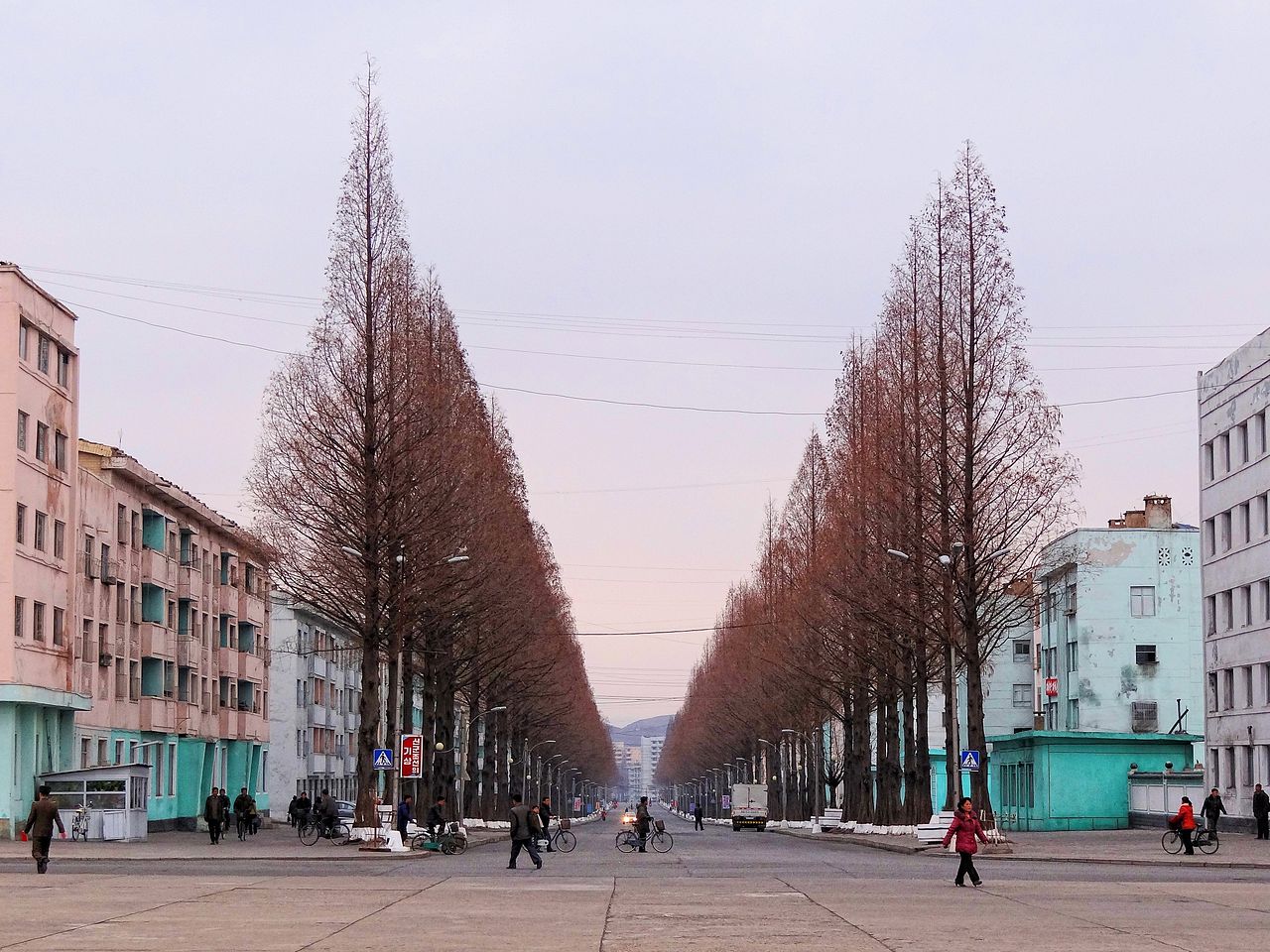
“The official salary from my workplace is about 30,000 North Korean won a month. But feeding our family of four takes more than 800,000 won a month.”
A factory worker in North Korea told Daily NK this recently. Do the math. Saving an entire salary without spending a single won would take more than two years and would only cover one month of food for the family.
Firewood, electricity, transportation, children’s education and medical costs push the math even further out of reach. Living on an official salary alone is essentially impossible, the factory worker explained. Add in the cost of handling crackdowns and paperwork to keep a business running. The burden on a household grows heavier still.
Even so, the factory worker cannot simply quit. In North Korea, a workplace is not just a source of income but also a basic unit that proves a person belongs to the state’s organizational system. Someone who leaves their job, or stops showing up for a long stretch, gets classified as unemployed, a status that invites scrutiny or criticism.
The factory worker keeps showing up to the factory, but the money that actually pays for daily life comes from trade and side jobs done outside of work. Officially, the factory worker is a state employee. In practice, the real income supporting the family comes from elsewhere.
Daily NK recently surveyed ordinary workers, merchants and donju, or wealthy North Korean entrepreneurs, inside the country. The survey covered their living conditions and income structures. The pattern described above turned out to be far from an isolated case. Official salaries and state distribution do not cover people’s basic needs. Trade, side jobs, foreign currency dealings and personal economic activity are what actually sustain households.
A wage that proves employment, and trade that pays the bills
Trade and side jobs are the most common way people fill the gap, sources said. People take on whatever work they can find to supplement their income. That includes small-scale sales, food processing, hauling, repairs, day labor and garden farming.
In the past, people leaned on better-off relatives. They also sold household items or borrowed money to get by. These days, relatives are often struggling too. That kind of support has become harder to count on.
Market vendors earn roughly 20,000 to 100,000 won a day, sources said. The amount depends on what they sell and the scale of their business. Actual net profit runs about 15% to 20% of that revenue. Even on a 100,000-won day, a vendor typically keeps only 15,000 to 20,000 won. The rest goes to the cost of goods, transportation and market fees.
That means two days of market earnings can match or exceed a worker’s entire monthly official salary. It creates a distorted income structure. A few days at the market can bring in as much as a full month’s state wage.
In the end, an official salary functions less as money that supports a family. It works more as a symbolic proof of belonging to a state workplace. Trade and side jobs, not the paycheck, are what actually feed North Korean families.
Authorities absorb markets into the system rather than shutting them down
Even so, it is difficult to describe North Korea’s economy today as a simple standoff. It is not just the state economy against the market economy. People inside the country agree that authorities are not banning trade and personal economic activity outright.
Some people register through the proper procedures and sell in designated locations. Others operate within the framework of an institution or enterprise. Either way, they can continue their economic activity. Registering a trading spot and the nature of the business, and paying various fees, allows market activity to continue under state management.
This appears to reflect a reality authorities themselves face. The state cannot support people’s livelihoods through official wages and supply alone. Blocking trade and side jobs entirely is difficult under those conditions. Doing so risks stoking instability and public discontent.
For residents, registration and management are not purely a burden either. Registering secures a place to trade. It allows relatively steady economic activity within certain limits.
Authorities collect market fees, usage charges and other non-tax payments through market management. In exchange, people earn their actual living expenses through trade, transport, processing and services. Markets serve as a means of survival for residents. For the state, they serve as a tool of social control and revenue.
Donju and private business operators frequently affiliate with a specific institution or enterprise, operating under its name. The individual gains the institution’s protection and a place to do business. The institution, in turn, secures a share of the individual’s earnings. That comes in the form of quota payments, tribute or various fees.
This shows that authorities are pulling markets into the state’s management system rather than eliminating them. They do not fully recognize market autonomy. But they actively make use of the goods, distribution, income and revenue markets generate.
“These days, a job and trading don’t operate separately,” a market vendor said. “A lot of people keep their name registered at a workplace while doing trade or side jobs. Donju also do business by borrowing an institution’s name while paying it a set amount.” The vendor added that the institution gets money and goods out of the arrangement, while the individual gets a space within which to run a business.
Goods and transport have grown, but buying power has not caught up
North Korean markets have recently seen a modest improvement in the supply of goods, sources said. Customer traffic has picked up gradually since rice-planting mobilization ended. Vehicles such as cars, motorcycles and electric bikes are also becoming more common.
For people running private businesses, these vehicles have become essential tools. They move both goods and people. More active transport and distribution can indirectly benefit ordinary people too, by improving access to goods. But this rise in economic activity has not directly translated into better living standards across the board.
“On the surface, it looks like there’s more construction and more factories,” the factory worker said. “But I can’t say life has gotten better overall. There’s nothing in particular that stands out as improved compared to before.”
For ordinary people, the cost of daily necessities remains a heavy burden. That includes rice, corn, cooking oil, fuel and medicine. When the exchange rate rises, the price of goods imported from China rises first. Other prices and services follow with some delay.
People with foreign currency income or holdings can absorb exchange-rate swings to some degree. But sources said even donju and officials have recently grown cautious. They remain wary of crackdowns and punishment.
A donju who earns $100 to $800 a month through trade, transportation, construction and processing work described the constant uncertainty. “Even if trading is allowed, you never know when they’ll find some problem to crack down on you,” the donju said. “If you get caught the wrong way, all the money you’ve earned can be taken away overnight.”
The government does not fully block markets, the donju added. Instead, it lets people trade on the condition that they register and pay fees. Residents find whatever way they can to get by within that framework. “Everyone hopes this unstable relationship will end someday, so people can work with peace of mind,” the donju said. “But I don’t think a system that has become this entrenched will change easily.”
Reporting from inside North Korea
Daily NK operates networks of sources inside North Korea who document events in real-time and transmit information through secure channels. Unlike reporting based on state media, satellite imagery, or defector accounts from years past, our journalism comes directly from people currently living under the regime. We verify reports through multiple independent sources and cross-reference details before publication.
Our sources remain anonymous because contact with foreign media is treated as a capital offense in North Korea — discovery means imprisonment or execution. This network-based approach allows Daily NK to report on developments other outlets cannot access: market trends, policy implementation, public sentiment, and daily realities that never appear in official narratives.
Maintaining these secure communication channels and protecting source identities requires specialized protocols and constant vigilance. Daily NK serves as a bridge between North Koreans and the outside world, documenting what’s happening inside one of the world’s most closed societies.