
Skip to main content
Syria
+ 2 more
Key Messages
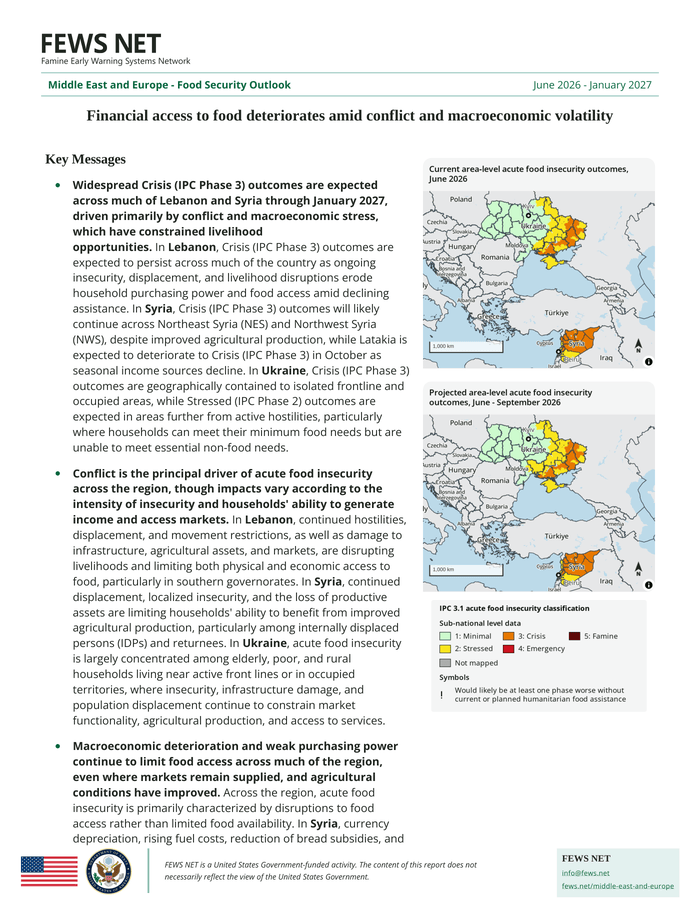
- Widespread Crisis (IPC Phase 3) outcomes are expected across much of Lebanon and Syria through January 2027, driven primarily by conflict and macroeconomic stress, which have constrained livelihood opportunities. In Lebanon, Crisis (IPC Phase 3) outcomes are expected to persist across much of the country as ongoing insecurity, displacement, and livelihood disruptions erode household purchasing power and food access amid declining assistance. In Syria, Crisis (IPC Phase 3) outcomes will likely continue across Northeast Syria (NES) and Northwest Syria (NWS), despite improved agricultural production, while Latakia is expected to deteriorate to Crisis (IPC Phase 3) in October as seasonal income sources decline. In Ukraine, Crisis (IPC Phase 3) outcomes are geographically contained to isolated frontline and occupied areas, while Stressed (IPC Phase 2) outcomes are expected in areas further from active hostilities, particularly where households can meet their minimum food needs but are unable to meet essential non-food needs.
- Conflict is the principal driver of acute food insecurity across the region, though impacts vary according to the intensity of insecurity and households’ ability to generate income and access markets. In Lebanon, continued hostilities, displacement, and movement restrictions, as well as damage to infrastructure, agricultural assets, and markets, are disrupting livelihoods and limiting both physical and economic access to food, particularly in southern governorates. In Syria, continued displacement, localized insecurity, and the loss of productive assets are limiting households’ ability to benefit from improved agricultural production, particularly among internally displaced persons (IDPs) and returnees. In Ukraine, acute food insecurity is largely concentrated among elderly, poor, and rural households living near active front lines or in occupied territories, where insecurity, infrastructure damage, and population displacement continue to constrain market functionality, agricultural production, and access to services.
- Macroeconomic deterioration and weak purchasing power continue to limit food access across much of the region, even where markets remain supplied, and agricultural conditions have improved. Across the region, acute food insecurity is primarily characterized by disruptions to food access rather than limited food availability.In Syria, currency depreciation, rising fuel costs, reduction of bread subsidies, and persistent inflation are expected to continue eroding real incomes despite a substantially improved cereal harvest. In Lebanon, high food and fuel prices, economic contraction, reduced labor demand, and the collapse of the tourism season are expected to further weaken household purchasing power. In Ukraine, national markets are generally functioning, and agricultural production is expected to improve in many areas; however, elevated food, energy, and transportation costs continue to constrain access for poor households, particularly pensioners, IDPs, and residents of frontline oblasts.
- Funding shortfalls and humanitarian access constraints are limiting the reach and effectiveness of humanitarian assistance across several countries, reducing the ability of assistance to mitigate food consumption gaps. In Syria, reductions in humanitarian food assistance and bread support are expected to reduce an important source of food for poor households, particularly as seasonal income opportunities decline and winter expenditures increase later in the year. In Lebanon, food assistance coverage is expected to decrease amid funding constraints and continued access challenges in insecurity-affected areas. In Ukraine, humanitarian food assistance is expected to remain concentrated in frontline areas and is helping sustain Stressed! (IPC Phase 2!) outcomes in several districts; however, winter conditions, rising logistical costs, and insecurity are likely to reduce humanitarian access in some hard-to-reach areas during the latter part of the outlook period.